What is the difference between white Chinese and brown Chinese geese?
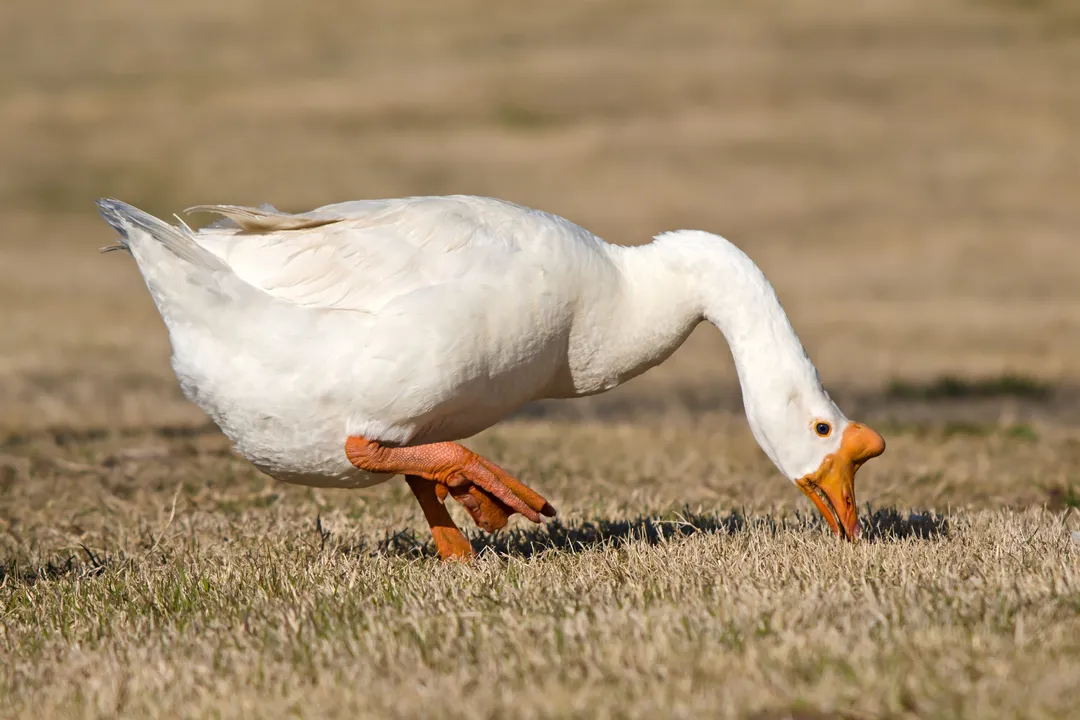
The Chinese Goose, whether found in stark white plumage or rich brown, descends from the Asian wild Swan Goose, Anser cygnoides. [3][2] While they are recognized globally and were admitted to the American Poultry Association's Standard of Perfection as far back as 1874, the two color varieties share nearly every characteristic that defines the breed, from their utility to their distinct personality. [3] The primary divergence lies purely in their feather coloration and the subtle details tied to those color genes. [3][4]
# Color Marking
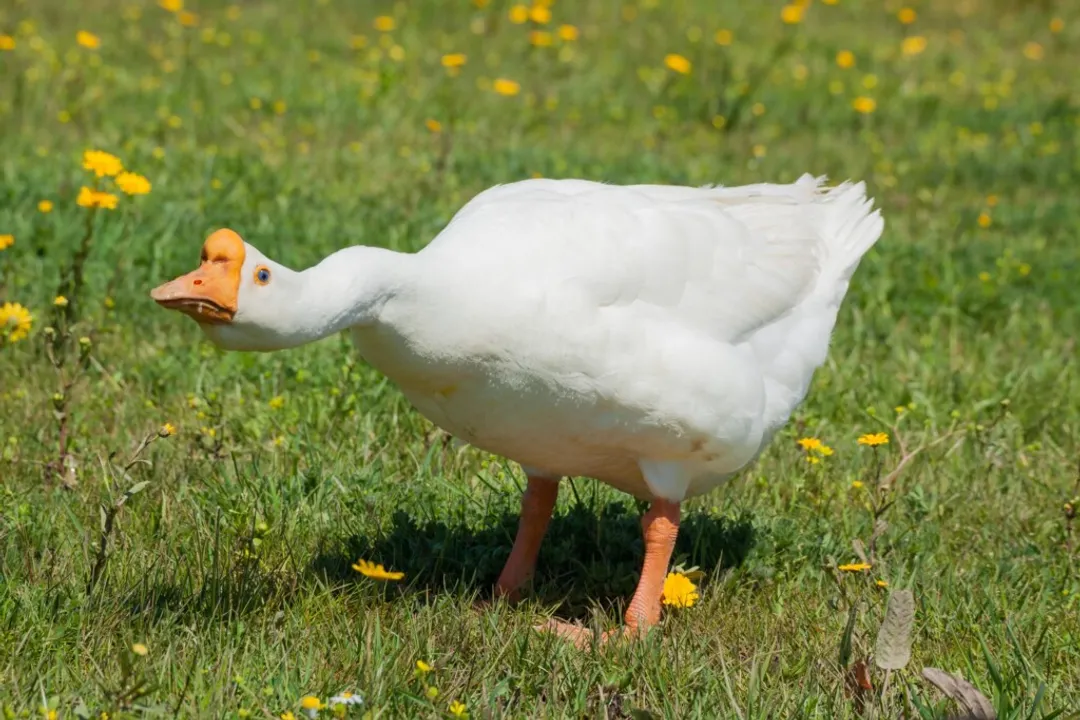
The most immediate and obvious difference between the two is their hue, which extends to other features like the eyes, bill, and shanks. [3]
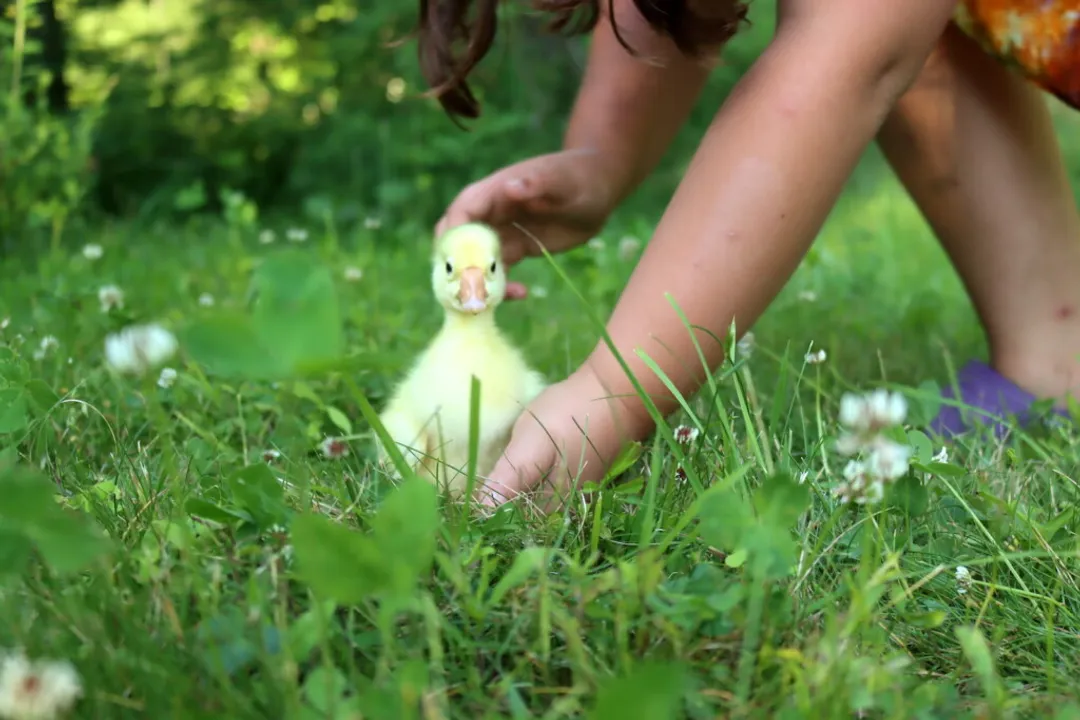
The White Chinese Goose is characterized by pure white plumage from tip to tail. [3][2] This monochromatic look is complemented by bright orange bills and legs. [3][2] A specific detail noted for the White variety, which helps distinguish them from other white waterfowl, is their eye color: they possess blue eyes. [3] Even their day-old down is described as a bright canary yellow. [3]
Conversely, the Brown Chinese Goose is the original color variety for the breed. [3] Their coloring is a complex blend of rich brown and fawn shades. [3] This pattern includes a dark, russet-brown stripe running down the neck. [3] For mature Brown Chinese, the bill and the basal knob on the forehead are glossy black, but this dark area is distinctly separated from the main head feathers by a narrow band of creamy-white plumage. [3] Their feet and shanks are generally a darker, brownish-orange, and their eyes are brown, contrasting with the White variety’s blue eyes. [3] This coloration can sometimes lead to confusion with the larger African Goose, which shares a similar gray pattern but has a heavier frame and a less upright posture. [5]
# Body Structure
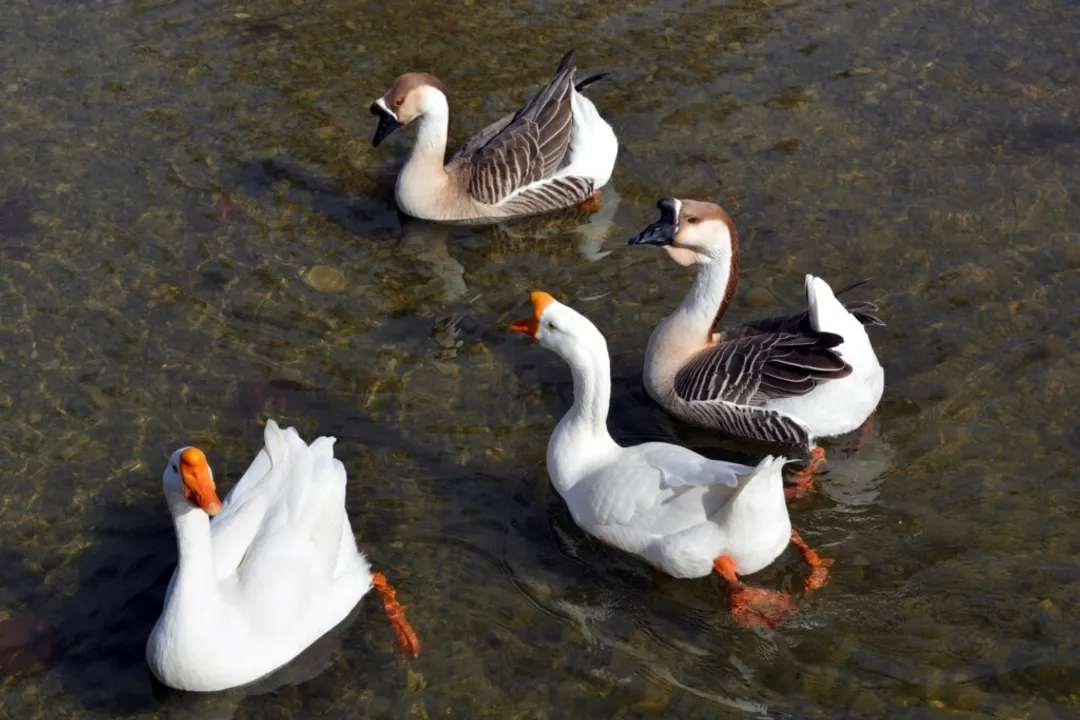
Despite the color variations, both types share the elegant, refined shape prized in the breed standard. [3] They are classified as a lightweight, active breed, with ganders typically weighing around 10 to 12 pounds and females slightly less at 8 to 10 pounds. [2][5] This size is notably smaller than breeds like the African or Toulouse, which can exceed 16 pounds. [5]
The defining silhouette comes from their high-set, upright carriage, long, slender, well-arched neck, and a body held at roughly a 45-degree angle to the ground. [3][2] Both colors feature a large, rounded basal knob on the forehead, atop the beak. [3] However, the male—the gander—of either color will develop a much more prominent knob than the female goose. [1][3] This structure, along with their high tail carriage, contributes to their swan-like appearance. [3]

# Vocalization Gender
While the physical differences are about appearance, a crucial distinction for keepers is related to gender, which is often indicated by sound, irrespective of whether the bird is brown or white. [1] Chinese geese are universally known for being vocal alarms, but the pitch of their warning signals can offer a clue to the bird's sex. [2][1] Ganders tend to emit a louder, high-pitched, trumpet-like sound, occasionally described as almost a scream. [1] The females produce a sound with a lower pitch and a deeper tone; some keepers even note it sounds like "oinking". [1] Furthermore, ganders naturally adopt a protective stance, often positioning themselves between a perceived threat and their female companions, sometimes acting "proud and angry" when guarding the flock. [1]
# Utility Profile
In terms of function on a homestead or in historical gardens, the Brown and White Chinese geese are considered equals. [2] They are perhaps the most productive geese for egg-laying, often producing 40 to 60 large, white eggs annually, with some females reaching 70 or more, especially if early clutches are collected. [2][3] This high production rate makes them invaluable for those seeking a steady supply of goose eggs. [2]
Beyond eggs, their agility, narrow bodies, and energetic grazing habits make them superior weeders compared to heavier breeds that might trample garden rows. [2][3] They excel at consuming grasses and herbaceous plants, allowing them to maintain growth on minimal commercial feed—a factor that contributes to their overall economy as livestock. [5][2] If a keeper is balancing goals, utilizing Chinese geese as a primary maintenance flock—relying on their eggs and foraging ability rather than prioritizing sheer meat volume—proves highly efficient. Their smaller, leaner carcasses mature quickly, but they do not yield the bulk associated with dedicated meat breeds. [2]

# Cold Hardiness
A shared vulnerability that keepers of both White and Brown Chinese geese must manage relates to their lean build and facial structure. [2][3] Because they carry less insulating body fat than heavier goose breeds, they require windproof shelter and plenty of dry bedding during cold snaps. [2] More specifically, the prominent basal knob on the forehead, which is a hallmark of the breed, is susceptible to frostbite when temperatures dip below approximately 20 to 25 degrees Fahrenheit. [3] Given that the gander’s knob is often larger, it presents a greater surface area for potential damage. As a practical preventative measure, applying a thin barrier ointment, such as plain petroleum jelly, to the knobs of both sexes before the first hard freeze can help protect this delicate feature from icing or cold damage. [3]
# Color Genetics
While the goal for most keepers is to maintain the pure White or pure Brown lines, cross-breeding reveals interesting biological differences regarding how their colors are inherited. [4] When a pure Brown goose is bred to a pure White gander, the resulting goslings are known as "splits," meaning they carry the genetic coding for both colors. [4] Offspring might display white with splashes of brown, or brown with splashes of white, and these mixed traits can sometimes persist for a few generations. [4] This observation suggests that the gene responsible for the solid white color in the Chinese Goose is genetically different from the sex-linked dilution genes found in other white breeds like the Embden. [4] Understanding this non-sex-linked color inheritance is important for breeders aiming to purify a line after accidental crosses occur, as it takes several generations of careful selection to stabilize the desired pure color again. [4]
Related Questions
#Citations
Brown Chinese X White Chinese Goslings? | BackYard Chickens
Chinese Goose - The Livestock Conservancy
Chinese Goose Breed Guide - Practical Self Reliance
Can anyone tell the gender of these Chinese geese? - Reddit
Brown Chinese Geese | Hilltophobbyfarm
All about GEESE! - Hackett Farm Supply