What is the Chinese water deer classification?
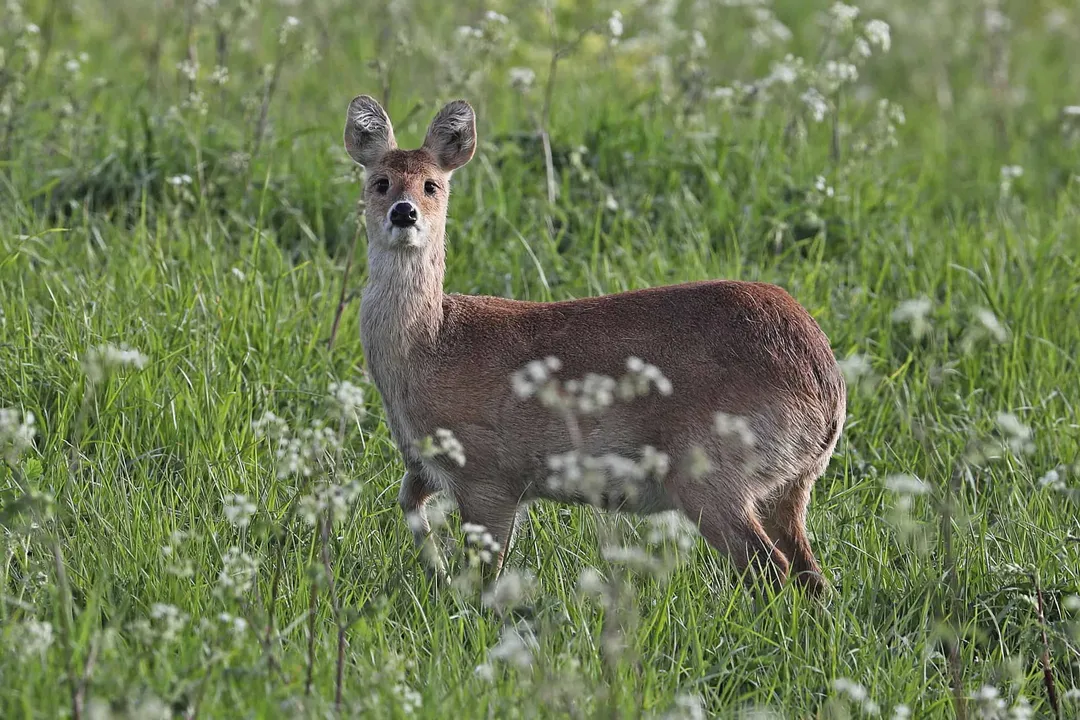
The classification of the Chinese water deer (Hydropotes inermis) places it firmly within the deer family, Cervidae, yet this small ungulate maintains several highly unusual characteristics that set it apart from almost all its relatives across the globe. [2][3][6] Understanding where this animal sits on the tree of life reveals much about its evolutionary path, particularly regarding the defining traits often associated with deer, such as antlers.
# Kingdom placement
Like all animals familiar to us, the Chinese water deer begins its taxonomic journey in the broadest grouping: the Kingdom Animalia. [1][2][7][9] This kingdom groups together multicellular, heterotrophic organisms, meaning they must consume other organisms for energy. [1] Moving down the line, it belongs to the Phylum Chordata, defined by having a notochord at some stage of development, which for a deer means possessing a backbone. [1][2][7][9] In the Class Mammalia, the deer shares characteristics with us: being warm-blooded, possessing fur or hair, and nursing their young with milk. [1][2][7][9]
# Order grouping
The next significant grouping places the Chinese water deer within the Order Artiodactyla, commonly known as the even-toed ungulates. [1][2][7] This order is expansive, including pigs, hippos, camels, and all other true deer species. [7] Artiodactyls are characterized by having an even number of toes, usually two or four, which bear the weight of the animal. [7] Within this order, the Chinese water deer is further grouped into the Suborder Ruminantia, which comprises animals that chew their cud, possessing a complex, multi-chambered stomach perfectly suited for digesting tough, fibrous vegetation. [1]
# Deer Family
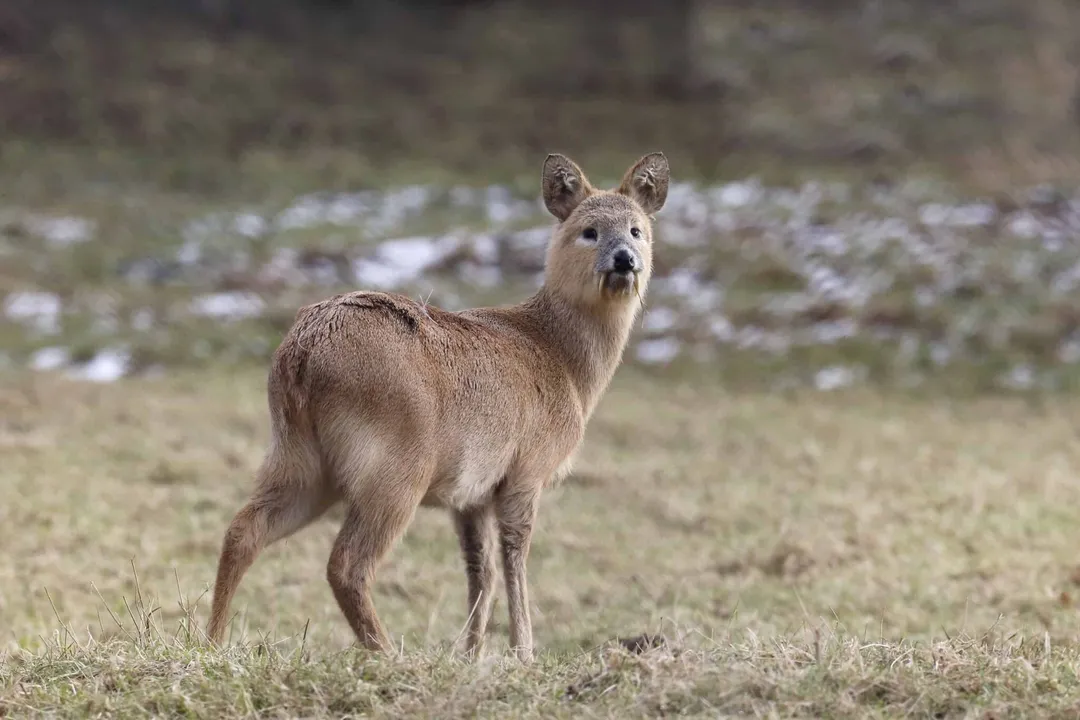
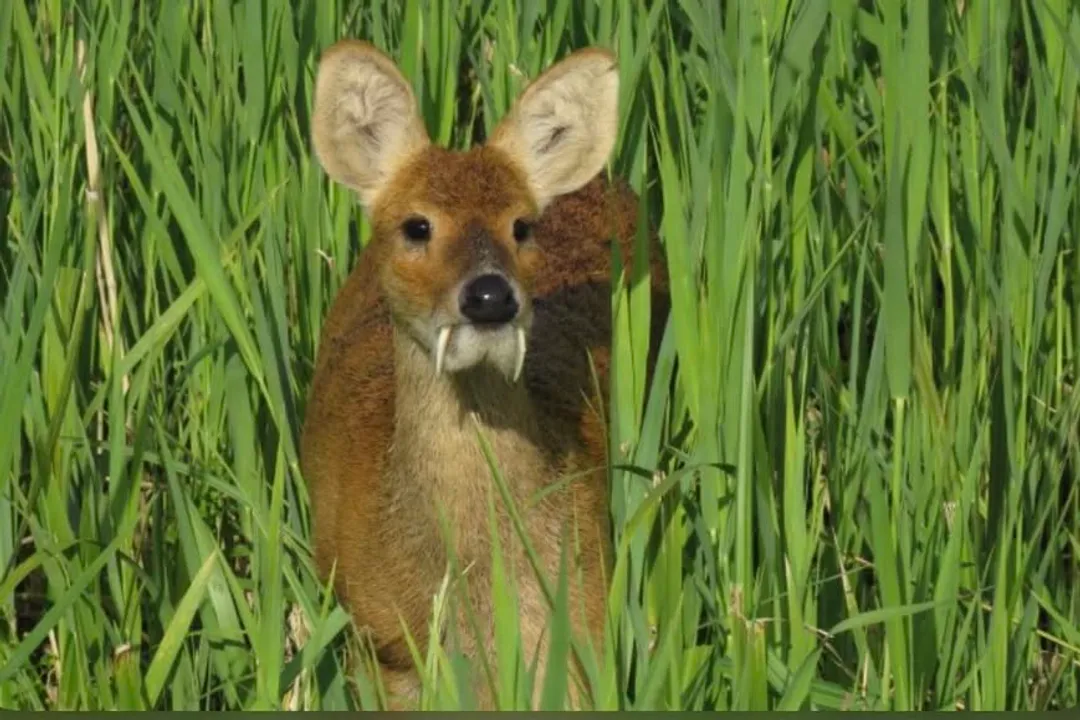
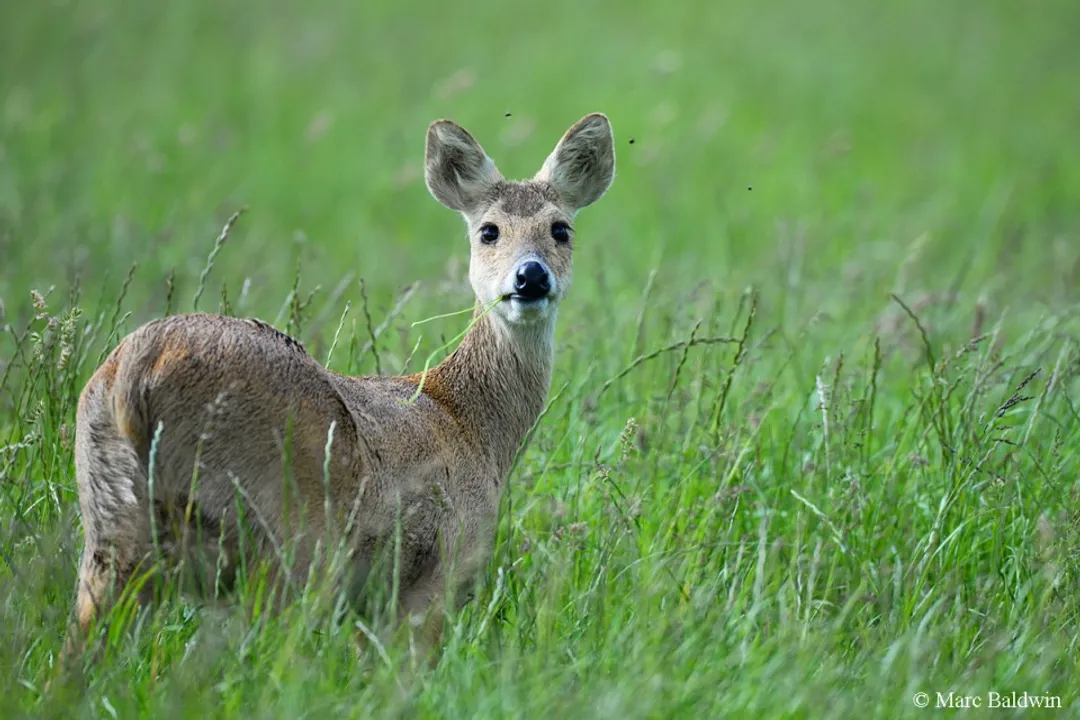
The family level is where the Chinese water deer’s identity becomes more specialized: Cervidae. [1][2][3][6][7][9] This is the true deer family. However, most deer species are defined by the males (and sometimes females) growing and shedding antlers annually. [3] The Chinese water deer is unique because, in place of antlers, the males possess prominent, elongated upper canine teeth that project downward from the mouth, often referred to as tusks. [2][3][6] This specific morphological feature causes some debate or at least keen interest among taxonomists regarding its precise placement within Cervidae. [3]
If one were to visualize the typical cervid structure—large rack of branched antlers—the Chinese water deer looks distinctly different. [6] This absence of antlers is a major classification puzzle piece. While other members of Cervidae, like the Muntjac, also have relatively simple antlers, the complete absence and replacement with tusks in the water deer suggest a more basal or divergent evolutionary history compared to, say, the Cervus genus which includes elk and red deer. [2] The tusked appearance of the male often leads to comparisons with musk deer, which are not true deer but belong to a different family, though the Chinese water deer is indeed classified as a true deer. [3]
# Genus and Species
The specific scientific name assigned to this animal is Hydropotes inermis. [1][2][7]
- Genus: Hydropotes. [1][2][7] This genus contains only the Chinese water deer. [7] The genus name itself hints at its affinity for watery habitats, which is often associated with its native environments in China and Korea. [3]
- Species: inermis. [1][2][7] The species epithet inermis is Latin for "unarmed," which, perhaps surprisingly given the tusks, may refer to the lack of antlers, the feature most commonly associated with armed deer species. [2]
It is noteworthy that H. inermis is the only extant species within its genus, highlighting its singular evolutionary standing. [7] The species is sometimes further broken down into subspecies based on geography, such as the Siberian water deer (H. i. sibiricus) and the Chinese water deer (H. i. inermis), although these distinctions can vary depending on the taxonomic authority consulted. [3]
# Comparative Anatomy in Classification
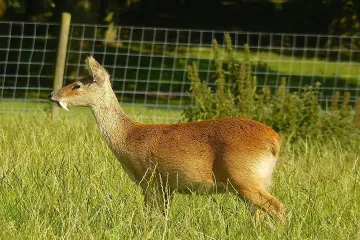
The features that define the Chinese water deer’s classification are best appreciated when contrasted with other deer. For instance, the lack of antlers in males means they do not participate in the typical, spectacular seasonal antler displays seen in species like the Red Deer or Moose. [3] Instead, males use their saber-like upper canines in dominance contests or territorial defense, a trait more reminiscent of species outside the main deer lineages. [2]
Considering the relative sizes of cervids, the Chinese water deer is quite small, standing about 45 to 55 centimeters (18 to 22 inches) at the shoulder and weighing between 9 and 18 kilograms (20 to 40 pounds). [3][9] This diminutive size, coupled with its primitive dental weaponry, suggests it might occupy a niche distinct from the larger, antlered grazers that dominate many other deer populations. [6] When examining the fossil record—though not detailed in these sources—its classification as a primitive lineage within Cervidae seems more strongly supported due to these ancestral traits retained alongside the derived trait of being a true ruminant deer. [1]
If we look at this from a modern conservation perspective, its unique classification means it doesn't fit neatly into management schemes designed around typical antlered deer populations. [4] For example, monitoring the game bag statistics in the UK, where it has established feral populations, requires recognizing that the traditional metrics used for assessing deer health—like antler condition in males—are simply inapplicable here. [4] This lack of standard antler development means that population structure assessment must rely more heavily on sex ratios observed in the field or reproductive success measures, rather than metrics derived from shed antlers. [4]
Here is a summarized view of its formal placement:
| Taxonomic Rank | Classification | Key Characteristic Reflected |
|---|---|---|
| Kingdom | Animalia | Multicellular, consumes food [1] |
| Phylum | Chordata | Possesses a spinal cord [1] |
| Class | Mammalia | Fur, milk production [1] |
| Order | Artiodactyla | Even-toed ungulate [7] |
| Family | Cervidae | True deer lineage [2] |
| Genus | Hydropotes | Monotypic genus [7] |
| Species | H. inermis | Chinese water deer [1] |
The fact that the genus Hydropotes is currently monotypic—containing only this one species—is a powerful indicator of its separation within the deer family structure. [7] Many deer genera contain multiple, closely related species. This singular representation suggests that the evolutionary line leading to the water deer either diverged very early and evolved its unique traits in isolation, or it represents a surviving branch of a lineage that has otherwise gone extinct. [6] This situation contrasts sharply with genera like Cervus, which encompasses several large, successful species globally. [2]
# Evolutionary Insights from Morphology
The defining feature of the male—the tusks—is truly exceptional in the context of Cervidae. In most deer, antlers are bone structures grown anew each year from bony pedicles on the skull. [3] The Chinese water deer’s reliance on large, modified canine teeth for combat means that sexual selection pressures operate differently than in most other deer. [2] The development and display of these tusks are genetically fixed rather than tied to the seasonal hormonal cycles that govern antler regrowth. [3] This suggests a deep divergence in the evolutionary pathway that determined how intraspecies competition—especially between males for mating rights—was resolved. [2]
Another subtle but important aspect of its classification relates to its coat. While many deer species undergo significant seasonal coat color changes or grow thick winter coats, the Chinese water deer retains a relatively consistent appearance, though the winter coat is denser. [9] Its coloration tends toward grayish-brown in winter and reddish-brown in summer. [9] This relative lack of dramatic seasonal pelage change, compared to deer in harsher northern climates, might also reflect its more southerly, temperate native range. [3]
Furthermore, when considering the introduction of the species outside its native range, such as in the United Kingdom, its behavior and ecological classification are influenced by its morphology. Its small size and unusual weaponry mean it interacts with predators and rivals in ways that larger, antlered deer do not. [4] For instance, introduced populations in the UK have adapted well, suggesting that the ecological niche it occupies is flexible enough to accommodate environmental changes, provided vegetation resources are adequate. [4] The fact that the female lacks both antlers and tusks further simplifies her physical profile relative to many other female cervids who might possess small antlers or spike-like ones. [3] This sexual dimorphism, expressed via tusks rather than antlers, is the clearest expression of its unique classification within the deer family structure. [2]
# Habitat and Distribution Context
While classification focuses on genetics and morphology, the animal's common name and historical distribution tie into its identity. Native to China and Korea, the water deer is associated with wetlands, grasslands, and riverine areas. [3] Its preference for dense cover and damp environments explains the "water" in its common name. [3] The subspecies division often noted in literature reflects its historical distribution across these large areas, with some populations isolated enough to develop minor but distinct characteristics over time. [3] Even when introduced to new environments, like parts of Europe, their need for adequate cover and water sources dictates where populations can successfully establish and thrive. [4] This preference aligns with the ecological niche assumed by a small browsing ungulate that relies on stealth and camouflage rather than sheer power or large herd defense, a strategy likely inherited from its early evolutionary branching within Cervidae. [6]
The study of the Chinese water deer's classification is not just an academic exercise in lining up its genus and species; it is an examination of an outlier within one of the world's most recognizable mammalian families. Its retention of tusks and complete loss of antlers serves as a living reminder that the evolution of deer took several interesting and divergent paths. [2][3] Its taxonomic position as Hydropotes inermis tells a story of ancient specialization, setting it apart from the broader, antlered world of Cervidae.
Related Questions
#Citations
Hydropotes inermis (Chinese water deer) - Animal Diversity Web
Chinese water deer | Endangered Species, Nocturnal, Antlers
Chinese water deer - Wildlife Online
Chinese water deer - Game and Wildlife Conservation Trust
Unique Chinese water deer species characteristics - Facebook
Chinese Water Deer - The British Deer Society
Chinese Water Deer - Facts, Habitat, Diet, Life Cycle, Pictures
Chinese water deer (Hydropotes inermis) : r/AIDKE - Reddit
Chinese Water Deer - Hydropotes inermis - A-Z Animals