When was the last Chinese paddlefish seen?
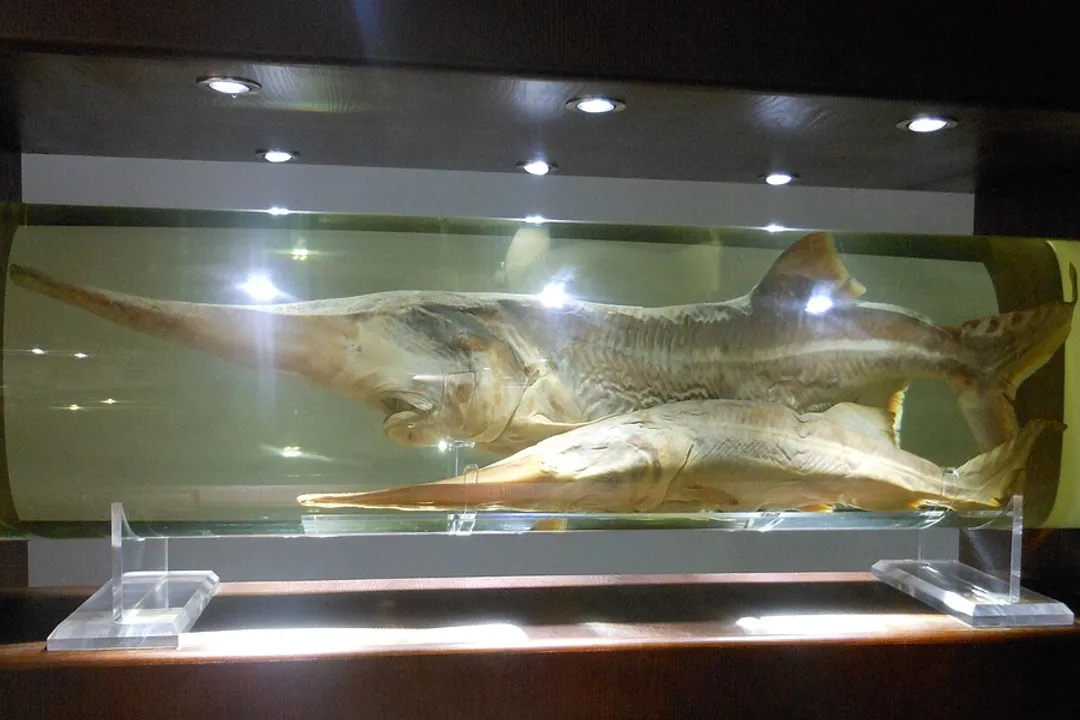
The last known time a living Chinese paddlefish, the Psephurus gladius, was observed remains a point of significant, though tragic, scientific concern, landing somewhere between the early 2000s and the middle of that decade. While precise records vary slightly depending on the monitoring effort cited, the consensus among conservation bodies is that this giant of the Yangtze River system is gone. The official declaration by the International Union for Conservation of Nature (IUCN) in 2020 confirmed what many researchers had long feared: one of the world's largest freshwater fish species, capable of reaching lengths of over 10 feet, had disappeared from the Earth's waterways. [3][5]
# Final Sighting
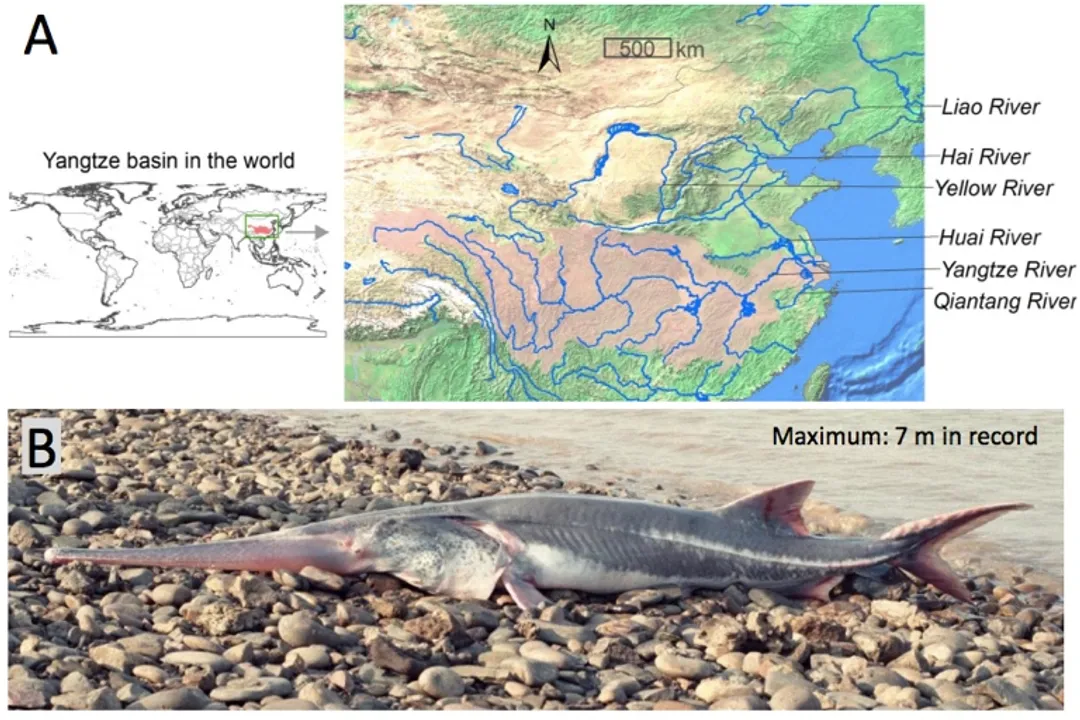
Pinpointing the exact moment of finality is difficult, a recurring problem when tracking species in vast, remote river systems. Some records indicate the last time a specimen was caught and documented occurred around 2007. [2] However, another frequently cited date for the last confirmed visual observation is 2002. [3] This discrepancy—the gap between the last known capture and the last visual confirmation—is a critical detail. It highlights the challenge of assessing extinction in real-time; a species can remain functionally extinct for years, with isolated individuals occasionally caught or glimpsed, before the scientific community can definitively declare its demise. [8] The fact that the last confirmed sighting predates the official extinction announcement by nearly two decades underscores how quickly a decline can become irreversible without immediate intervention. [3]
# Giant Profile
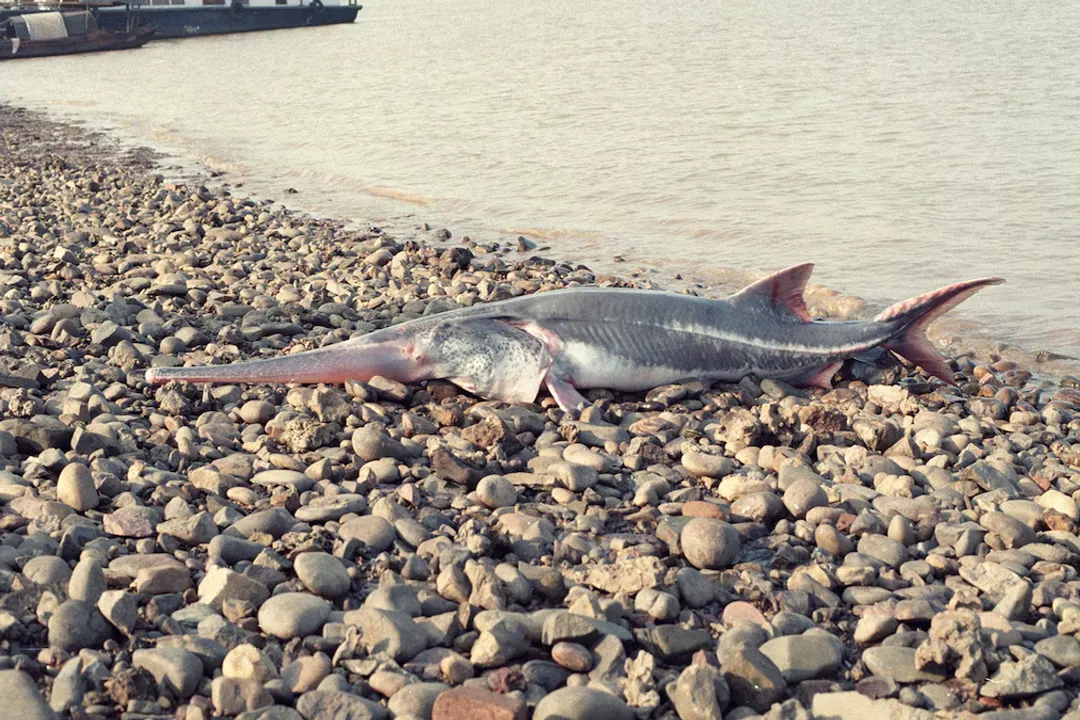
The Chinese paddlefish was an ancient marvel, a relic from the Cretaceous period that survived for millions of years only to be wiped out by modern human pressures. [6][7] Scientifically named Psephurus gladius, its common name derived from its elongated, paddle-like snout, which could account for up to a third of its total body length. [1] These fish were categorized as sturgeon-like, although they belonged to their own unique family. [1] When fully grown, they were imposing, often reaching impressive sizes, with some historical accounts suggesting they could grow up to 3 meters (nearly 10 feet) in length. [1][6] The species was once common throughout the Yangtze River basin in China, spreading into the surrounding tributaries. [1] A testament to its historical presence is the specimen that German zoologist Wilhelm Peters first described in 1862. [7] The sheer scale of this fish meant that its disappearance leaves a massive ecological void, representing a significant loss of biodiversity in the world’s third-longest river. [6]
# River Destroyed
The demise of the Chinese paddlefish was not sudden; it was a slow, grinding attrition caused by synergistic environmental pressures, chiefly habitat fragmentation and rampant overexploitation. [8] The Yangtze River, once a thriving ecosystem supporting this megafish, underwent radical modification throughout the 20th century. [3][8] One of the most significant blows came from large-scale hydroelectric projects. The construction of major dams, such as the Gezhouba Dam, profoundly altered the river's hydrology and, critically, blocked the long migratory routes that the paddlefish needed to reach spawning grounds. [3][8] This disruption of migration is often fatal for species that require extensive travel to reproduce successfully. [8]
Coupled with habitat loss was unsustainable fishing pressure. [3] As the Chinese population expanded and commercial fishing intensified, the paddlefish, being large and relatively slow-growing, became an easy and lucrative target. [1][3] Pollution from industrialization and agricultural runoff further degraded water quality, stressing the already struggling population. [8] The combination—being unable to breed due to dams and being heavily targeted by nets—created a perfect storm for extirpation. [8] The fact that the species could not recover, even after conservation efforts began, speaks volumes about the severity of the cumulative impacts. [2]
# Extinction Confirmed
While the last specimen was documented around 2007, [2] the global scientific community took several more years to reach the necessary level of certainty to formally change the species' status. In 2020, the IUCN officially listed the Chinese paddlefish as Extinct. [3][5] This was a landmark moment, representing the first time a species of fish of this magnitude had been declared extinct in modern history. [3][6] The announcement signaled that, despite intensive surveys and the desperate hope that a few individuals might have survived in remote areas, the species was definitively gone. [3] Interestingly, while the IUCN officially listed it as Extinct, some conservation groups had already moved to classify it as Extinct in the Wild (EW), acknowledging the critical state even before the final declaration. [2][5] This status change serves as a solemn, undeniable marker of failure for conservation efforts in that region. [8]

# Lessons Learned
The story of the Chinese paddlefish offers a stark warning regarding the management of large river ecosystems globally. The rapid destruction of a river system to serve immediate infrastructural or economic needs, without fully accounting for the needs of its apex species, invariably leads to catastrophic loss. [8] Considering the scale of the Yangtze, the near-total collapse of this megafish population demonstrates that even seemingly resilient, ancient species are vulnerable to modern engineering and intensive exploitation. [1][7] It is telling that while the last confirmed visual evidence dates back two decades, the official confirmation took another ten to fifteen years, suggesting that vast stretches of biodiversity might be vanishing silently beneath the water line before we even have the tools or funding to count them out. [3] This timeline gap between the 'last seen' and the 'last confirmed' forces a reconsideration of what "conservation in progress" truly means when dealing with slow-reproducing giants. [1] For those managing other large river systems—like the Amazon, Mekong, or Mississippi—the fate of Psephurus gladius should serve as a critical baseline assessment tool: if the top predators disappear, it means the entire ecological structure supporting them has already fundamentally failed. [8] The only record of this remarkable fish now rests in museum collections and scientific descriptions, a sad replacement for a living, swimming behemoth. [7]
Related Questions
#Citations
Chinese paddlefish - Wikipedia
Sadly, it is not the Year of the Sturgeon in China | WWF
The long goodbye: Study declares ancient Chinese paddlefish extinct
Footage of the last 2 confirmed Chinese Giant Paddlefish ... - Reddit
Sadly, it is not the Year of the Sturgeon in China - WWF-Mediterranean
Chinese paddlefish, one of the world's largest fish, declared extinct
Chinese paddlefish: A Berlin zoologist was the first to describe it
Chinese Paddlefish extinction - Interconnected Disaster Risks
Up the Creek | NewsChina Magazine