What classification is a katydid?
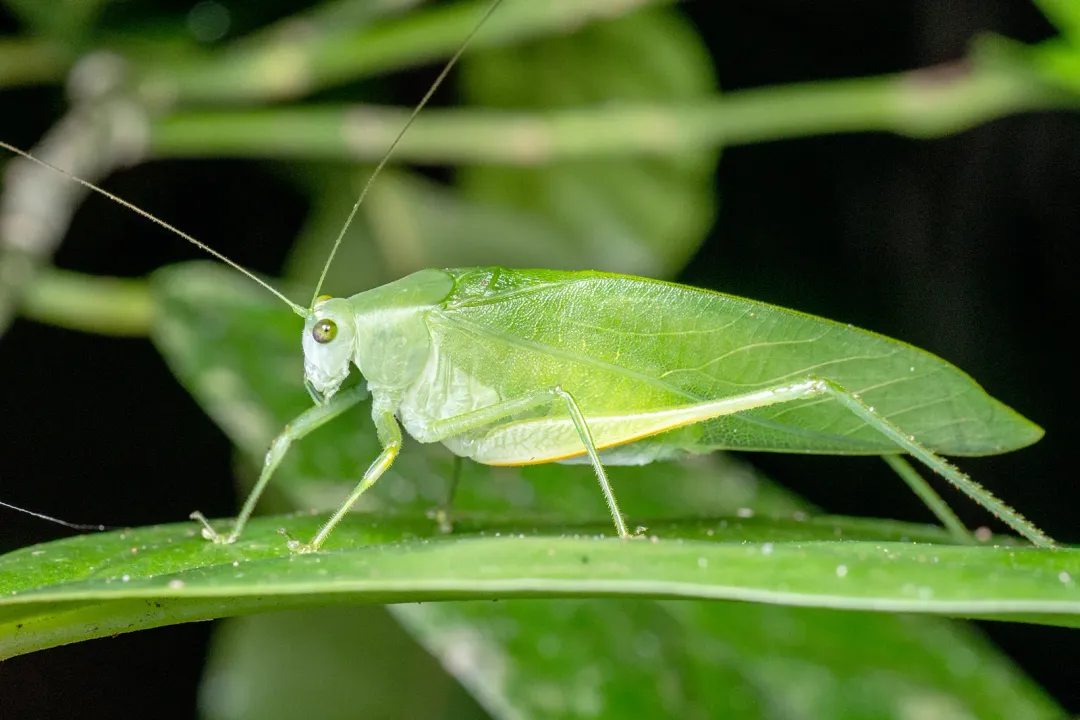
The creature known colloquially as the katydid immediately sparks curiosity, often due to its uncanny resemblance to a leaf or its surprisingly loud nighttime serenade. Fundamentally, a katydid is an insect belonging to the insect order Orthoptera, a group that also contains crickets and grasshoppers. [3][6][8] While they share this large taxonomic grouping, their specific placement within the hierarchy defines them precisely: they belong to the family Tettigoniidae. [1][2][8] This family is scientifically distinct from true grasshoppers (Acrididae) and true crickets (Gryllidae), although common names frequently blur these lines across different regions. [5][9]
# Kingdom Animalia
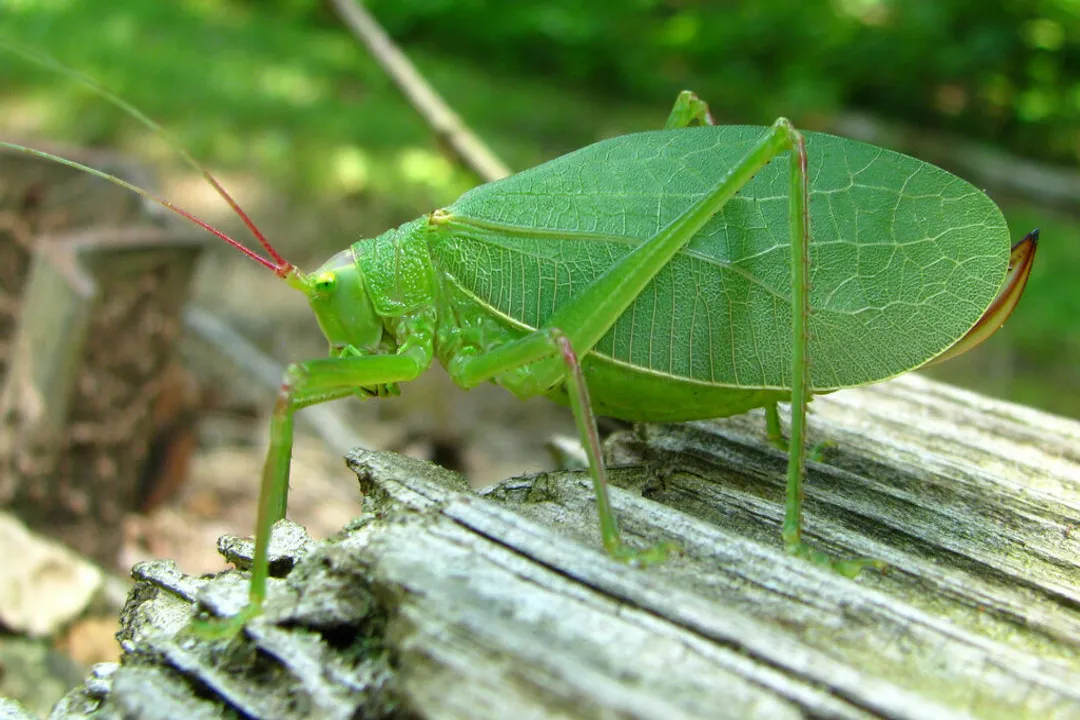
To understand the classification of the katydid, one must trace its lineage backward through the established Linnaean system, confirming its identity as a complex multicellular organism. Like all insects, the katydid falls under the Kingdom Animalia. [1] They possess an exoskeleton, segmented bodies, and jointed appendages, fitting the general definition of an animal. [1]
# Phylum and Class
Moving down the hierarchy, katydids belong to the Phylum Arthropoda, the largest phylum of animals, characterized by their segmented bodies and hard external skeletons. [1] Following this, they are placed in the Class Insecta, as they possess three distinct body parts—head, thorax, and abdomen—and typically three pairs of legs. [1]
# Order Orthoptera
The most defining group at the higher level is the Order Orthoptera, which literally means "straight-winged". [1][8] This order encompasses all the familiar leaping insects, including grasshoppers, crickets, and the katydids themselves. [9] Insects within Orthoptera generally undergo simple or incomplete metamorphosis (nymphs look like miniature adults) and share common morphological traits, though significant adaptations exist between the suborders. [1]
# Family Tettigoniidae
The specific identity of the katydid rests within the Family Tettigoniidae. [1][2] This family is sometimes referred to by the common descriptor long-horned grasshoppers due to their most recognizable feature. [5] This family represents a massive group of insects, demonstrating significant global diversity across various habitats. [2] While the name "katydid" is often used interchangeably with the entire family, the term is perhaps most commonly associated with species in North America and Australia. [1] Interestingly, in many other parts of the world, members of this same family are better known as bush crickets. [1][6] This variation in common nomenclature can sometimes obscure the clear scientific grouping when only relying on local speech patterns. [1][6]
# Antennae Length Distinction
The most reliable way to separate a katydid (Tettigoniidae) from a true grasshopper (Acrididae) is by examining the antennae. [4][5] This physical characteristic is the cornerstone of their distinction within the Orthoptera order. [1]
True grasshoppers possess antennae that are noticeably shorter than their body length. [1][4] In contrast, katydids possess very long antennae, which are often significantly longer than their head and body combined. [1][5] This difference is so fundamental that "long-horned grasshopper" serves as a direct, descriptive alternative name for the family Tettigoniidae. [5]
The extreme length of these sensory organs implies a specialized relationship with the environment. While a true grasshopper might rely more heavily on visual cues and short-range tactile input during quick jumps, the elongated antennae of the katydid suggest a heavy reliance on tactile navigation and chemical reception, perhaps essential for moving through dense vegetation or locating mates in the dark. [1] For anyone trying to identify an unknown specimen in the field, measuring the antennae relative to the body length provides an immediate and accurate identifier. [4]
# Morphology and Sound
Katydids share several general morphological traits with other Orthopterans, such as powerful hind legs adapted for jumping, though they are often less dedicated jumpers than true grasshoppers. [1] Their body shape is often highly modified for camouflage, frequently appearing remarkably like leaves, hence the common term "leaf insect" sometimes applied incorrectly, though the true Leaf Insects belong to the order Phasmatodea. [1]
# Chirping Mechanism
The characteristic sound produced by katydids, which gives rise to the common name "bush cricket," is created through a process called stridulation. [1][9] This sound is generated when the insect rubs a specialized scraper or file located on one wing against a plectrum or vein on the opposing wing. [1] This wing-to-wing friction produces their distinctive calls, which are most audible during the evening and night, especially among males seeking to attract females. [9]
# Ecological Roles
The function of katydids within their ecosystems varies considerably, showing a greater ecological flexibility compared to some of their more strictly herbivorous grasshopper cousins. [9]
# Feeding Habits
While many katydids are primarily herbivorous, feeding on leaves, flowers, and seeds, a significant number within the Tettigoniidae family are actually omnivorous or even predatory. [1][9] Predatory katydids may consume other smaller insects, spiders, or even other katydid nymphs. [9] This predatory aspect means that in agricultural or garden settings, a local population of katydids might actually be providing a service by consuming soft-bodied pests. [9] Conversely, when their diet leans heavily toward cultivated plants, they can be classified as minor pests, capable of causing noticeable damage to foliage. [9]
| Feature | Katydid (Tettigoniidae) | True Grasshopper (Acrididae) |
|---|---|---|
| Antennae Length | Very long, often longer than the body [1][5] | Short, much shorter than the body [1][4] |
| Common Names | Katydid, Bush Cricket, Long-horned Grasshopper [1][5] | Grasshopper [5] |
| Diet Tendency | Herbivorous to Omnivorous/Predatory [9] | Primarily Herbivorous [9] |
# Classification Summary
In summary, the classification of a katydid is firmly established within the biological hierarchy:
- Kingdom: Animalia [1]
- Phylum: Arthropoda [1]
- Class: Insecta [1]
- Order: Orthoptera [1][8]
- Family: Tettigoniidae [1][2]
This placement solidifies their identity not merely as a type of grasshopper, but as a distinct, long-antenned relative within the Orthoptera order, often occupying a more varied niche regarding diet than their short-horned counterparts. [5][9]
Related Questions
#Citations
Tettigoniidae - Wikipedia
Katydids (Family Tettigoniidae) - iNaturalist
Katydid Scientific Name : Unidentified ID Family ... - Facebook
(Family) Katydids - Montana Field Guide - MT.gov
Katydid | Description, Insect, Facts, & Sound - Britannica
Katydids, often known as bush crickets, are insects belonging to the ...
Tettigoniidae (katydids) - Tsammalex -
What is a katydid? - Quora
Katydids - UC IPM