Water Vole Scientific Classification
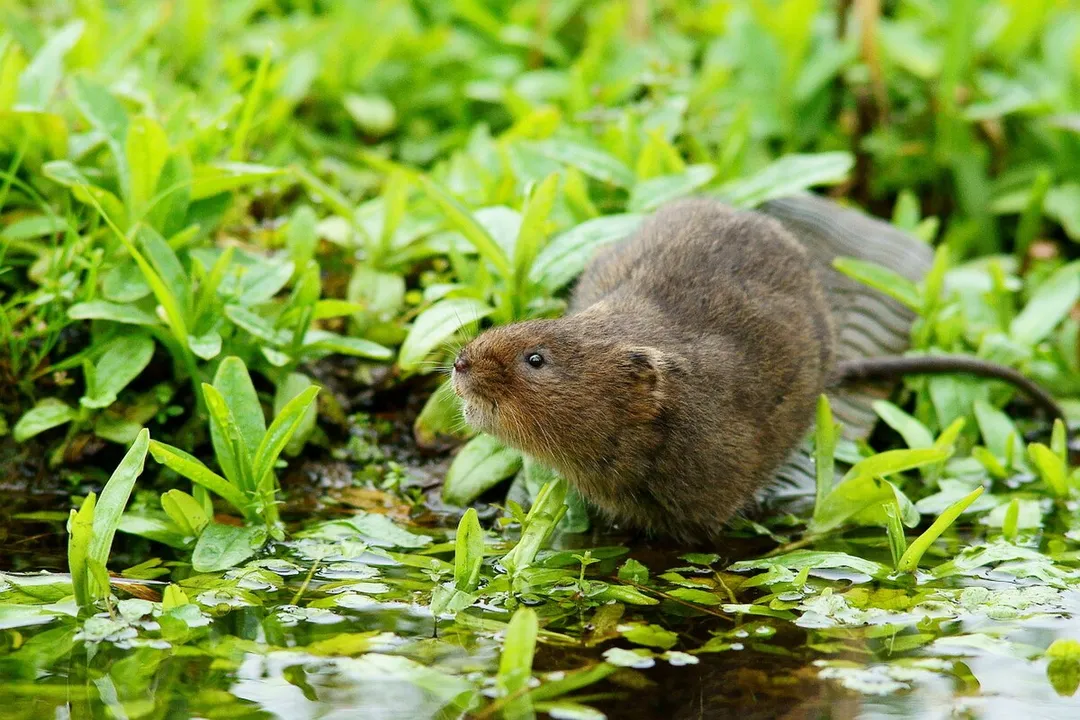
The path to understanding any creature, from its physical characteristics to its behavior, begins with placing it correctly within the vast catalog of life—its scientific classification. For the creature often simply known as the water vole, this taxonomy reveals a surprising geographical split in common names versus formal grouping. Depending on where you encounter a semi-aquatic vole, you might be looking at a member of the genus Arvicola or, in North America, the species Microtus richardsoni, which shares the water-loving habitat and common name descriptor. [2][4][6] To truly know its place, we must examine its Linnaean lineage, tracing it from the broadest categories down to its specific binomial name.
# Kingdom Animalia
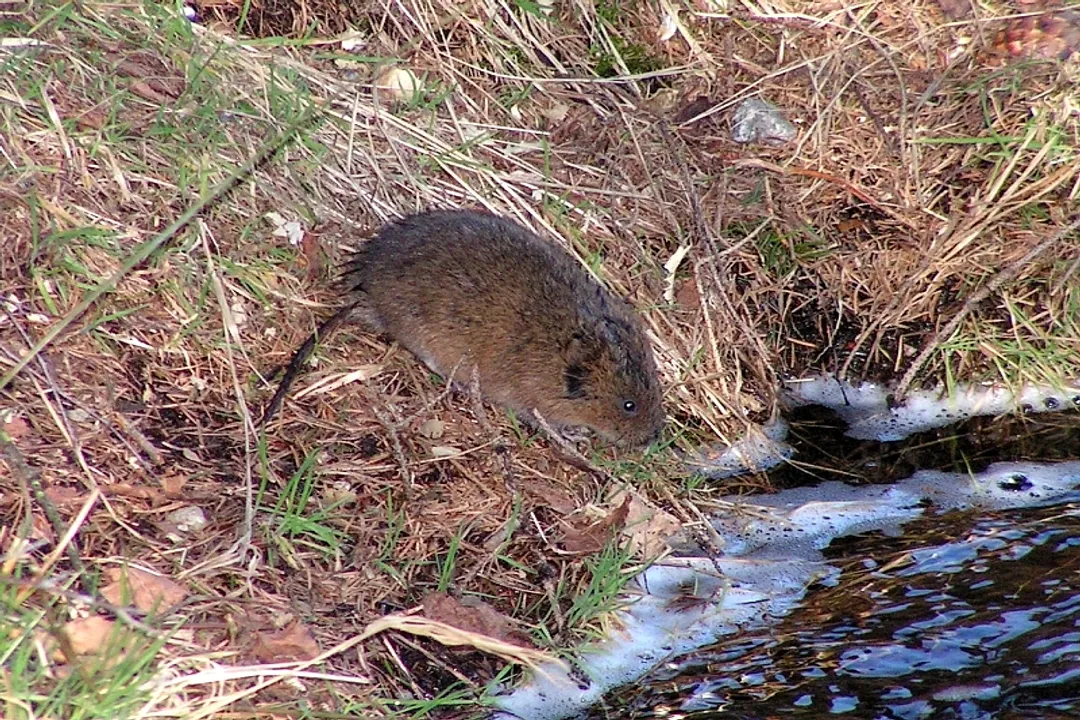
The very foundation of the water vole's scientific designation starts with the classification Kingdom Animalia. [7] This places the water vole firmly among multicellular, eukaryotic organisms that must consume other organisms for energy, lacking the cell walls found in plants and fungi. This broad grouping is fundamental, confirming its status as an animal, capable of movement and possessing specialized sensory organs necessary for its riparian existence. [2]
# Phylum Chordata

Moving down one level places the vole into Phylum Chordata. [7] This phylum is defined by the presence of a notochord at some stage of development, a dorsal nerve cord, pharyngeal slits, and a post-anal tail, though in a small mammal like the water vole, these features are highly modified or only present during embryonic stages. Membership here signifies that the animal possesses a backbone or internal skeletal support structure, linking it to vertebrates. [2]
# Class Mammalia
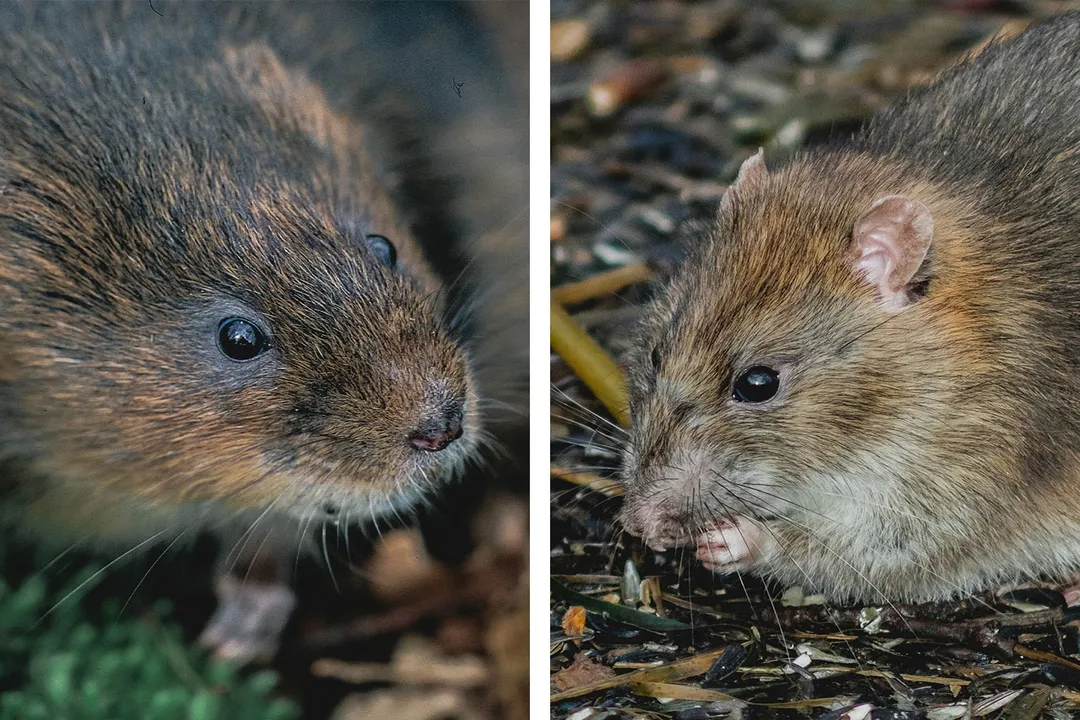
A significant step is the placement within Class Mammalia. [7] This class immediately brings several recognizable traits into focus: the presence of mammary glands to nurse their young, hair or fur covering the body, and, critically for a semi-aquatic lifestyle, the maintenance of a constant, warm-blooded body temperature. [9] Water voles, whether Arvicola or Microtus, are placental mammals, meaning their young develop internally connected to a placenta before birth. [4]
# Order Rodentia
The water vole then enters the massive and highly successful Order Rodentia. [7] This order groups the world's rodents, characterized by a single, continuously growing pair of upper and lower incisor teeth that must be kept worn down by gnawing. [2] This defining dental feature is what unites the water vole with mice, squirrels, and beavers. Within this order, the water vole is recognized as a relatively small representative, typically weighing between 150 to 350 grams, though this can vary by species and location. [9][6]
# Family and Subfamily
The next steps dive deeper into the structure of the rodent family tree, placing the water vole first in Family Cricetidae. [1][7] This family encompasses the voles, lemmings, hamsters, and New World rats and mice. It is a large, diverse grouping of rodents. [1]
Within Cricetidae, the water vole belongs to the Subfamily Arvicolinae. [7] This group is often referred to as the voles and lemmings. Members of Arvicolinae are generally characterized by stockier bodies, shorter tails, and smaller ears and eyes compared to members of the Cricetinae subfamily (the hamsters). [1] This morphological distinction helps solidify its place among its closest relatives.
# The Genus Divide Water Vole Identity
This is where the scientific classification of the "water vole" requires a crucial distinction based on geography, which speaks volumes about evolutionary divergence. The term "water vole" in Europe and Asia most often refers to species within the genus Arvicola. [4] However, the creature known as the Richardson's Water Vole, found in western North America, is classified under the genus Microtus. [3][5][8]
# The Arvicola Genus
The genus Arvicola is home to the Eurasian water vole (Arvicola amphibius) and the Mediterranean water vole (Arvicola sapidus). [1] These are the true voles traditionally associated with the species that inspired characters like The Wind in the Willows. They are generally classified as semi-aquatic, with A. amphibius being the better-known European species. [4] The genus name Arvicola itself is derived from Latin, meaning "field dweller," which might seem slightly contradictory given their aquatic preference, though they inhabit grassy banks and fields surrounding water bodies. [1]
# The Microtus Genus
In sharp contrast, the North American Microtus richardsoni, or Richardson's Water Vole, resides in the genus Microtus. [5][8] This genus is far larger and includes common meadow voles. While M. richardsoni is strongly associated with water, living in wet meadows and along streams, [6][3] its placement in Microtus rather than Arvicola indicates a separate evolutionary trajectory, despite the convergence on a similar niche habitat and common name. [8]
It is fascinating that two distinct genera, Arvicola and Microtus, both house species that have specialized so successfully near water that they share the common descriptor "water vole" across continents. [5] This highlights a key challenge in common naming versus scientific rigor: nomenclature reflects evolutionary history, not just ecological similarity. If a field biologist in Montana encounters a vole near a stream, confirming its genus as Microtus immediately tells them they are dealing with a North American lineage distinct from its Eurasian namesake, Arvicola. [3]
# Species Specification
The final step in the classification is the species level, which uses the binomial nomenclature system introduced by Linnaeus—a combination of the genus and the specific epithet.
# European Species
For the European Water Vole, the species is Arvicola amphibius. [4] Sometimes, historical or older texts might refer to it as Arvicola terrestris, especially when discussing the European water vole complex where some forms are more terrestrial. [1] However, A. amphibius is the accepted name for the larger, truly aquatic species found across Great Britain and much of Europe. [4][9]
# North American Species
The Richardson's Water Vole is formally Microtus richardsoni. [6][8] This species is a medium-sized vole in the genus Microtus. [5] Its distribution is decidedly western, found in mountainous regions from Alaska down into Colorado. [6] The M. richardsoni often has darker, richer fur than some of its Microtus relatives, an adaptation perhaps linked to its consistently damp environment. [3]
This table summarizes the formal species distinction for the creatures commonly referred to as water voles:
| Common Name Reference | Genus | Species | Primary Geographic Range | Key Trait |
|---|---|---|---|---|
| European Water Vole | Arvicola | amphibius | Europe/Eurasia | True semi-aquatic vole [4] |
| Richardson's Water Vole | Microtus | richardsoni | Western North America | Closely related to meadow voles [5] |
# Understanding the Higher Taxonomy Ranks
To truly appreciate the classification, it helps to understand the breadth of each rank above the genus level, focusing on the Arvicola line as the template for the Arvicolinae subfamily members:
- Order: Rodentia (The Gnawers) [7]
- Family: Cricetidae (Includes hamsters, lemmings, voles) [1]
- Subfamily: Arvicolinae (Voles and lemmings) [7]
The placement in Arvicolinae is significant because it groups them with animals that share a certain cranial morphology and reproductive strategy. For instance, the gestation period is relatively short across the subfamily, ensuring rapid population turnover, which is characteristic of small rodents living in environments with fluctuating resources. [2] Analyzing conservation status across these closely related groups can sometimes reveal patterns. For example, while Arvicola amphibius faces severe declines in some areas of the UK, the status of Microtus richardsoni may be less threatened across its broader North American range, despite both sharing the 'water vole' connection. [10][8] A deeper understanding of their classification allows conservation bodies to compare species susceptibility based on genetic proximity rather than just habitat type alone.
# The Importance of Binomial Nomenclature
The system used—Genus followed by species—is vital for clarity, especially when common names overlap geographically. The binomial Arvicola amphibius refers only to the European species, preventing confusion with Microtus richardsoni. [4][6] If a researcher in Poland is discussing population dynamics, their reference to A. amphibius is unambiguous globally, whereas asking about "water voles" in a general forum might elicit data pertaining to two genetically distinct groups. [1] This consistency, established centuries ago, remains the bedrock of biological communication, ensuring that every description, whether about diet, morphology, or habitat preference, is attached to the correct lineage. [7]
# Taxonomy and Habitat Connection
While classification is based on genetics and morphology, it naturally reflects ecological adaptation. The Arvicolinae subfamily, which includes both water vole genera, contains many species adapted to grassland or cold environments. [1][7] The divergence into Arvicola and Microtus represents two separate evolutionary successes in adapting to similar, moist, riparian habitats. For Arvicola, this involved developing a body shape slightly more specialized for swimming, featuring short, thick legs and a less visible tail when swimming. [4][9] For Microtus richardsoni, the adaptation appears to be specialized habitat occupancy within its genus, leading to its distinctive common name. [6] This illustrates that while classification is based on inherent traits (like skull structure or dental patterns), those traits reflect long-term successful interactions with specific environments.
Related Questions
#Citations
Arvicola - Wikipedia
Water Vole - Arvicola amphibius - A-Z Animals
[PDF] Water Vole (Microtus richardsoni) Taxonomy
Microtus richardsoni (water vole) - Animal Diversity Web
North American Water Vole - Montana Field Guide
Arvicola amphibius • Eurasian Water Vole
Microtus richardsoni | NatureServe Explorer
Water vole - WWT
Water vole | The Wildlife Trusts