What specialized digestive trait places *H. inermis* in the Suborder Ruminantia?
Answer
Chewing cud using a complex, multi-chambered stomach
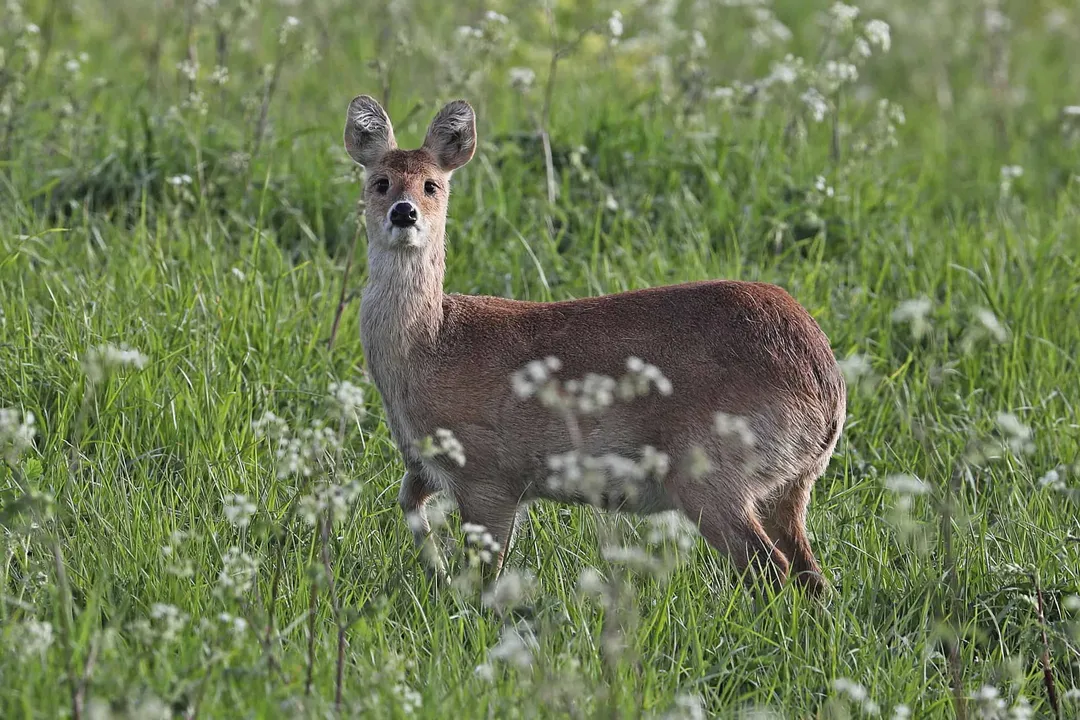
Placement within the Suborder Ruminantia signifies that the Chinese water deer possesses a complex, multi-chambered stomach structure specifically adapted for ruminating, which involves chewing cud. This process allows the animal to efficiently break down and derive maximum nutrition from tough, fibrous vegetation, typical of their herbivorous diet. This physiological feature confirms its classification among true deer, as ruminants share this specialized digestive adaptation for processing plant matter.
Related Questions
What unique feature replaces antlers in male Chinese water deer (*Hydropotes inermis*)?Which specific family level grouping defines the Chinese water deer lineage?What does the Latin species epithet *inermis* signify regarding *H. inermis*?What primary characteristic defines the Order Artiodactyla for this ungulate?Why is the monotypic nature of the genus *Hydropotes* significant in classification?What specialized digestive trait places *H. inermis* in the Suborder Ruminantia?Why are antler condition metrics inapplicable for assessing feral *H. inermis* populations in the UK?Which non-deer species is the tusked Chinese water deer often compared to morphologically?What does the diminutive size of *H. inermis* suggest about its ecological niche?How does the seasonal pelage change of *H. inermis* contrast with some other deer species?