How many Chinese water deer are left?
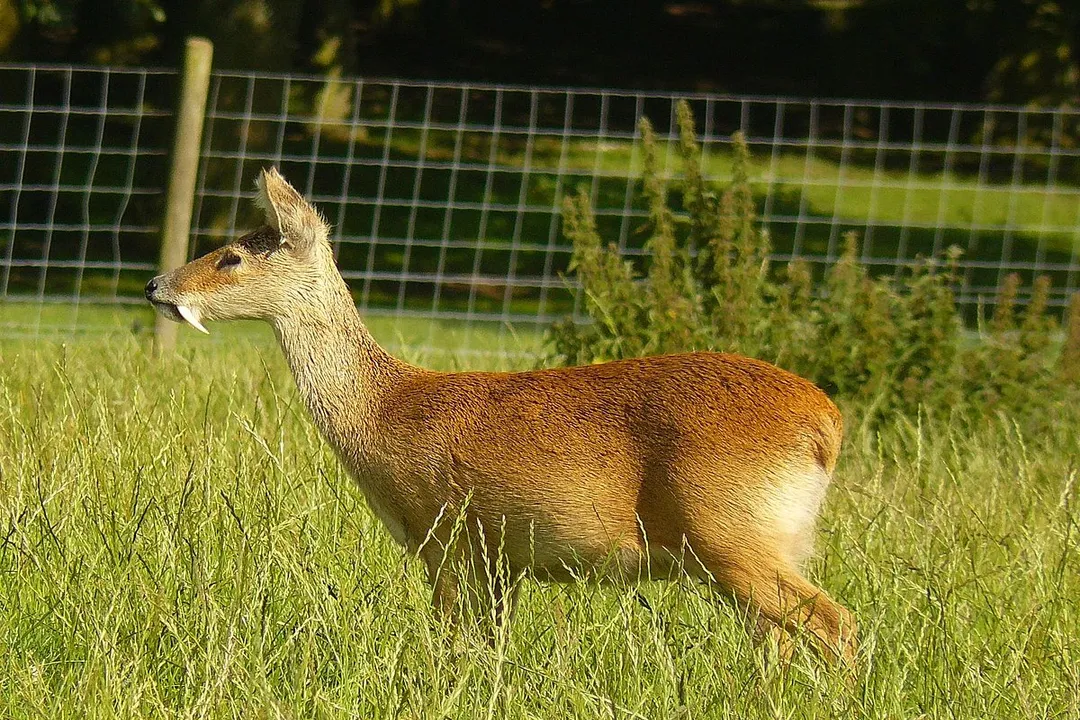
The question of how many Chinese water deer remain in the world is fascinating, largely because the answer depends entirely on where you are looking. These unique, tusked deer present a stark contrast between their ancestral home and their adopted territories across the globe. [1][9] Unlike many larger, more charismatic megafauna, a precise, definitive global count is difficult to pin down, primarily due to the conservation status variations between their native range and established introduced populations. [9]
# Native Range
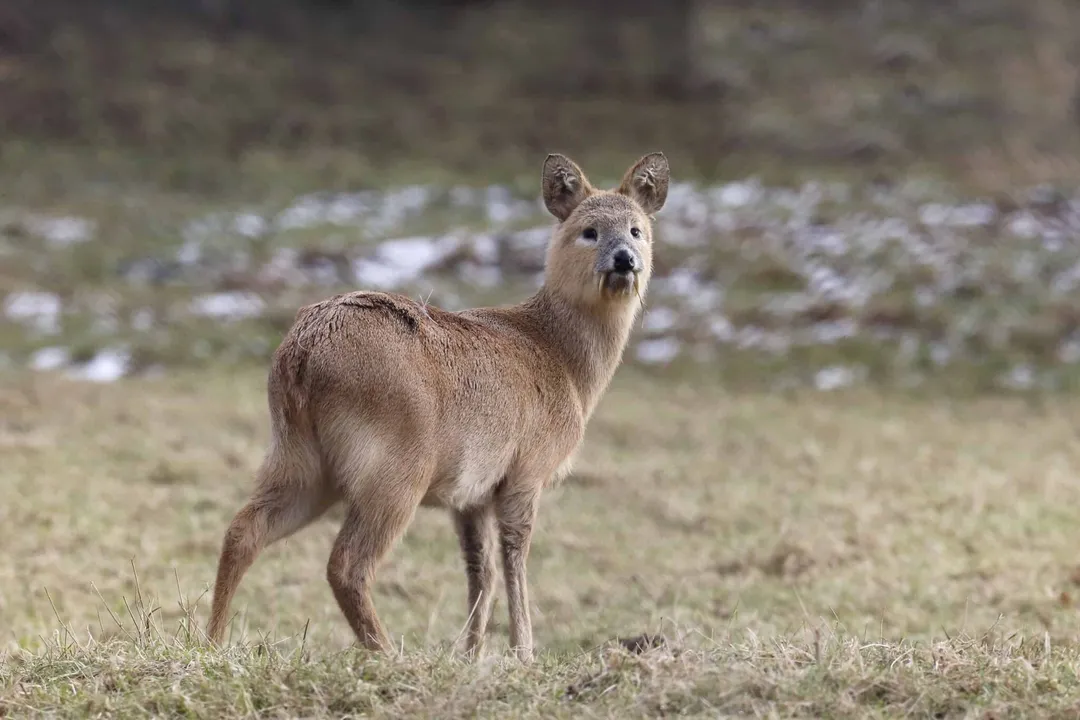
The Chinese water deer (Hydropotes inermis) originates in the lowlands of China and Korea. [1][2] In its native Asian habitat, the species faces significant conservation challenges, and the population trend is generally considered to be one of decline. [9] Estimating the true abundance within China and Korea proves remarkably challenging for researchers. [9] This difficulty stems from various factors, including the deer’s secretive nature and the vastness and accessibility challenges within their historical range. [9]
While specific, recent census figures for the native population are often elusive or fragmented, the general assessment from conservation bodies suggests that the species is vulnerable or has suffered local extirpations across parts of its historical distribution. [9] The threats in their native environment often relate to habitat loss and fragmentation due to intense human activity and agricultural expansion in those densely populated regions. [1] A critical distinction must be made here: when people ask "how many are left," they often implicitly mean "how many are left in the wild," which immediately splits the answer into the threatened native group and the successful introduced group. [9]
# Established Range
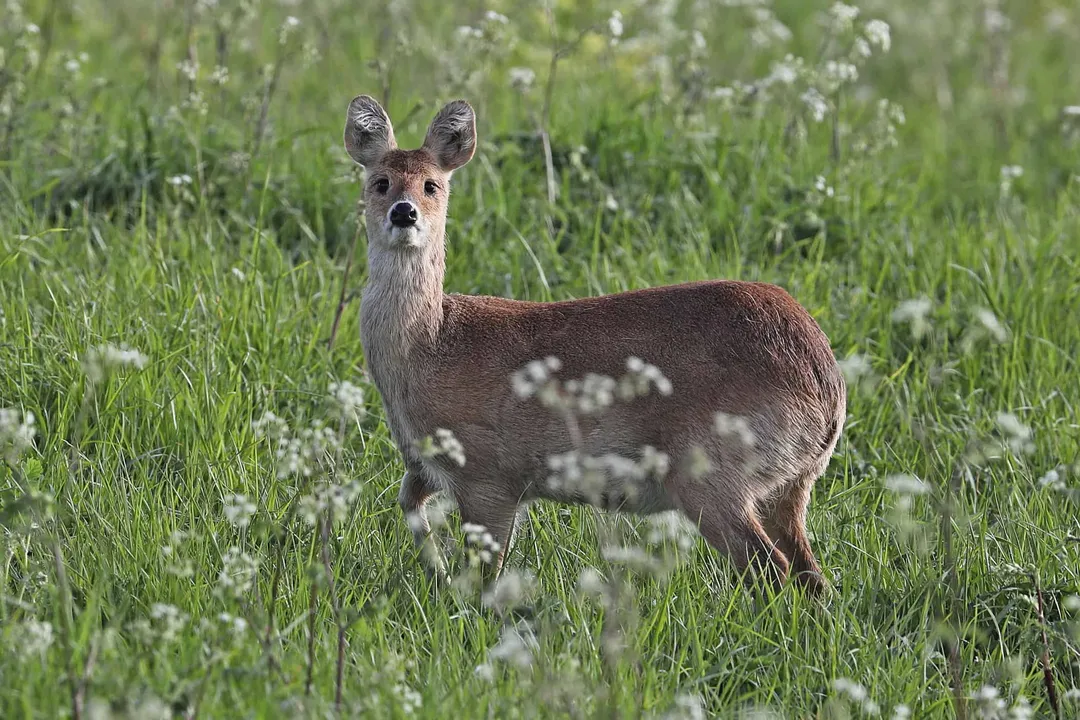
The story of the Chinese water deer outside of Asia, particularly in the United Kingdom, is one of remarkable success following introduction. [2][7] These animals were first introduced to Britain around the turn of the 20th century, with early releases occurring in East Anglia. [7] Since then, they have become firmly established, spreading across parts of the UK where suitable habitats exist. [2][7]
The dynamics in the introduced range are entirely different from the native one. In the UK, the population is considered abundant and, in some areas, quite numerous, thriving in environments like wetlands, grasslands, and agricultural land. [2] This successful colonization highlights the species' adaptability when facing fewer natural predators and greater management oversight compared to their homeland. [1]
# Population Metrics
Pinpointing an exact total number is complicated because different regions rely on different counting methodologies. In their native Asia, large-scale systematic censuses are scarce. [9] In contrast, regions like the UK rely heavily on data derived from management practices, specifically game management and agricultural surveys. [3]
For instance, the Game & Wildlife Conservation Trust (GWCT) National Gamebag Census tracks the number of deer bagged (harvested) annually. [3] This provides an essential, though indirect, measure of population health and density in managed areas. While the harvest figures do not represent the total population—as many deer survive culling efforts or live outside managed hunting estates—they offer a time-series data set that indicates population trends. [3] If thousands of CWD are being culled annually across the UK, it implies a local population base numbering in the tens of thousands, significantly larger than the presumed state of the native population. [3]
It is helpful to compare this reliance on harvest data versus a true census. A census aims to count every individual, which is almost impossible for a shy, ground-dwelling species spread across varied terrain. [9] Harvest data, on the other hand, provides an activity index—it tells managers how many deer are being removed to maintain population targets or manage agricultural impact. [3] This reliance on management data for the most robust statistics available means that the most reliably documented CWD populations are those in areas where they are actively managed for sport or control. [3]
If we consider the overall global situation, the number of Chinese water deer in their native Asian range is likely decreasing and poorly quantified, potentially placing them in a precarious position globally, while the introduced populations, particularly in the UK, are stable or increasing, providing thousands of traceable individuals annually. [9][3] This creates a unique conservation irony: a species is simultaneously struggling for survival in its origin country and flourishing as a widespread non-native resident elsewhere.
This situation suggests a fascinating divergence in conservation focus. While native range efforts would concentrate on habitat restoration and protection against poaching or localized persecution, the management in places like the UK focuses more on deer management plans to mitigate impacts on forestry or agriculture, rather than outright species preservation. [7] Thinking about the ecological footprint, a thriving population, even one documented primarily through removal statistics, indicates that the deer have found niches that support high densities, sometimes leading to localized conflicts with agricultural interests. [1]
# Population Data Comparisons
To better illustrate the complexity, one can look at recorded sightings or harvests across different years, realizing that these are only snapshots. For example, records might show a specific number of deer harvested one season, which is then compared to the previous year's harvest and linked to environmental conditions or management intensity. [3] A sharp spike in the bag might indicate an overpopulation in a specific district, or it might simply mean that more hunters were active or that conditions allowed for easier tracking. [3]
Conversely, the scientific literature dealing with genetics or disease monitoring might occasionally capture a more comprehensive (though still localized) population snapshot during specific field studies, often focusing on specific counties or nature reserves rather than the entire country. [5] These dedicated research efforts, though infrequent, provide high-quality, targeted data that contrasts with the broad, annual data collected via game surveys. [5]
| Population Status Area | Primary Data Source Type | General Trend Indication | Counting Difficulty |
|---|---|---|---|
| China/Korea (Native) | Anecdotal, localized surveys | Declining, locally extinct | High [9] |
| United Kingdom (Introduced) | National Gamebag Census (Harvest) | Abundant, stable/increasing | Moderate (via management data) [3] |
| Other Introduced Areas (e.g., Netherlands, France) | Ad-hoc reports, sightings | Established, less monitored | Variable |
When analyzing the data available, it becomes clear that the total number remaining is an aggregate of these disparate datasets, heavily weighted by the known quantities in the introduced zones. [3][7] If one were to sum up the reported harvests from the UK's gamebags over several decades, that sum alone would represent a significant number of individuals, far exceeding what might be estimated for the entirety of their native range based on conservation concern. [3]
The lack of a unified international counting effort means that any single figure quoted for the entire species risks being wildly inaccurate, heavily favoring the better-documented introduced populations while minimizing the true count of the native, struggling group. [9] This means that while we can confirm the species is not globally extinct—thanks to its success abroad—its status as a native species remains a serious concern. [9]
# Ecological Niche and Survival
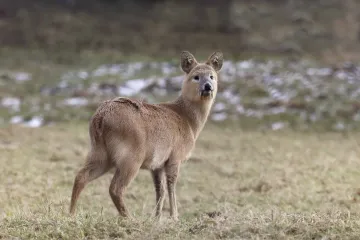
The Chinese water deer’s success outside its native range is linked to its specific ecological requirements. They favor cover near water sources, such as marshy areas, reedbeds, and agricultural land with hedgerows. [2] Their physical characteristics, particularly their small size and reliance on camouflage and stillness rather than speed or group defense, allow them to persist even in human-altered landscapes, provided there is adequate ground cover. [1]
In areas like the UK, their diet, primarily grass and agricultural crops, brings them into contact with farmers. [1] This interaction is the main driver for the detailed tracking provided by organizations like the GWCT—the management of conflict ensures a level of observation that a purely protected species might not receive. [3] Where they are an established, managed game species, there is an incentive for accurate local reporting of numbers, even if only the harvested portion is recorded. [3] This administrative necessity provides a window into local population density that simply doesn't exist for their wild cousins in the remote corners of the Yangtze basin. [9]
It is interesting to consider that the very characteristics that make them vulnerable in their native, crowded habitats—being relatively small and solitary, relying on dense undergrowth—become survival assets in the often mosaic-like agricultural landscapes of Northern Europe. [1] They are specialists that have become generalists by adapting their habitat needs to available cover in new areas. [2]
Ultimately, while a single definitive figure—say, "There are X Chinese water deer left globally"—is unavailable and likely unachievable given the current data landscape, we can summarize the situation based on available evidence: The species is globally present and numerically strong in certain introduced areas, evidenced by thousands being managed and culled annually in places like the UK. [3] However, its status at home remains cause for concern, characterized by fragmentation and population decline, with reliable counts being the exception rather than the rule. [9] The current global count is therefore a function of administrative bookkeeping in one hemisphere overlaid upon a conservation emergency in the other. [9][3]
Related Questions
#Citations
Water deer - Wikipedia
Chinese water deer - People's Trust for Endangered Species
Chinese water deer - Game and Wildlife Conservation Trust
Chinese Water Deer - Hydropotes inermis - A-Z Animals
Distribution update of water deer (Hydropotes inermis) and ... - Nature
Chinese Water Deer - INNS Week 2022 - Mammal Society
Chinese Water Deer - The British Deer Society
Chinese Water Deer | Online Record Book Preview
Water Deer Population & Abundance - Native Range - Wildlife Online