White-tail deer Scientific Classification
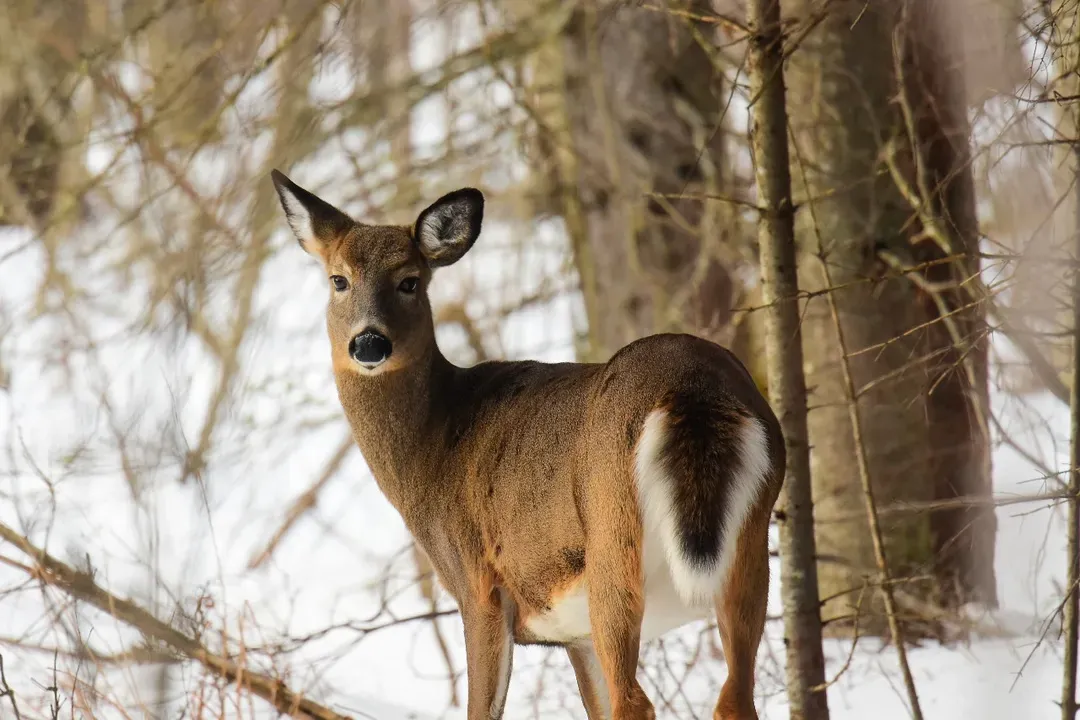
The white-tailed deer, known universally across North America for its conspicuous tail flash when alarmed, holds a very specific and well-established position within the tree of life. Understanding its scientific classification is more than just memorizing Latin names; it reveals deep evolutionary relationships and shared biological traits that connect this common ruminant to everything from ancient hoofed mammals to modern forest dwellers. [1][6] This detailed taxonomy helps researchers track populations, understand ecological niches, and study its evolutionary success across diverse environments. [8]
# Kingdom Animalia
At the broadest level, the white-tail falls squarely into the Kingdom Animalia. [1][3][7] This classification groups it with all multicellular, heterotrophic organisms—creatures that must consume other organisms for energy, unlike plants or fungi. [7] This designation immediately separates it from the world of flora and fungi, placing it within the vast group of mobile life that characterizes the animal kingdom. [3]
# Chordate Phylum
Moving down, the next major grouping is the Phylum Chordata. [1][3][7] Members of this phylum share several key developmental features at some stage of their lives, most notably a notochord, a dorsal hollow nerve cord, pharyngeal slits, and a post-anal tail. [7] For the deer, these traits are evident during embryonic development, even if they become modified or reduced in the adult form. The presence of a backbone, or vertebral column, solidifies its placement within the subphylum Vertebrata, a group celebrated for its complex skeletal support systems. [1]
# Mammalian Class
The Class Mammalia is where the deer begins to share traits familiar to human observers. [1][3][7] Mammals are characterized by several non-negotiable features: the presence of mammary glands to nurse their young, hair or fur covering the body, three middle ear bones, and a neocortex region in the brain. [7] For the white-tail, the dense coat provides insulation against harsh winters, a critical feature given its vast northern range. [2][10] Furthermore, parental care is an essential component of their life cycle, relying on milk production for fawn survival. [4]
# Order Ungulates
Within Mammalia, the white-tailed deer belongs to the Order Artiodactyla, often referred to as the even-toed ungulates. [1][5][7] This grouping is significant because it defines their fundamental foot structure. Artiodactyls, which include pigs, cattle, and camels, walk on an even number of toes, typically two or four. [7] In the case of the white-tail, they are digitigrade, meaning they walk primarily on the tips of their third and fourth toes—what we perceive as the hoof. [5] This specialized foot structure, along with their complex, four-chambered stomachs designed for efficient digestion of tough plant matter, links them closely to other ruminants like moose and elk. [5]
The adaptation for a strictly herbivorous, ruminant diet is a powerful evolutionary signature of this order. When considering regional management challenges, such as determining appropriate carrying capacity in a specific forest parcel, knowing the deer is a highly specialized browser (unlike a generalist grazer) is key to predictive modeling of vegetation impact. [10] This precise classification reflects an animal whose entire physiology is geared toward consuming large volumes of fibrous forage efficiently. [5]
# Family Cervidae
The next step down places the white-tail into the Family Cervidae, the true deer family. [1][3][5][7] This is the group that shares the defining characteristic of deciduous antlers in males, known as bucks. [6][10] Unlike the permanent horns of bovids (cattle, sheep), cervid antlers are shed and regrown annually, a metabolically expensive process tied closely to the male's health and testosterone levels. [6] This cyclical process contrasts sharply with the permanent keratin sheaths found on the horns of other ungulates and dictates much of the annual social structure of deer populations. [10]
The classification within Cervidae shows a clear evolutionary split between the Old World deer and the New World deer, and Odocoileus virginianus firmly belongs to the latter group. [7]
# Genus Odocoileus
The genus Odocoileus contains only a handful of species, most notably the white-tailed deer and the mule deer (O. hemionus). [1][5] Sharing a genus signifies a very recent common ancestor compared to members of other deer genera. [7] This close relationship is observable in several key aspects:
- Antler Structure: While mule deer antlers branch dichotomously (forking), white-tail antlers typically branch upward from a main beam, though this is a generalization. [1]
- Sensory Acuity: Both species possess highly developed senses of hearing and smell, often relying on them before sight when detecting threats. [6]
- Tail Flagging: The behavior of raising the white underside of the tail as an alarm signal is a shared, defining trait, although the way the tail is carried differs between the two genera. [1][9]
It is interesting to note that while the white-tail is dominant in the East, the mule deer typically occupies the western terrain. [1][9] This biogeographical split often leads to differences in local management strategies, even though the animals share a genus. For instance, in areas where their ranges overlap, such as the western edge of the whitetail's distribution, hybridization can sometimes occur, showcasing their close genetic ties. [5]
# Species O. virginianus
The full scientific binomial, Odocoileus virginianus, designates the specific species. [1][3] The specific epithet, virginianus, is a direct nod to the first specimens collected and described from the region of Virginia. [1] This species is one of the most abundant and widely distributed large mammals in the Americas. [4][8]
The species O. virginianus is broadly categorized as a medium-sized deer. [4] Adults typically exhibit coloration that ranges from reddish-brown in the summer to grayish-brown in the winter. [2][4] The defining characteristic, mentioned earlier, is the bright white underside of the tail, which is usually prominently displayed during flight. [2][4]
The incredible geographic success of the white-tailed deer, spanning from southern Canada down through Central and northern South America, is a testament to its adaptability, which is often reflected in the recognized subspecies. [8]
# Taxonomic Structure Summary
To visualize the established hierarchy, one can map out the official classification:
| Rank | Taxon |
|---|---|
| Kingdom | Animalia |
| Phylum | Chordata |
| Class | Mammalia |
| Order | Artiodactyla |
| Family | Cervidae |
| Genus | Odocoileus |
| Species | Odocoileus virginianus |
# Subspecies Variation
While the species designation is O. virginianus, the sheer environmental breadth it covers necessitates the recognition of numerous subspecies. [8] These represent localized populations that have evolved distinct characteristics in response to their specific ecological pressures, such as climate, available forage, and predation levels. [8]
For example, the classification might include the Northern White-tailed Deer (O. v. borealis), common in the northern forests and generally larger, contrasting with smaller, more tropical subspecies found further south. [1][5] The recognition of these subspecies, while sometimes debated in taxonomy, is incredibly valuable for conservation efforts and regional wildlife management because it acknowledges locally adapted gene pools. [8] A population adapted to the dense mixed woods of Pennsylvania, for instance, may have slightly different body proportions or coat density than a relative living in the swamps of Florida. [10][4]
# Enduring Classification
The scientific classification of the white-tailed deer appears quite stable across major taxonomic authorities, such as those listing it on conservation registries. [8] It is designated as a species of Least Concern globally by NatureServe, reflecting its immense population size and broad distribution, which is a remarkable status for a large ungulate in the modern era. [8]
The consistency in placing O. virginianus within the established taxonomy—Animalia, Chordata, Mammalia, Artiodactyla, Cervidae—demonstrates a strong consensus among biologists regarding its evolutionary history and anatomical relationships. [1][7] This certainty in its scientific placement allows ecologists and hunters alike to apply broad biological principles derived from its relatives while focusing on the specific management needs dictated by its unique behavioral traits, like its remarkable fecundity and ability to thrive near human habitation. [4][2] This deep-rooted, verified classification provides the foundational knowledge necessary for effective stewardship of this iconic North American mammal. [9]
Related Questions
#Citations
White-tailed deer - Wikipedia
White-tailed Deer | Squam Lakes Natural Science Center
White-tailed Deer - Explore the Taxonomic Tree | FWS.gov
White-tailed Deer | NC Wildlife
Odocoileus virginianus - USDA Forest Service
White-tailed Deer - Odocoileus virginianus - New Hampshire PBS
Odocoileus virginianus (white-tailed deer) - Animal Diversity Web
Odocoileus virginianus - White-tailed Deer - NatureServe Explorer
Odocoileus virginianus (White-tailed Deer) - Idaho Fish and Game
White-tailed deer - Commonwealth of Pennsylvania