Are the elongated, visible canine teeth of the water deer buck bone structures grown annually?
Answer
No, they are modified upper canine teeth.
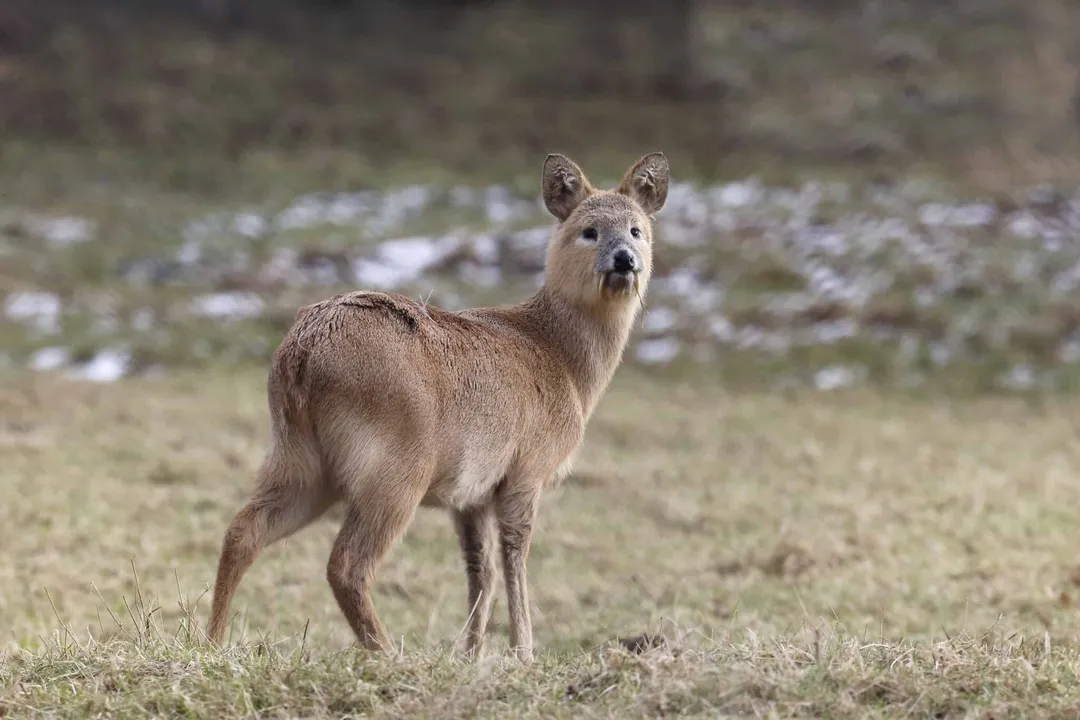
The distinctive tusks found in the male Chinese water deer are not antlers, which are structures composed of bone that are grown and shed on an annual cycle. Instead, these impressive, downward-pointing tusks are derived from the modification of the upper canine teeth. They are permanent structures, unlike antlers, and can achieve considerable lengths, sometimes exceeding 5 centimeters (2 inches) in mature males. This dental modification serves as a fixed, direct weapon, contrasting sharply with the seasonal, regrowth-intensive nature of traditional cervid antlers, illustrating a divergent evolutionary path favoring continuous weaponry over temporary displays.
Related Questions
What distinguishes male Chinese water deer from other Cervidae regarding head ornamentation?Are the elongated, visible canine teeth of the water deer buck bone structures grown annually?How do the functions of the water deer's tusks compare to the function of typical deer antlers?What is the typical height range at the shoulder for Chinese water deer bucks?When do the distinct white spots on young Chinese water deer fawns typically fade?What type of environment does the Chinese water deer prefer over dense forest or open grassland?In which specific region of the United Kingdom have feral Chinese water deer populations established themselves?What has the distinctive alarm call emitted by an alarmed water deer been described as?What is a common range for the number of young born in a single litter to a female water deer?What scientific classification identifies the Chinese water deer in the Cervidae family?What primary food sources constitute the herbivorous diet of the water deer?