Water Buffalo Scientific Classification
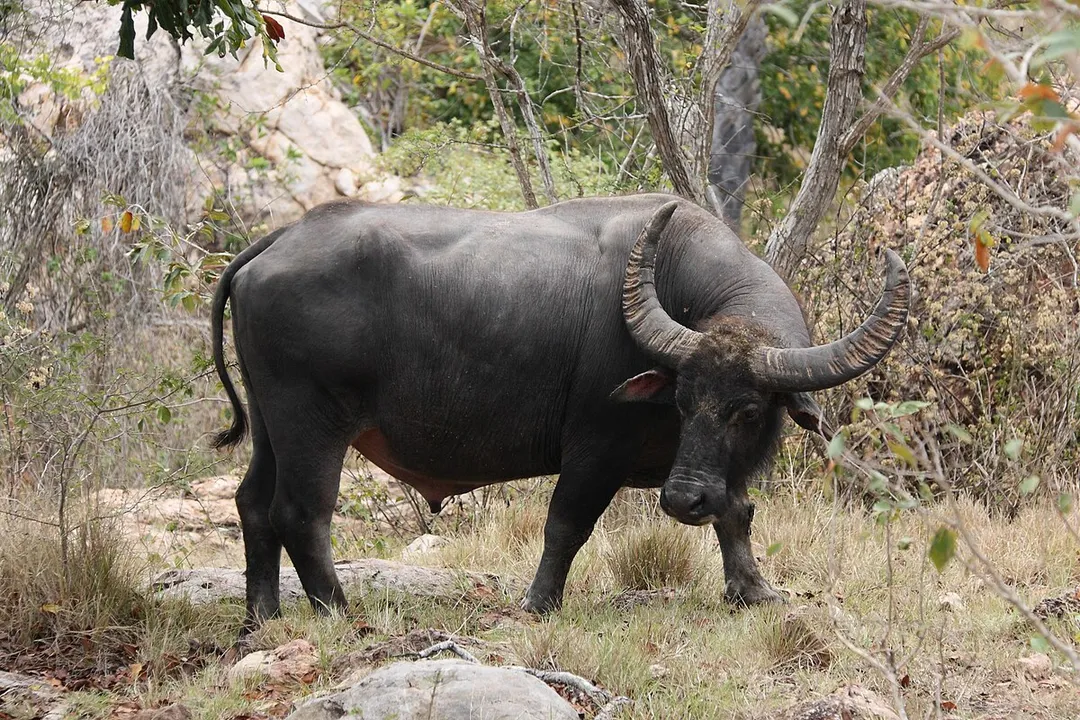
The water buffalo, a truly magnificent and ancient domesticate, warrants a precise placement within the biological hierarchy to distinguish it from its wild relatives and other bovids like cattle or the African buffalo. Its official scientific designation is Bubalus bubalis. [1][3][4][5][6][7][10] This binomial nomenclature, standardized by Linnaeus, immediately situates the animal within the genus Bubalus and the species bubalis. [5][10] Understanding this classification means tracing the lineage from the broadest biological kingdom down to the specific species level. [4]
# Kingdom Animalia
The starting point for any animal classification places the water buffalo firmly in the Kingdom Animalia. [4][9] This means it is a multicellular, eukaryotic organism that heterotrophically obtains energy by consuming other organisms. [9] Within this massive kingdom, the buffalo belongs to the Phylum Chordata, indicating that at some stage in its life, it possesses a notochord, a dorsal nerve cord, and pharyngeal slits. [4] Its membership in the Class Mammalia is evident through characteristics like possessing mammary glands, hair, and being warm-blooded. [4] The Order Artiodactyla further refines this, grouping it with all even-toed ungulates, like cows and deer, which walk on two primary toes. [4]
# Family Bovidae
The family level provides immediate context regarding the animal’s nearest relatives. The water buffalo resides within Bovidae. [4][10] This family is quite large and diverse, encompassing cattle, goats, sheep, and various species of antelope. [10] Members of Bovidae are characterized by the presence of permanent, unbranched horns that attach to the skull bone, a feature clearly visible on the water buffalo. [10] This distinguishes them from deer, which shed their antlers annually. When reviewing the classification, it is helpful to note that the water buffalo is sometimes confused with the African buffalo, which belongs to a different genus, Syncerus, highlighting the importance of the genus placement for true kinship. [1]
# Genus Bubalus
Moving down the taxonomy, the water buffalo is anchored in the Genus Bubalus. [2][5] This grouping signifies a closer evolutionary relationship among the species it contains than with other bovids. [2] The genus Bubalus is notable because it includes species that are adapted to more wetland or marsh environments compared to some other buffalo groups. [1] Perhaps the most well-known relative within this genus is the Tamarau (Bubalus mindorensis), a smaller, distinct species endemic to the island of Mindoro in the Philippines. [2] The inclusion of these animals in the same genus speaks to shared anatomical and genetic traits specific to this lineage of buffalo. [2]
# Species Distinction
The specific epithet, bubalis, defines the species: Bubalus bubalis. [1][5][6] While the entire organism is generally referred to as the water buffalo, this species level is further complicated and refined by recognized subspecies, which often reflect patterns of domestication and geography. [1][5]
The primary division recognized today often separates the populations into two main groups: [1][5]
- River Buffalo (B. b. bubalis): These are often associated with South Asia, and their chromosomal makeup is typically . [5] They are generally smaller, have smoother coats, and are characterized by curved horns that sweep back along the body. [1][5]
- Swamp Buffalo (B. b. carababensis): Found predominantly in Southeast Asia, these animals are characterized by a higher chromosome count () and possess massive, crescent-shaped horns that often flatten out. [1][5]
It is interesting to observe how taxonomy mirrors agricultural history. The consistent recognition of these two forms, sometimes elevated to full species status (B. carababensis), suggests that distinct domestication pathways or genetic isolation occurred early enough to create significant divergence in chromosome count. [5] For instance, while B. b. bubalis is overwhelmingly domesticated and used for dairy production, the Swamp buffalo has historically retained closer ties to draft work in wet, rice-paddy environments. [1][5] This taxonomic split is therefore not merely academic; it reflects thousands of years of human selection pressure shaping the gene pool differently across various ecological niches. [1]
# Naming Stability
Scientific naming is rarely static, and the water buffalo is no exception. While Bubalus bubalis is the widely accepted standard, taxonomy must account for evolutionary history and relationships with extinct forms. [1] Some systems integrate the river buffalo lineage as closely related to the extinct Bubalus antiquus, placing it within a broader grouping that acknowledges these deep connections. [1] Furthermore, differing taxonomic viewpoints lead to fluctuations in how subspecies are treated, meaning one scientific text might list the River and Swamp buffalo as subspecies of B. bubalis, while another might list them as two distinct species within the genus Bubalus. [5] For general understanding, however, the binomial Bubalus bubalis remains the most common identifier for the collective domestic population. [6][10]
When working with conservation genetics or international trade regulations, the distinction between the two forms becomes immensely practical. A researcher studying the genetics of high-yield dairy strains would be focused exclusively on the River type, while someone modeling disease transmission in Southeast Asian agriculture would be more concerned with the Swamp type's population dynamics. [5] The precise classification, even down to the subspecies level, guides research and protection efforts, providing a shared language for global scientific communities to discuss specific genetic pools. [5] The International Organization for Standardization (ISO) often relies on these precise classifications to ensure consistency in data reporting across different nations involved in agriculture and livestock management. [7]
Related Questions
#Citations
Water buffalo - Wikipedia
Water buffalo (Bubalus bubalis) longevity, ageing, and life history
Bubalus bubalis (water buffalo) - PubChem - NIH
Bubalus bubalis (water buffalo) - Animal Diversity Web
Bubalus bubalis (Linnaeus, 1758) - GBIF
Water Buffalo (Bubalus bubalis) | U.S. Fish & Wildlife Service
Bubalus bubalis (Asian water buffalo) | CABI Compendium
Water Buffalo (Bubalus bubalis) - the Wonderful Wildlife of Samloem
What is the scientific name of Buffalo? - BYJU'S