What makes Chinese water deer unique?
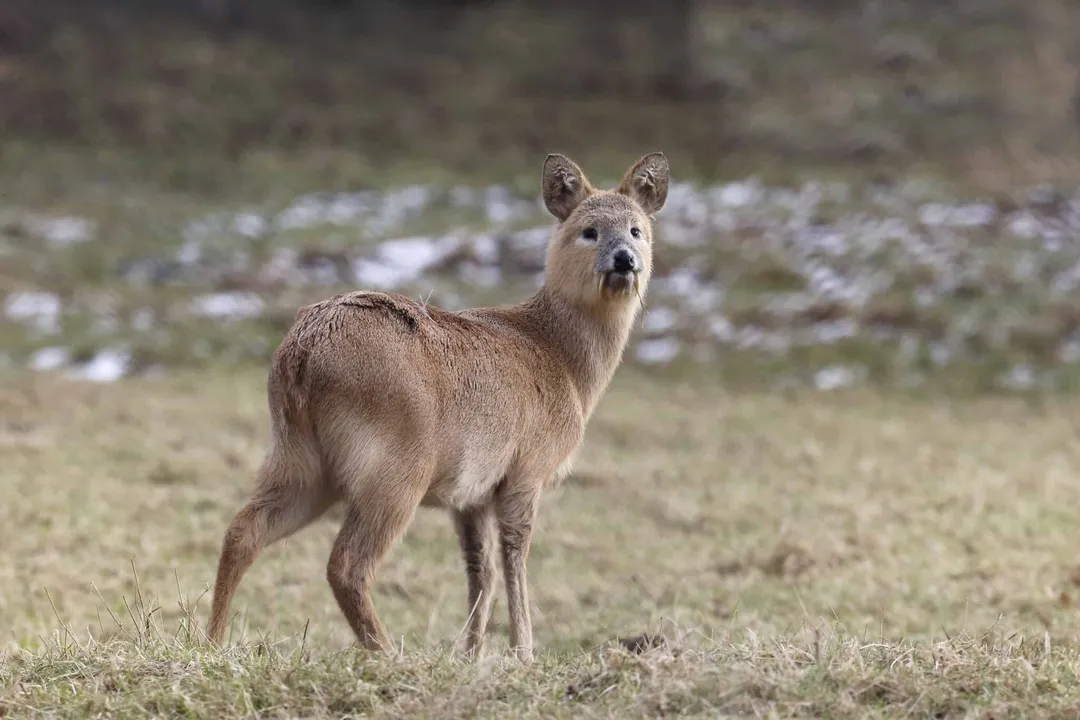
The Chinese water deer (Hydropotes inermis) presents a fascinating case study in mammalian evolution, immediately setting itself apart from nearly every other member of the deer family. While we associate deer with impressive racks of bone crowning their heads during mating season, the water deer completely eschews this tradition. This tiny, stocky creature, native to parts of Asia, carries a feature far more primal and unexpected for a cervid: prominent, sharp tusks.[5][8] It is, in fact, the only deer species in the entire world that possesses these elongated, visible canine teeth instead of antlers in the males.[5]
# Fang Teeth

The most distinguishing characteristic, the pair of long, downward-pointing tusks, belongs exclusively to the buck. These are not bone structures grown annually like antlers; rather, they are modified upper canine teeth, which can grow to impressive lengths—sometimes exceeding 5 cm (2 inches) in mature males. [8] This unique dental weaponry lends the species nicknames like "vampire deer," although their nature is far less menacing than the moniker suggests.[8] When comparing the function, antlers often serve as seasonal displays of fitness, used primarily for ritualized sparring and display during the rut. The water deer's tusks, however, seem to function as year-round, direct piercing weapons, which males deploy in serious territorial contests. This suggests an evolutionary path where direct, visceral combat with a fixed weapon was favored over the energy-intensive, seasonal regrowth cycle of antlers—a remarkable deviation within the Cervidae family.[5]
# Profile Small
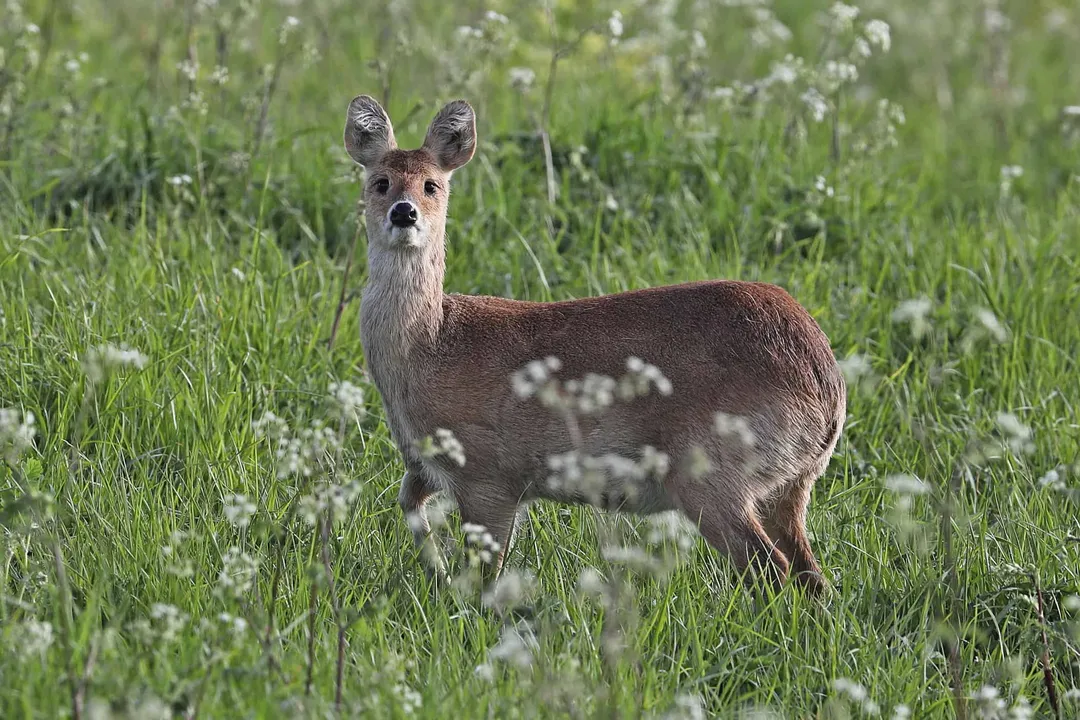
Physically, the water deer is one of the smallest deer species globally. They are characterized by a relatively small, stocky body structure, standing between 43 and 55 centimeters (17 to 22 inches) high at the shoulder. [6] Weight is also modest, with males typically ranging between 13 and 18 kilograms (29 to 40 pounds), with females often being slightly lighter. [6] Their coloration provides good camouflage in their preferred surroundings, usually presenting as a yellowish-brown to grayish-brown coat across the back and flanks, with a distinctly paler, sometimes white, belly. [2][5] A curious feature, noted by observers, is that young fawns are born displaying distinct white spots, similar to many other deer species, but these markings fade entirely once the animal reaches about six months of age. [4]

# Wetland Niche
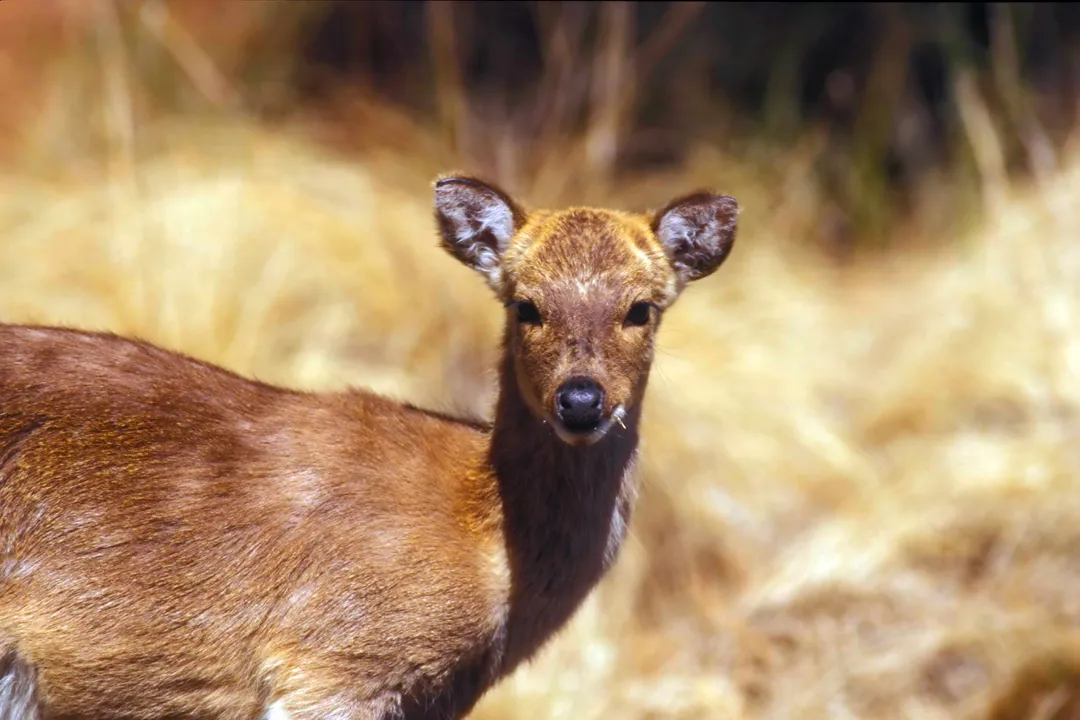
The name "water deer" is highly descriptive of their preferred environment. Unlike many deer species that favor dense forest or open grassland, these animals thrive in marshy environments, including swamps, reed beds, and areas with tall grasses. [1][2][6] Their native range includes regions of China and Taiwan. [1][5] However, their adaptability has allowed them to be introduced to other parts of the world, notably establishing feral populations in the United Kingdom, particularly within the fens of East Anglia. [1][6] Their affinity for dense, damp cover suggests they rely on concealment more than sheer speed or height to evade predators. In fact, their success in established areas like the UK fens, which often feature dense, water-retentive vegetation, may be partially explained by this preference for thick cover that deters human encroachment or provides superior hiding spots compared to open parkland favored by larger deer species.[6]
# Sound Communication
While they are generally solitary or found in small, loose groupings, water deer are far from silent creatures. They utilize a variety of vocalizations, which often surprises those unfamiliar with the species. [2] When alarmed or threatened, they often emit a loud, distinctive alarm call that has been described as a sharp "bark" or even a "scream". [2][6] This immediate, loud warning serves to alert nearby conspecifics to danger. Understanding the nuances of their vocal repertoire is important for anyone studying their behavior, as their communication extends beyond this simple alarm, contrasting with the generally quieter nature of many other solitary deer.

# Reproductive Cycle
The breeding biology of the Chinese water deer presents a few key differences from their antlered cousins. Females, or does, typically carry their young for about a six-month gestation period. [6] When the fawns arrive, usually in litters ranging from two up to eight, though three or four is common, they are surprisingly well-developed. [4][6] These precocial young are capable of walking soon after birth, a necessary trait when the mother needs to move her young quickly through dense marsh vegetation or flee from a perceived threat. [4] This relatively large litter size, compared to the usual single or twin offspring of many temperate deer, might be an adaptation related to the higher predation risks or environmental variability found in their native and introduced habitats.
# Feeding Habits
As herbivores, their diet naturally aligns with their wetland habitat. They primarily graze on grasses and consume various forms of aquatic vegetation. [1][2] This dietary focus means they are less dependent on browsing woody material than deer found in heavily forested areas. Their tendency to graze in damp areas also means they share their foraging grounds with various waterfowl and smaller wetland mammals, which can sometimes lead to competition for specific plant resources depending on the season and water levels.
# Taxonomy Note
Scientifically classified as Hydropotes inermis, the water deer occupies a unique spot within the Cervidae family. [2] While firmly within the deer group, its retention of canine teeth and lack of antlers places it among what are considered more primitive deer forms, offering a glimpse into what ancient deer might have looked like before the evolution of the classic antler structure became dominant across the group. [5] The species' continued existence, thriving in its specialized niche while showcasing such ancient morphological traits, underscores the diverse paths evolution can take within a single biological family.
Related Questions
#Citations
Chinese water deer: Why they grow fangs instead of antlers
Hydropotes inermis (Chinese water deer) - Animal Diversity Web
Chinese water deer. These beautiful animals have a very ... - Reddit
The Chinese water deer is a very unique and interesting animal ...
Chinese water deer | Endangered Species, Nocturnal, Antlers
Chinese Water Deer - The British Deer Society
Chinese Water Deer - Hydropotes inermis - A-Z Animals
Water deer - Wikipedia