What term describes the powerful, clawed front legs adapted for grasping prey in Giant Water Bugs?
Answer
Raptorial appendages
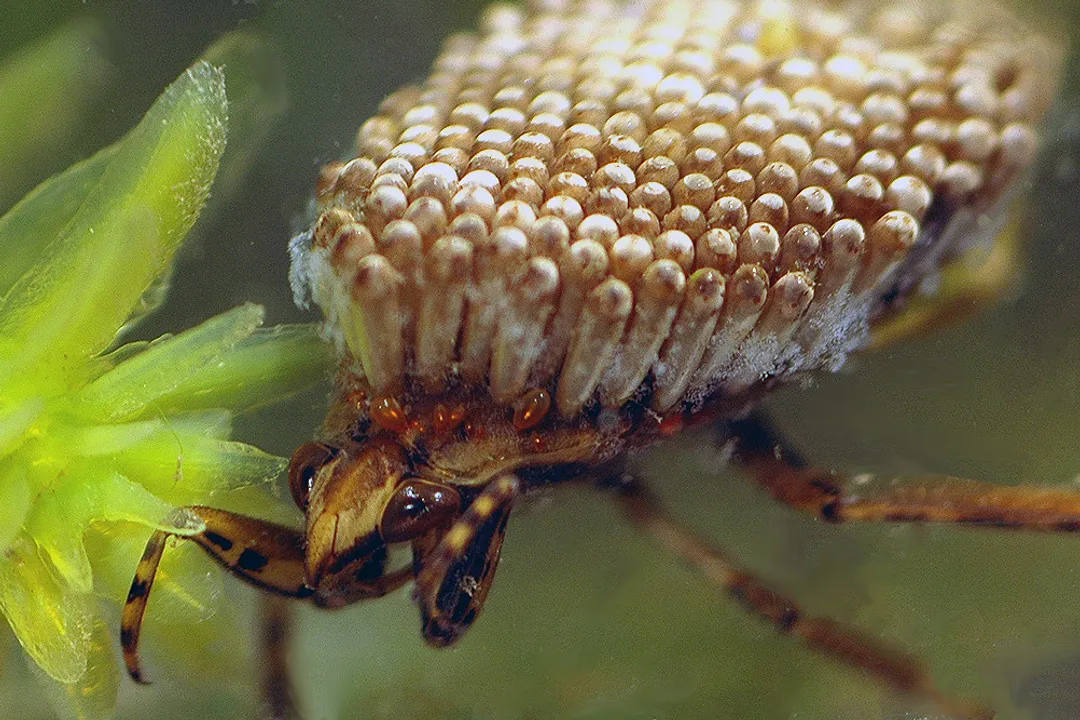
The specialized forelegs of the Giant Water Bug are structurally modified for predation and are referred to as raptorial appendages. These strong, clawed arms are essential for capturing and securely holding struggling victims, often creatures significantly larger than the bug itself. This powerful grasp ensures that once prey is seized, it cannot escape before the bug delivers its paralyzing, digestive bite using its modified mouthparts.
Related Questions
What insect family includes the Giant Water Bug commonly called the "water bug"?What is the function of the sharp saliva injected by the Giant Water Bug into its prey?Why do Giant Water Bugs acquire the nickname "electric-light bug"?What adaptation allows the Giant Water Bug to breathe air at the surface of the water?What term describes the powerful, clawed front legs adapted for grasping prey in Giant Water Bugs?Which common nickname refers to the severe pain caused when a person handles or steps on a Giant Water Bug?To which insect order do Giant Water Bugs belong, signifying they are true bugs?What unusual paternal responsibility do male Belostomatidae insects undertake during reproduction?What is the typical maximum size for the common Giant Water Bug species found in North American temperate zones?Besides aquatic insects, what other creatures frequently feature in the diet of the Giant Water Bug?