What are water bugs classified as?
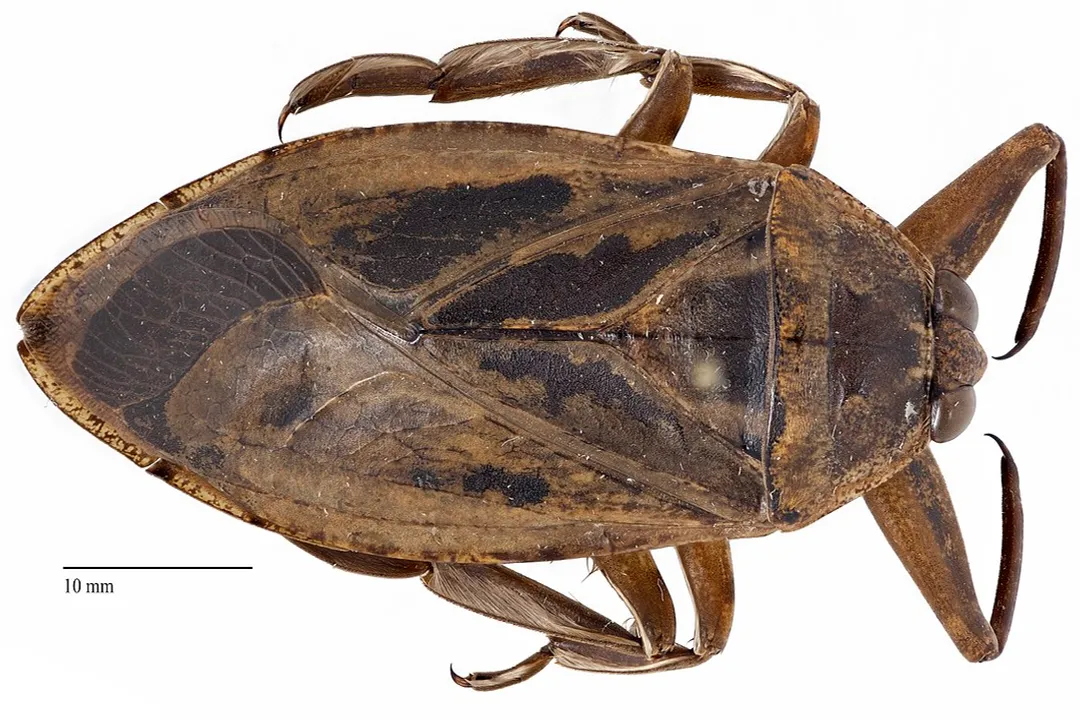
The term "water bug" carries a heavy weight of ambiguity, often causing more confusion than clarity when trying to identify an insect found near damp environments. For many people, especially those dealing with unwelcome houseguests, calling a creature a "water bug" is simply shorthand for a large, dark insect that seems determined to stay near drains, basements, or damp crawlspaces. [1][9] Entomologically, however, the classification is far more precise, leading to a distinct division between common household pests and genuinely aquatic insects. [2][4] Understanding which "water bug" you are dealing with is essential, as the appropriate response—whether professional pest control or simply managing an outdoor environment—depends entirely on the true identity of the creature. [3]
# Pest Misnomer
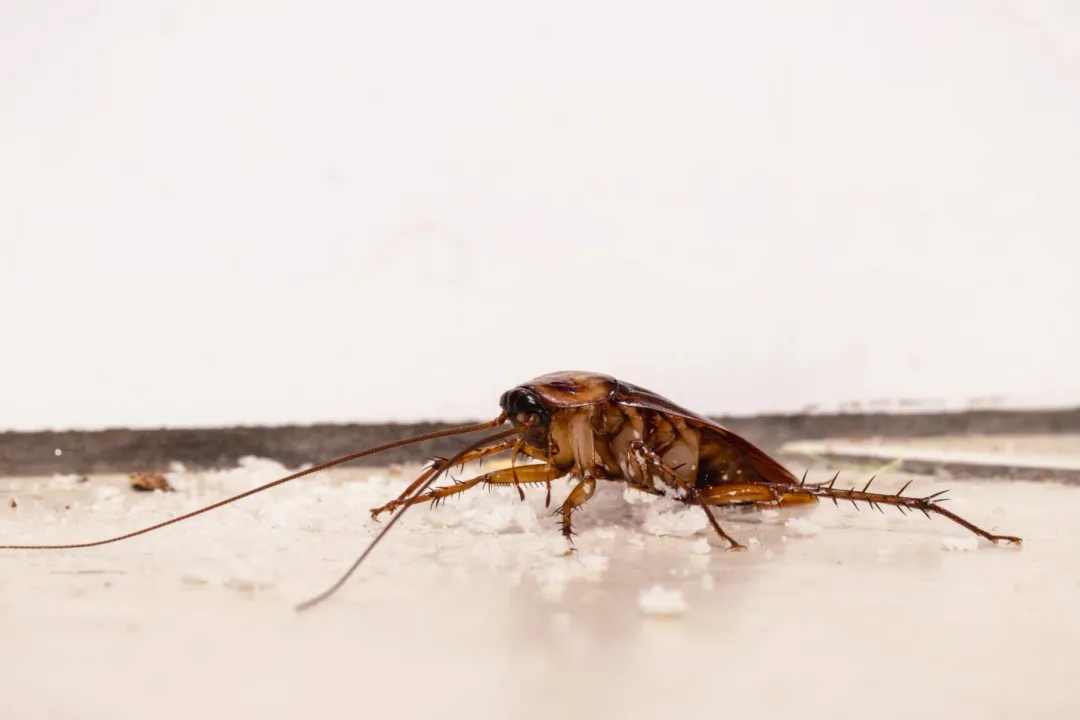
The most frequent source of the "water bug" label in residential settings points directly toward a specific type of cockroach: the Oriental Cockroach (Blatta orientalis). [1][3][4][9] These insects are notorious for congregating in areas with high moisture, such as sewers, drains, plumbing voids, and damp basements, which gives them their watery association. [1][3] They thrive in cool, damp places, meaning they often enter structures via ground-level entry points or sewer lines. [4]
Physically, the Oriental Cockroach presents a certain imposing appearance that can lead to its misidentification. Adult females often have very short wing pads, giving the impression of being wingless, while males have wings that cover most of their abdomen. [1] They are typically dark brown to black and quite shiny. [3] An important distinction from some other roach species is their relative lack of climbing ability; they do not readily scale smooth vertical surfaces like walls or high cabinets, preferring to stick to floors and lower levels. [1][3] This preference anchors them to the ground-level dampness that fuels the "water bug" moniker. While they are indeed pests and capable of spreading bacteria due to their diet and habitat, they are fundamentally terrestrial insects that tolerate high humidity, unlike true aquatic bugs. [9]
# True Kinship
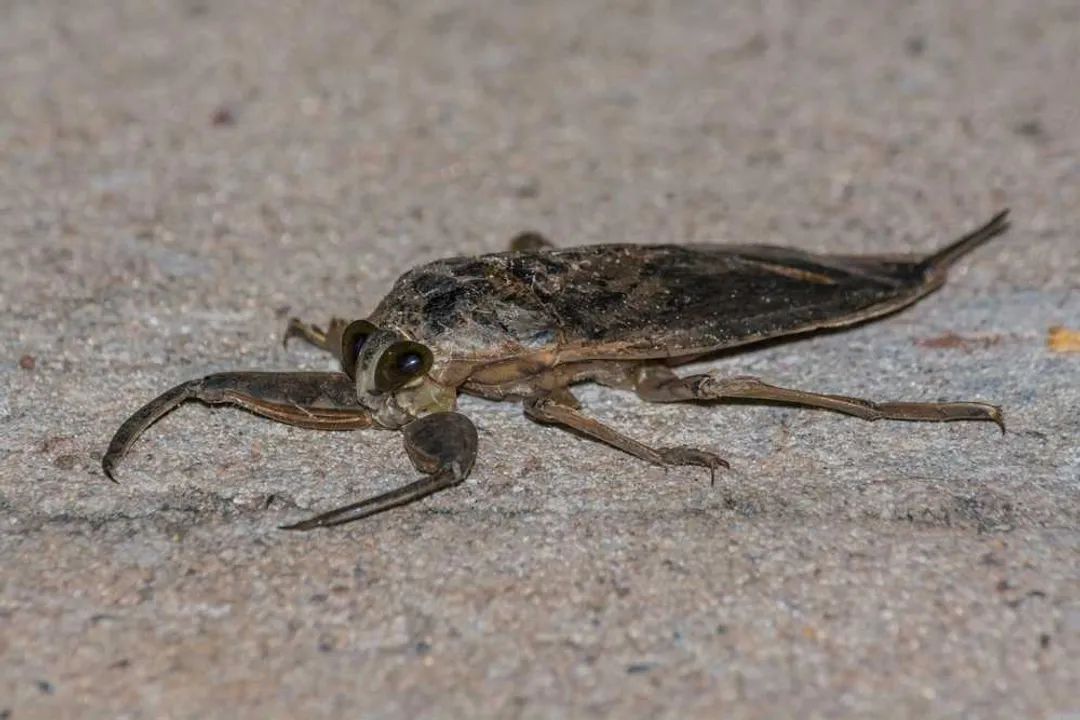
When an entomologist hears "water bug," they are almost certainly referring to insects belonging to the infraorder Nepomorpha, commonly known as true water bugs. [2][4] These are not terrestrial pests that like moisture; they are obligate aquatic insects whose entire life cycle, save for mating flights, occurs in water. [2]
The most famous of these are the insects in the family Belostomatidae, often called Giant Water Bugs or "Toe-Biters". [2] These creatures are fascinating predators of freshwater environments. They possess large, raptorial front legs, similar to a praying mantis, which they use to grasp and subdue prey like small fish, tadpoles, and other aquatic invertebrates. [2][4] They are built for the water, possessing specialized breathing tubes or siphons that allow them to draw air from the surface while remaining submerged. [2]
Belostomatidae bugs are also strong fliers, which is a major factor in residential confusion. When environmental conditions change—such as a pond drying up or heavy rain—they take to the air, often attracted to lights at night. [2] It is during these nightly flights that they are sometimes mistaken for very large, clumsy cockroaches, as both can end up trapped against a porch light or flying into a home. [2][9] Unlike the slow, skittering movement of a basement cockroach, the true water bug moves with a distinct flying gait, even if it ends up near a damp area after landing. [2]
# Morphology Comparison
The differences between the common pest and the true aquatic bug are significant when you look closely at their anatomy and behavior, which helps classify why one belongs in the sewer line and the other in a pond. [4]
| Feature | Oriental Cockroach (Blatta orientalis) | Giant Water Bug (Belostomatidae) |
|---|---|---|
| Classification | Order Blattodea (Cockroaches) | Infraorder Nepomorpha (True Bugs) |
| Primary Habitat | Damp, dark areas, drains, sewers (terrestrial) | Ponds, lakes, slow-moving water (aquatic) |
| Forelegs | Standard grasping legs, designed for running/climbing | Large, powerful raptorial claws for seizing prey |
| Respiration | Spiracles along the body; often found near moisture | Possesses a breathing tube/siphon to access surface air |
| Movement | Skittish, fast runners; poor climbers on smooth surfaces | Excellent swimmers; strong fliers when displaced |
| Diet | Scavenger, consuming decaying matter, garbage, food scraps | Active predator of small aquatic life |
Comparing the two side-by-side reveals that their ecological niches are entirely different. [2][4] The cockroach is an opportunistic recycler of organic waste near human dwellings, while the water bug is a specialized hunter in natural aquatic settings. [9] While both may be found near a house—the roach in the foundation, the water bug attracted to a patio light—their underlying biology dictates their classification and management needs. [1][2]
# Contextual Clues
When trying to definitively classify the insect encountered, the context of the sighting offers immediate, practical clues that cut through the generic "water bug" label. If you find a dark, smooth-shelled insect rapidly scurrying across a dry concrete basement floor or hiding under a cardboard box near a leaking pipe, the odds strongly favor the Oriental Cockroach. [1][3] They are terrestrial survivors thriving in the humidity the pipe leak creates. Furthermore, if the insect appears to be avoiding direct light and moves with speed along the ground, it’s likely the pest species. [3]
Conversely, if you pull an insect out of a bucket of rainwater, or find one clinging to the edge of a natural pond or swimming pool, you have almost certainly encountered a true aquatic bug. [2][4] If the insect possesses those distinctly large, segmented front legs built for catching things, and perhaps a noticeable siphon extending from its rear end when it surfaces for air, the classification shifts entirely to Belostomatidae. [2] The presence of these predatory adaptations immediately excludes it from the scavenging cockroach family.
This contextual sorting is where practical identification often overtakes strict taxonomy for the average homeowner. A sighting near an outdoor light fixture on a warm night might be either, but the subsequent observation—whether the insect flies clumsily toward the porch or immediately seeks the nearest body of water—provides the final answer. [2][9]
One subtle but often overlooked indicator when distinguishing these two is the speed of their introduction to a dry area. The Oriental Cockroach can establish populations within the walls, plumbing, and foundation vents of a home, becoming a persistent resident. [1] A true water bug, however, is usually an accidental visitor, blown in by wind or attracted by light, and unless the house has a large, permanent body of water directly attached (like a basement cistern), it will not establish a breeding colony indoors. [2][4] They are simply wanderers passing through the terrestrial world.

# Management Implications
The importance of accurate classification stems directly from management strategies. If the identified "water bug" is, in fact, the Oriental Cockroach, control measures must focus on sanitation and exclusion targeting terrestrial pathways. [1] This involves sealing cracks in the foundation, eliminating standing water sources inside the home (like leaky fixtures), removing clutter that holds moisture, and targeting harborage areas with residual insecticides suitable for cockroaches. [3] Because they favor dark, damp areas, moisture control is a significant step in making the environment less attractive to this pest species. [1]
If the investigation reveals a Giant Water Bug, the approach changes completely. Since these bugs live in water, treating the home’s interior with general pest spray will be ineffective against the breeding population. [2] The focus shifts outdoors to the nearest pond, retention ditch, or ornamental water feature. [4] Control, if necessary, would involve managing the aquatic environment or discouraging flight near the home, though often, these beneficial predators are left alone unless they become a nuisance near a pool. [2] They are generally considered beneficial insects in their natural habitat due to their predatory role in controlling aquatic insect populations. [4]
Ultimately, while the common vernacular lumps them together due to their association with dampness—one because it lives in it, the other because it lands near it—the biological classification separates them into two very different orders of insect life: the household scavenger versus the freshwater predator. [2][3] Recognizing this fundamental difference dictates whether one needs a pest control technician or merely needs to turn off the exterior porch light. [9]
Related Questions
#Citations
Waterbugs vs. Cockroaches | Are Roaches Waterbugs? - Orkin
Belostomatidae - Wikipedia
What's the Difference Between a Cockroach and a Water Bug?
Water Bug - Field Guide to Common Texas Insects
What's the difference between water bugs and roaches? : r/pestcontrol
What Are Water Bugs? Learn How to Spot and Stop Them Fast
Giant water bug identification and facts - Facebook
What is a water bug? - Quora
Water Bugs and Cockroaches: Are They the Same Bug? - MosquitoNix