What behavior, evidenced in 160-million-year-old fossils, suggests early complex parental care?
Answer
Insects actively protecting their offspring
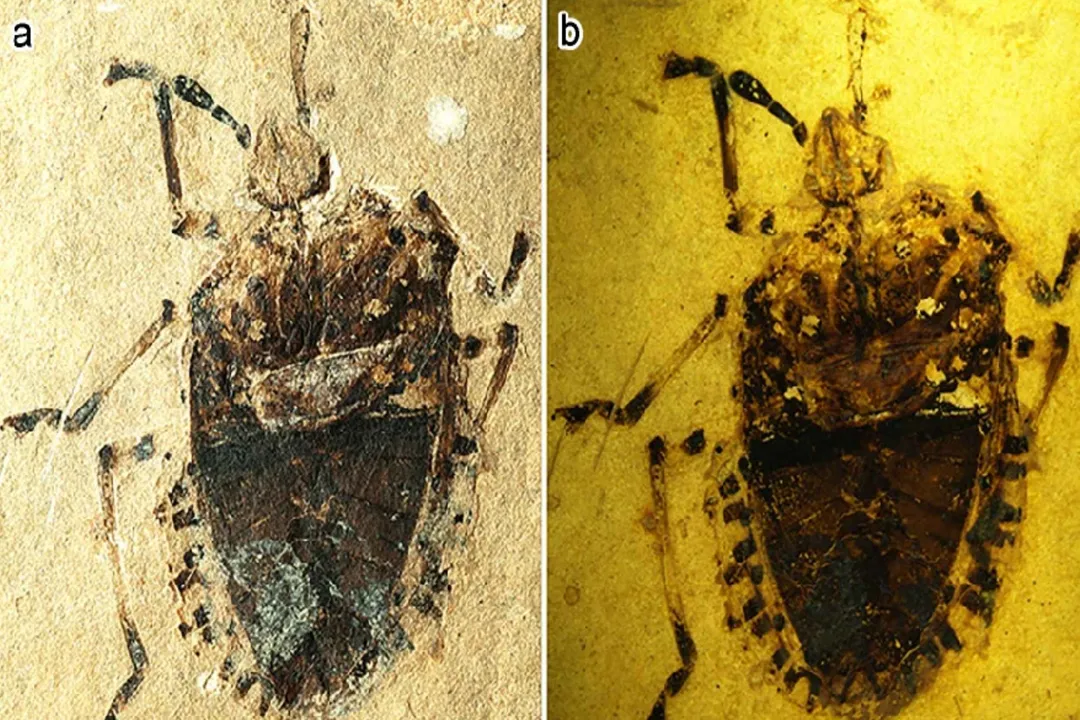
Fossils dating back about 160 million years reveal insights into ancient behavior alongside morphology. Specifically, these older water bug specimens demonstrate the earliest known instances of insects engaging in the active protection of their young. This finding is significant because complex parental care strategies are often considered a more recent evolutionary development in many other insect lineages. The presence of this behavior so early indicates that selective pressures favoring offspring protection in the aquatic niche were already strong during that ancient time frame.
Related Questions
What approximate age is the fossilized insect *Zekuforma maculata*?What behavior, evidenced in 160-million-year-old fossils, suggests early complex parental care?How do giant water bugs (Belostomatidae) subdue larger prey using their rostrum?Which gender in many Belostomatidae species is responsible for brooding the eggs?What primary function do the highly modified forelegs serve for surface dwellers like the Gerridae family concept?What is one strategy water bugs use involving physical structures to carry an air supply underwater?What key evolutionary event is suggested to have been established during the Jurassic period based on 160-million-year-old forms?What evolutionary concept explains when unrelated aquatic groups independently evolve similar traits?Why do many aquatic insects retain fully functional wings despite spending most of their life cycle underwater?What analysis technique helps resolve ambiguities by confirming placement relative to terrestrial relatives?