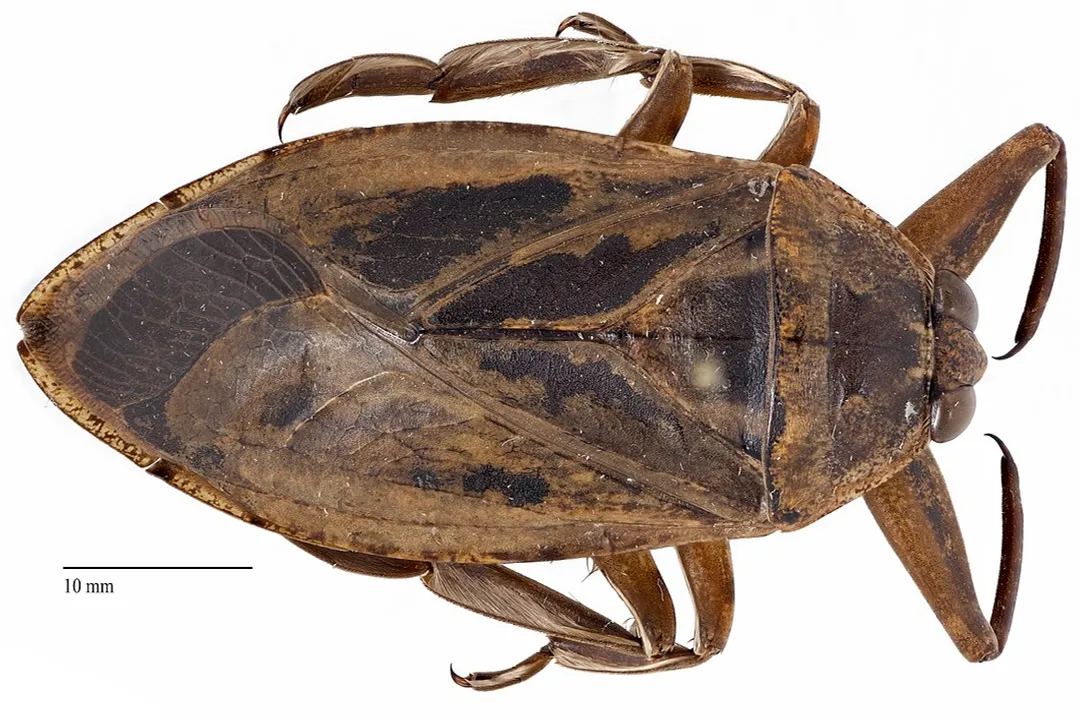
How does the giant water bug liquefy prey using its sharp, piercing beak known as the rostrum?
It injects digestive enzymes, dissolving internal tissues externally before sucking the resulting liquid.
The actual feeding mechanism employed by the giant water bug is a sophisticated process involving external digestion. After securing the prey with the rostrum—the sharp, piercing beak—the bug injects a potent, saliva-like substance rich in digestive enzymes directly into the victim's body. These enzymes work to break down the internal tissues and essential structures, effectively liquefying the contents of the prey from the inside out. Once this dissolution is sufficiently advanced, the bug reverses the flow, simply sucking the resulting nutritious liquid through its beak. This external digestion strategy is crucial because it allows the bug to consume creatures much larger than the physical opening of its mouth would otherwise permit.