Water Beetle Facts
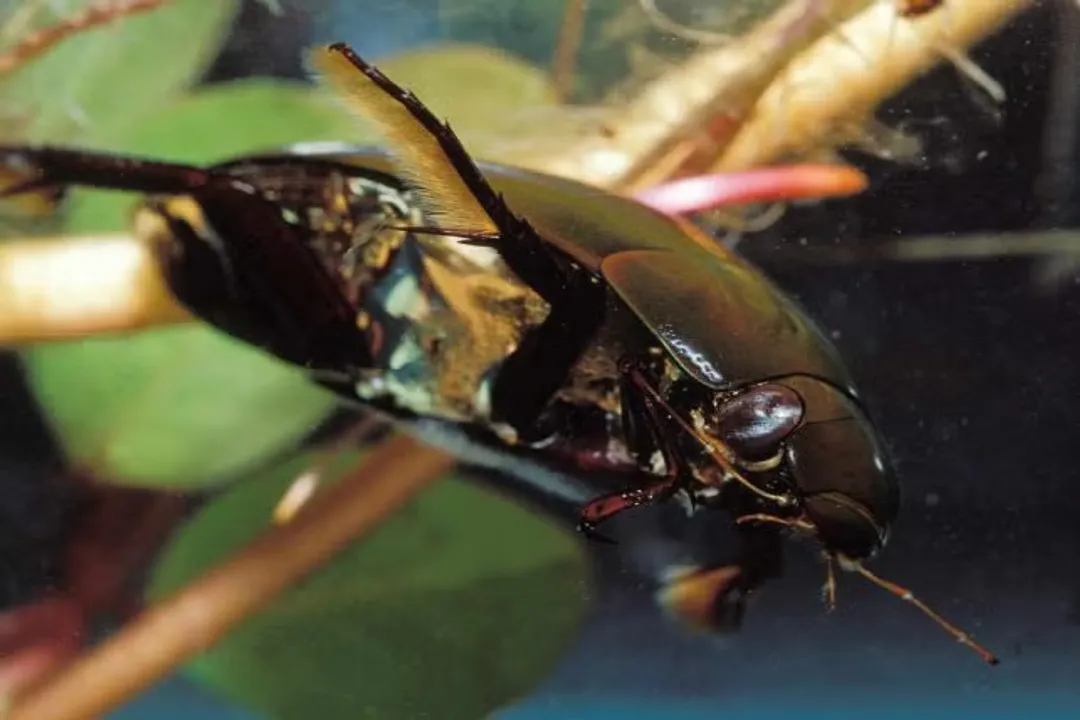
The world beneath the surface of ponds, streams, and even backyard birdbaths hosts an astonishing array of life, and among the most fascinating inhabitants are the water beetles. These creatures are not a single, neat group but rather a diverse collection of species that have adapted to spend significant portions of their lives in aquatic environments. [1][5] Belonging to the order Coleoptera, the same massive group that includes ladybugs and longhorn beetles, water beetles represent one of the most successful evolutionary radiations into freshwater habitats globally. [1][6] Their presence is often a good indicator of water body health, though some species can occasionally become nuisances in managed water systems like swimming pools. [2][5]
# Aquatic Diversity
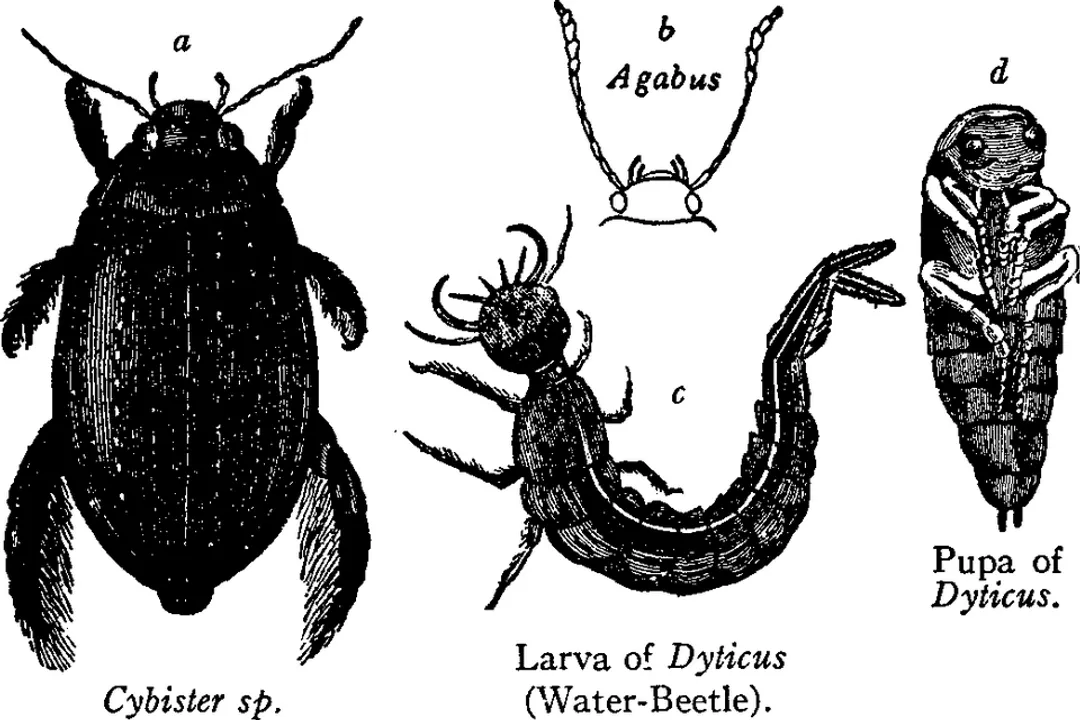
The sheer variety within the group is remarkable, with estimates suggesting thousands of species existing worldwide. [1] What unites them is their adaptation to life in water, though how they live in that water varies immensely between families. [5] For instance, the Dytiscidae, commonly known as predaceous diving beetles, are famous for their streamlined bodies and hunting prowess, while members of the Hydrophilidae, the water scavenger beetles, often cruise along the bottom or filter debris. [8][9]
Their morphological adaptations reflect their specific lifestyles. Some beetles, like the diving beetles, are exceptionally hydrodynamic, built for fast movement beneath the surface. [9] Others might be more clumsy swimmers or even primarily terrestrial but frequent water margins. [5] A key distinction for general identification often hinges on their antennae and mouthparts, which differ significantly between the major aquatic families. [6][8]
| Family Group | Common Name | Primary Feeding Style | Typical Underwater Behavior |
|---|---|---|---|
| Dytiscidae | Predaceous Diving Beetles | Carnivorous | Rapid, agile swimming; powerful underwater hunters [9] |
| Hydrophilidae | Water Scavenger Beetles | Scavenging, Filtering | Bottom dwelling, often slow-moving or utilizing air bubbles [8] |
| Gyrinidae | Whirligig Beetles | Surface feeders, predation | Skating in circles on the water surface [1] |
| Haliplidae | Tadpole Beetles | Algae scraping | Slow movement, often associated with aquatic plants [5] |
This table offers just a snapshot; many smaller, less conspicuous groups also contribute to the aquatic ecosystem. [5] It is important to remember that larval forms can look drastically different from adults—for example, the larvae of predaceous diving beetles are often known as water tigers due to their fierce appetites. [9]
# Breathing Underwater
Perhaps the most intriguing aspect of water beetle existence is how they manage to respire without gills, as they are insects and breathe air through spiracles. [1][6] They have evolved ingenious methods to bring a supply of atmospheric air to their underwater existence. [6]
The most common mechanism, shared by many diving and crawling species, involves trapping a physical bubble of air beneath their hardened forewings, the elytra. [1] As the beetle dives, it carries this silvery bubble down with it, acting as a temporary physical gill. [6] The oxygen diffuses from the water into this bubble, and the beetle breathes from the enriched air supply. [1] A sophisticated behavior often observed is the way they surface to renew this supply, typically by sticking the tip of their abdomen, where the breathing tube or spiracles are located, just above the waterline. [6]
Some groups, like the Whirligig Beetles (Gyrinidae), have specialized adaptations for their unique surface life, often resting upside down on the water surface tension film, using their eyes adapted for both above and below water views. [1] Scavenger beetles (Hydrophilidae) also use a bubble, but their technique can sometimes involve creating a more permanent "physical gill" by trapping air beneath their elytra in a way that allows for longer submersion periods, though they still need to surface periodically. [8]
When thinking about these air-carrying systems, it is useful to consider the water chemistry. In highly oxygenated, fast-flowing water, the dissolved oxygen replenishes the air bubble more slowly, meaning the beetle may need to surface more frequently than one resting in stagnant, deoxygenated water where the bubble depletes faster. [6] This simple necessity dictates their surface movements.
# Predation and Diet
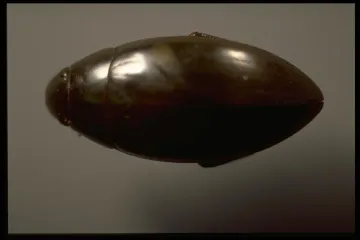
The feeding habits of water beetles showcase a spectrum of ecological roles, from dedicated hunters to meticulous recyclers. [9] This variation means a single pond can support entirely different trophic levels based on which beetle species dominate.
Predaceous diving beetles, the Dytiscidae, are apex invertebrate predators in many small aquatic systems. [9] Both the adults and the larvae—the water tigers—are voracious carnivores. [9] Adults possess strong mandibles and are known to consume small fish, tadpoles, and other aquatic insects. [9] The larvae, in particular, have long, sickle-shaped mouthparts used to inject digestive fluids into their prey before sucking out the liquefied contents. [9] If you encounter a pond specimen that looks vaguely insect-like but possesses wickedly curved, piercing mouthparts, you are very likely looking at a Dytiscid larva. [9]
In contrast, the Water Scavenger Beetles (Hydrophilidae) generally earn their name by consuming decaying organic matter, detritus, and sometimes algae. [8] While some species are carnivorous, the majority prefer a diet of submerged rotting material, acting as important decomposers in their environment. [8] Their role is essential for nutrient cycling, preventing excessive buildup of dead plant matter on the substrate.
A practical way to assess the ecological balance of a small, still body of water is by observing the dominant beetle type. If you are finding many large, fast-moving beetles actively hunting or seeing large larvae with piercing mouths, the ecosystem is likely thriving with a high degree of predation, keeping populations of smaller invertebrates in check. Conversely, if the substrate is thick with decomposing leaves and you net more slow-moving, bottom-hugging adults, the scavenger community is performing the clean-up duty. [5] Recognizing this balance helps one appreciate that "pest" is a relative term; in a natural setting, both hunters and scavengers are vital components. [5][8]
# Life Cycle Stages
Water beetles undergo complete metamorphosis, meaning they pass through four distinct life stages: egg, larva, pupa, and adult. [1] This cycle is highly synchronized with the aquatic environment.
Eggs are usually laid in or on aquatic vegetation or sometimes even embedded in the mud or submerged wood. [1] The duration of the egg stage is temperature-dependent, a common factor in all ectothermic aquatic insects.
The larval stage is often the most active feeding stage, particularly for the predatory families. [9] As noted, Dytiscid larvae are fearsome predators. [9] Hydrophilid larvae, on the other hand, might be free-swimming predators or specialized filter feeders. [8] The morphology of the larva dictates its niche; some are elongated and worm-like, while others are more compact.
Pupation typically occurs on land, which is a fascinating necessity for an insect so fundamentally tied to water. [1] The larva crawls out of the water, burrows into the damp soil or mud bank near the water's edge, and constructs a cell where it transforms into the pupa. [1] This terrestrial stage is vulnerable, making the proximity of suitable, undisturbed banks crucial for successful reproduction. The adult beetle then emerges, often digging its way back into the water to resume its aquatic life.
# Surface Skaters
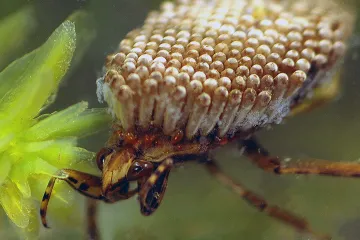
While many beetles swim beneath the surface, the Whirligig Beetles (Gyrinidae) have perfected the art of life on the water. [1] They are easily recognized by their habit of skating rapidly in intricate, swirling patterns on the surface film. [1]
Their body structure is unique for this lifestyle. They possess short legs, modified into specialized paddles, which they use to push off the water surface. [1] Crucially, their eyes are divided, often split horizontally, allowing them to see clearly both what is happening above the water and what is moving beneath it simultaneously. [1] This dual vision system is essential for their survival, helping them evade aerial predators while simultaneously detecting prey or obstacles in the water below. [1] Their behavior is a constant balance between maintaining their position on the surface film and monitoring the world in three dimensions.
# Field Identification Notes
For hobbyists or field observers interested in identifying these insects, looking closely at breathing apparatus and swimming style can save time. [6]
If you observe a beetle that swims with its rear end angled up, frequently surfacing to ‘sip’ air without breaking the surface tension with its head, it is likely a diving beetle (Dytiscidae) using its abdominal tip to access the air bubble under its elytra. [9]
If, however, you see a beetle that seems clumsy when swimming underwater but is very adept at crawling over submerged debris or vegetation, and you notice a distinct, continuous silvery sheen under its back that seems to stay attached even when it moves, it might be a scavenger beetle (Hydrophilidae). [8] Furthermore, the antennae can be a major clue. While Dytiscids usually have simple, segmented antennae, Hydrophilids often possess long, segmented antennae that are sometimes nearly as long as their bodies. [8]
It's worth noting that while many aquatic beetles are ecologically beneficial or neutral, homeowners with ornamental ponds or pools may occasionally encounter them as pests. [2] Large numbers of certain species entering a pool can lead to minor issues, such as coating the filter intake or simply being unsightly. [2] Control in these managed settings usually involves netting or physical removal rather than chemical treatment, as many species are protected or simply part of the natural food web that supports larger fauna. [2] For anyone managing a small habitat, maintaining a muddy, vegetated margin provides the necessary exit point for pupation, supporting the entire life cycle, which is something often overlooked when ponds are heavily lined with concrete or plastic. [1]
These beetles, from the ferocious water tigers to the silent scavengers, demonstrate an incredible mastery over the interface between air and water, solidifying their place as crucial components of freshwater ecology. [5][9]
Related Questions
#Citations
Water beetle - Wikipedia
10 Things You Should Know About Water Beetles - AAI Pest Control
[PDF] Wildlife Profiles: Water Beetles Monitoring & Research
Water beetle Facts for Kids
Water beetles - Species Directory - Freshwater Habitats Trust
Water beetles (order Coleoptera) - LIFE IN FRESHWATER
Bug Blog #6: Aquatic Beetles: No Punch Backs - EcoSpark
(Family) Crawling Water Beetles - Montana Field Guide
Predaceous Diving Beetles (Water Tigers) | Missouri Department of ...