What adaptation allows the Giant Water Bug to breathe air at the surface of the water?
Answer
A modified siphon located at the rear end of their abdomen.
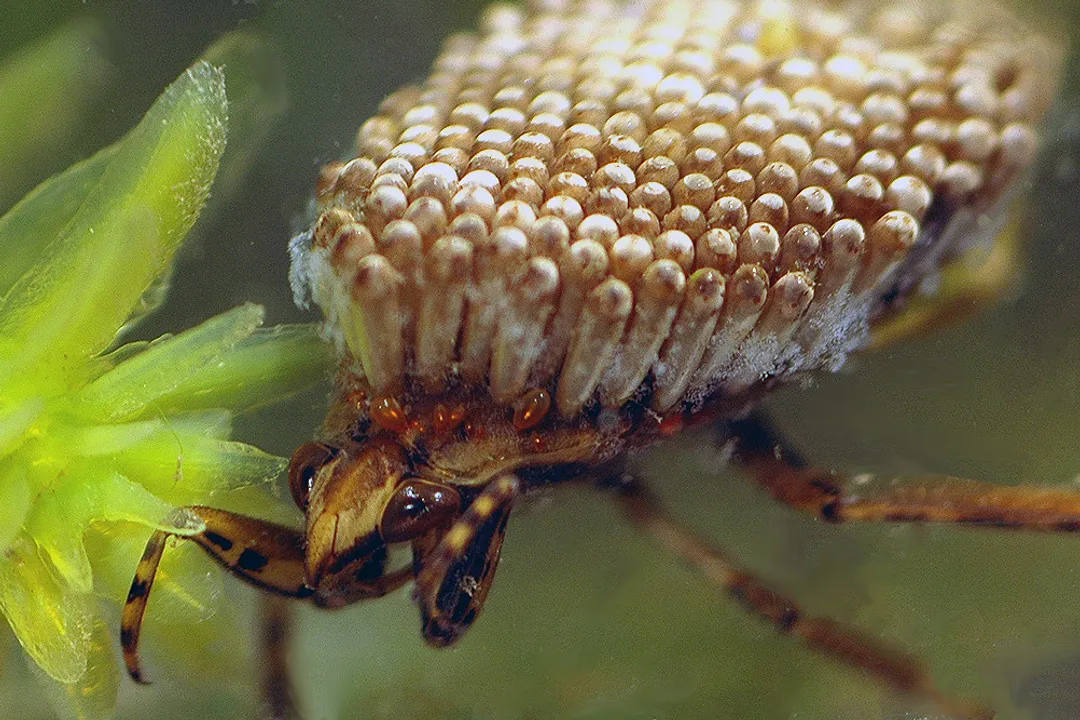
Despite being formidable aquatic hunters, Giant Water Bugs are air-breathers and must periodically return to the surface for oxygen intake. They accomplish this discreetly using an ingenious structure located at the posterior tip of the abdomen. This beak-like structure functions as a siphon, which is positioned just below the water line. This allows the insect to draw air down into its respiratory system without fully breaking the surface tension or revealing its entire body, thus maintaining its camouflage while respiring.
Related Questions
What insect family includes the Giant Water Bug commonly called the "water bug"?What is the function of the sharp saliva injected by the Giant Water Bug into its prey?Why do Giant Water Bugs acquire the nickname "electric-light bug"?What adaptation allows the Giant Water Bug to breathe air at the surface of the water?What term describes the powerful, clawed front legs adapted for grasping prey in Giant Water Bugs?Which common nickname refers to the severe pain caused when a person handles or steps on a Giant Water Bug?To which insect order do Giant Water Bugs belong, signifying they are true bugs?What unusual paternal responsibility do male Belostomatidae insects undertake during reproduction?What is the typical maximum size for the common Giant Water Bug species found in North American temperate zones?Besides aquatic insects, what other creatures frequently feature in the diet of the Giant Water Bug?