Water Bug Evolution
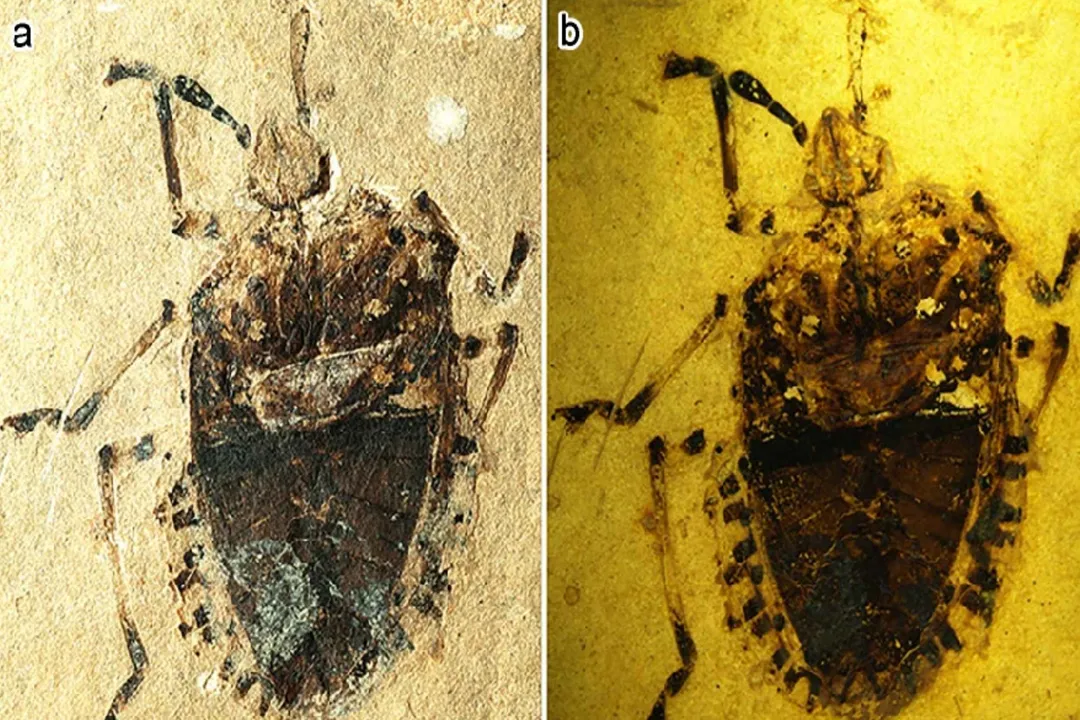
The story of water bugs—insects intimately connected to aquatic life—is a narrative spanning hundreds of millions of years, deeply embedded in the fossil record and continually refined by modern genetic sequencing. These creatures, ranging from tiny skaters to formidable giant bugs, represent successful, yet complex, evolutionary lineages within the broader insect world. Understanding their development requires looking back to periods before the dinosaurs dominated the land, right up to the specialized forms we observe in ponds and streams today. [3][9]
# Deep Past
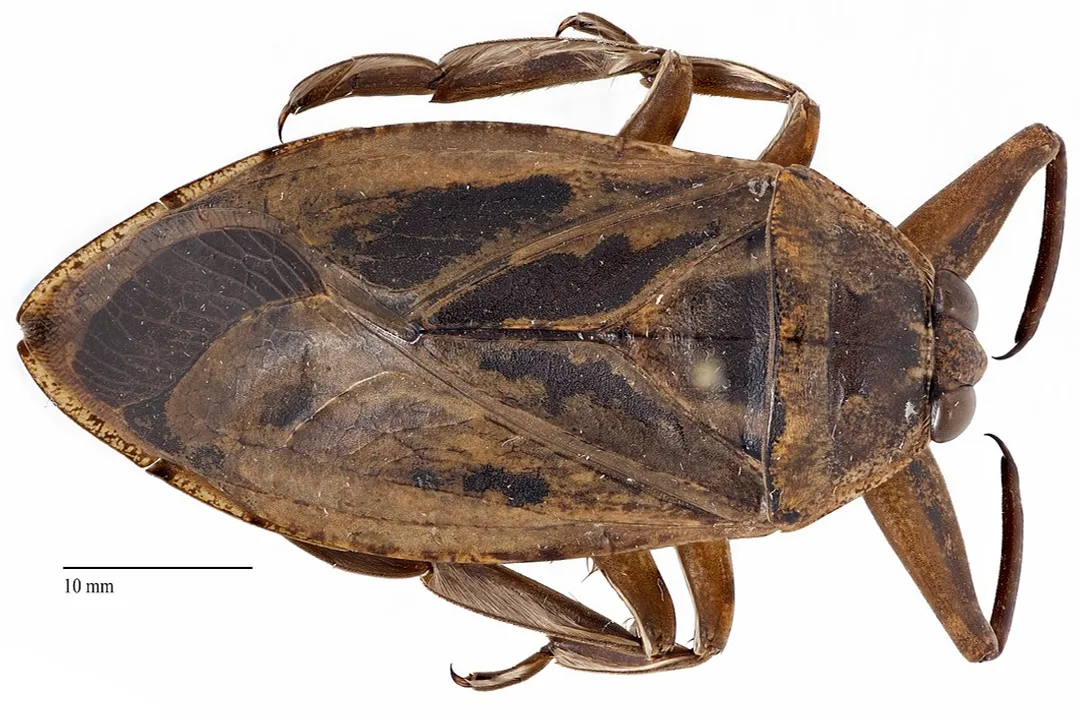
The antiquity of aquatic insects is staggering, pushing back our understanding of insect life significantly. Discoveries, such as the fossilized insect Zekuforma maculata, date back approximately 230 million years. [3] This remarkable find represents an early stage in insect evolution, forcing a rewriting of timelines regarding when certain developmental pathways solidified. [3] Fossils provide concrete evidence that insects were adapting to semi-aquatic or fully aquatic niches much earlier than some previous models suggested. [10]
Another fascinating piece of this ancient puzzle comes from fossils preserved around 160 million years ago. [9] These older water bugs offer insights not just into morphology, but into behavior. Notably, some of these ancient specimens show the earliest known examples of insects actively protecting their offspring. [9] This suggests that complex parental care, often thought to be a more recent evolutionary development in many insect groups, was already being experimented with by these early aquatic dwellers. [9] Comparing the anatomy of these 160-million-year-old forms to modern groups like the Belostomatidae reveals a surprisingly complete lineage, suggesting that the foundational body plan for many aquatic Hemiptera was established during the Jurassic period. [1][9]
It is important to differentiate between groups that evolved into the water and those that may have retained an older aquatic heritage. Phylogenetic studies, which use modern DNA analysis alongside morphology, help map these relationships. [2][6] For instance, looking at the phylogeny of aquatic bugs helps determine if a lineage like the true water bugs (Heteroptera) adopted the water lifestyle once, or if multiple separate invasions of the aquatic habitat occurred across different branches of the insect family tree. [6] Molecular data continues to refine these ancestral connections, often challenging or confirming hypotheses based solely on fossil structure. [2]
# Aquatic Traits
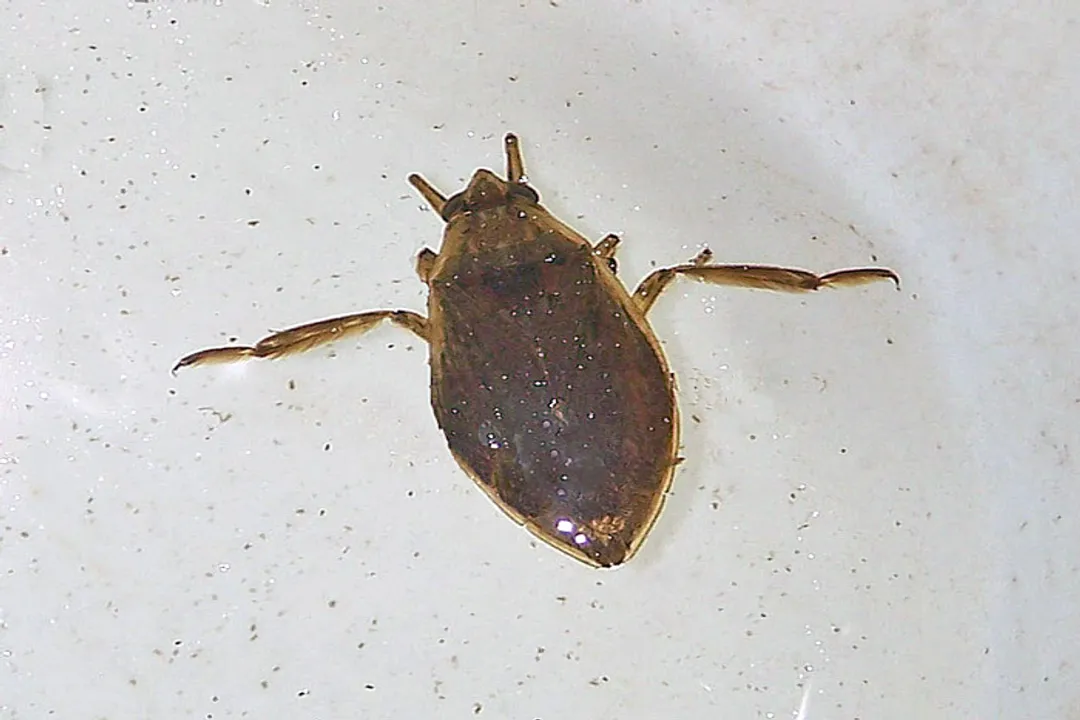
The transition to a water-based existence demands significant biological adjustments. For insects, which are primarily air-breathers, mastering the aquatic environment centers on respiration and movement. [4] Insects inhabiting the water must solve the problem of extracting dissolved oxygen or effectively carrying an air supply. [10]
Water bugs have evolved several strategies to manage this. Some species employ physical gills, utilizing specialized structures to draw oxygen from the water, while others employ plastrons or air bubbles trapped by hydrophobic hairs, effectively creating a portable lung. [10] The way they move is equally specialized. While some skaters utilize surface tension, others, like the larger predatory bugs, develop strong legs for swimming or grasping prey underwater. [1][7] The degree to which an insect relies on the surface versus fully submerging dictates the evolutionary path of its appendages and respiratory systems. [4]
Consider the sheer variety in form even within closely related groups inhabiting the same pond. One might observe a swift, narrow-bodied swimmer alongside a broad, flattened scavenger. This morphological divergence within a stable environment indicates strong selective pressures acting on feeding habits or predator avoidance, leading to specialized adaptations over time. [6] If we were to chart the common traits found across all aquatic bugs versus those found only in a specific suborder, the resulting cladogram would highlight where the major evolutionary splits occurred following the colonization of water. [2]
For general readers encountering these creatures, recognizing these adaptations is key. A bug with very large, paddle-like hind legs is clearly optimized for propulsion through water, whereas one with a sharp, piercing mouthpart is built for subduing prey, whether on land or water. [1]
# Giant Evolution
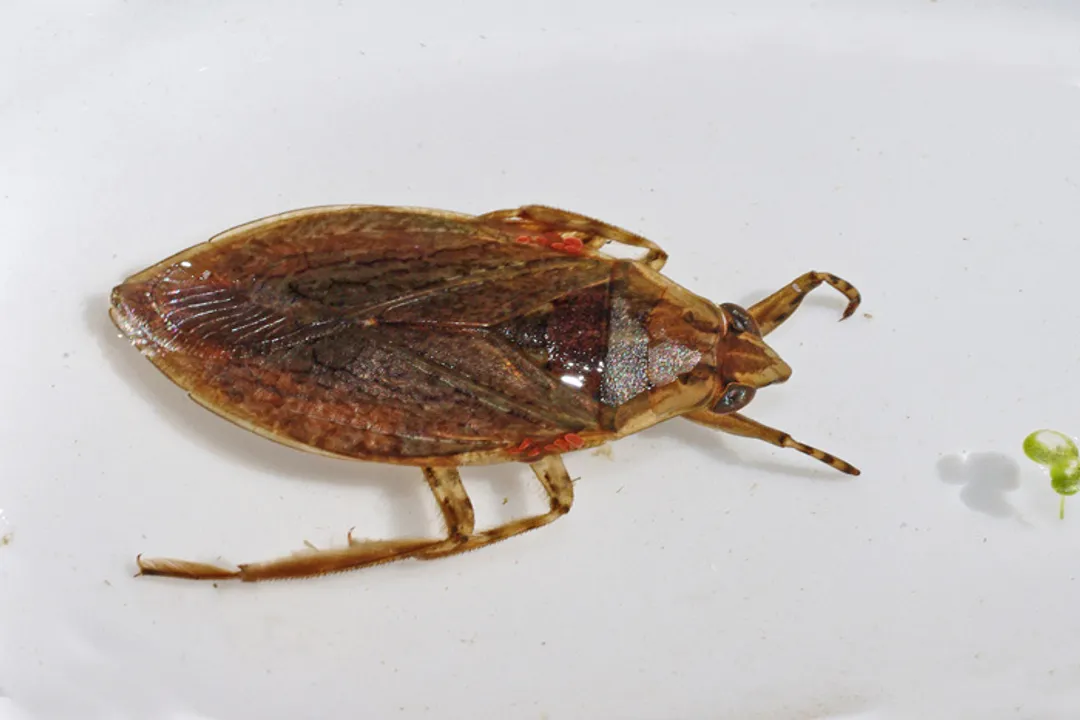
Among the most striking examples of water bug evolution are the Belostomatidae, commonly known as giant water bugs or electric light bugs. [1][7] These insects are iconic predators of freshwater habitats across the globe. [1] Their evolution reflects a trajectory toward maximizing predatory efficiency in an aquatic setting. They possess powerful, raptorial forelegs, modified for grasping prey—ranging from small invertebrates to frogs and even small fish—which they subdue using a toxic saliva injected via their rostrum. [1][7]
The sheer size of these bugs is an evolutionary advantage in their niche, allowing them to exploit larger prey resources that smaller insects cannot access. [7] However, their relationship with water is not purely predatory; reproduction showcases another layer of specialization.
# Parental Care
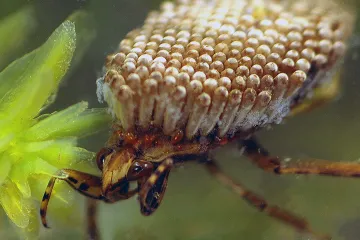
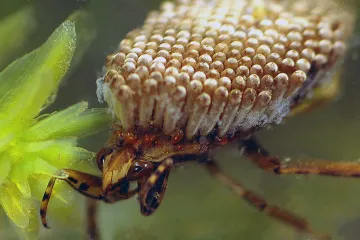
Perhaps the most famous evolutionary trait associated with certain giant water bugs is paternal care. [9] In many species of Belostomatidae, the male is responsible for brooding the eggs. [9] The female deposits her clutch onto the male's back, where he carries them until they hatch. [9] This behavior is a significant investment and offers strong protection against predation and desiccation—a benefit evidenced even in the 160-million-year-old fossils. [9]
This observed behavior offers a point of comparison with the ancient fossils. The fact that the 160-million-year-old bugs were already exhibiting this trait suggests that the evolutionary pressures favoring parental protection in the aquatic environment were present very early on. [9] In contrast, other aquatic groups might exhibit no parental investment or a different form, such as burying eggs in substrate. The male Belostomatid’s back, essentially becoming a moving, oxygenated nursery, is a highly specialized evolutionary solution to egg survival in an unpredictable water column. [1]
If we examine the energy trade-off, a male bug carrying eggs is likely less efficient at hunting and avoiding his predators. The evolutionary success of this strategy implies that the survival rate increase for the offspring drastically outweighs the cost to the father's fitness. [7]
# Comparative Forms
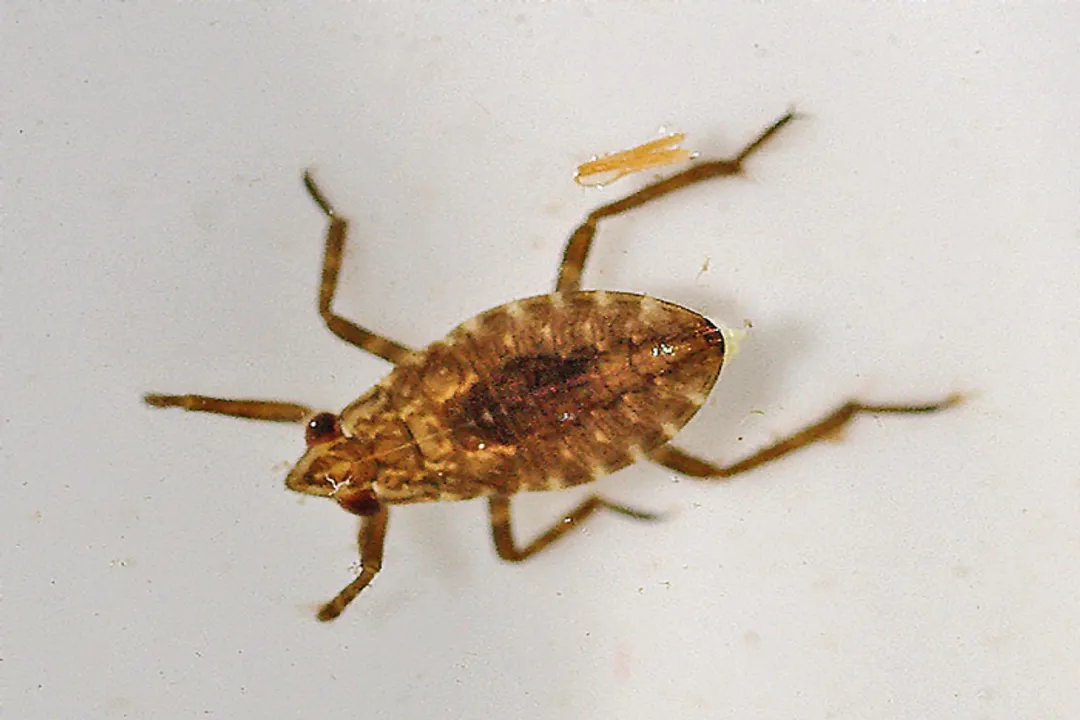
Evolution is rarely a linear path; related groups often find different solutions to the same environmental problem. While Belostomatidae dominates the 'giant' category, other water bugs illustrate different successful evolutionary arcs.
The existence of groups like Surskit (a fictional creature from popular media, but representing the concept of pond skaters) or the real-life Gerridae family highlights specialization on the surface rather than fully submerged life. [8] These surface dwellers evolved an entirely different set of adaptations focusing on hydrodynamics and minimizing surface tension disruption, contrasting sharply with the predatory, diving strategy of the Belostomatids. [4] Their forelegs are often highly modified for sensing vibrations on the surface film, rather than for grasping submerged prey. [10]
When reviewing evolutionary data, it is instructive to map these divergent paths:
| Group Characteristic | Predatory Divergence (e.g., Belostomatidae) | Surface Specialization (e.g., Gerridae concept) |
|---|---|---|
| Primary Habitat Use | Submerged pursuit and attack | Water surface tension |
| Foreleg Modification | Raptorial grasping | Sensory/propulsion |
| Key Adaptation | Toxic saliva, large size | Hydrophobic structures |
| Reproductive Strategy | Often male brooding [9] | Varies, less specialized brooding |
This comparison underscores that "water bug evolution" isn't a single story but a collection of independent evolutionary radiations into the freshwater realm, each group settling into a unique ecological slot. [6] One analytical observation is how consistently the Hemiptera order appears to have developed piercing-sucking mouthparts first, and then adapted those mouthparts for either sucking blood/plant sap or injecting toxins for paralyzing larger aquatic prey. [2] The versatility of the rostrum seems to be a foundational trait that facilitated their invasion of diverse aquatic niches. [1]
# Reconstructing the Tree
Modern molecular techniques provide high-resolution views of evolutionary relationships. For example, genomic and transcriptomic analyses are helping to resolve deeper ambiguities within the insect phylogeny, confirming placement of aquatic bugs relative to terrestrial relatives. [2][6] Sometimes, morphological similarities between distantly related aquatic groups are found to be examples of convergent evolution—where unrelated species independently evolve similar traits to solve similar environmental problems—rather than shared ancestry. [10] This means that two different groups might both evolve a streamlined body shape because water favors that shape, even if their common ancestor was terrestrial. [2]
The study of these transitions helps us understand the genetic mechanisms that allow for such profound ecological shifts. How does the network of genes controlling leg development change to favor a swimming paddle over a jumping limb, or a sensory tip over a grasping hook? Answering these questions bridges the gap between the fossil evidence of Zekuforma maculata [3] and the highly specialized biology of a modern giant water bug. [1]
It is noteworthy that many of these aquatic insects retain fully functional wings, even though they spend the majority of their life cycle underwater. [7] This presents an interesting evolutionary trade-off: maintaining the capacity for flight provides an escape route from drying ponds or a means to find new habitats, but developing large, robust wings can also create drag or make submergence more difficult. The persistence of flight capability across many families suggests that the terrestrial environment remains an essential, if temporary, part of their life cycle, even for species deeply committed to aquatic life. [7] If a lineage were fully committed to the deep water for all life stages, one might predict the eventual loss of wings, similar to what happened in some beetle groups. The continued presence of wings in many water bugs indicates a balanced selective pressure between aquatic specialization and terrestrial dispersal needs. [4]
Ultimately, the evolution of water bugs is a story of successful adaptation to a challenging, oxygen-limited environment, played out over vast stretches of geological time, with key behavioral innovations like parental care appearing remarkably early in their history. [3][9] They serve as living testament to the power of natural selection to shape form and behavior within the constraints of an ancient evolutionary blueprint.
Related Questions
#Citations
Belostomatidae - Wikipedia
Evolution of aquatic insect behaviours across a gradient of ...
Fossil found in Tibet rewrites 230 million years of insect evolution
More of an actual evolution question, but how come we don't see ...
Araquanid (Pokémon) - Bulbapedia
Phylogeny and diversification of the true water bugs (Insecta ...
Giant Water Bugs Revisited – Field Station - UW-Milwaukee
Surskit Pokédex: stats, moves, evolution & locations
Fossils of 160-million-year-old water bugs are earliest example of ...
Genomics of the semi-aquatic bugs (Heteroptera; Gerromorpha)