What taxonomic feature distinguishes the genus *Xantusia* from the genus *Lepidophyma* within the Xantusiidae family?
Answer
*Xantusia* is endemic to the deserts of the United States
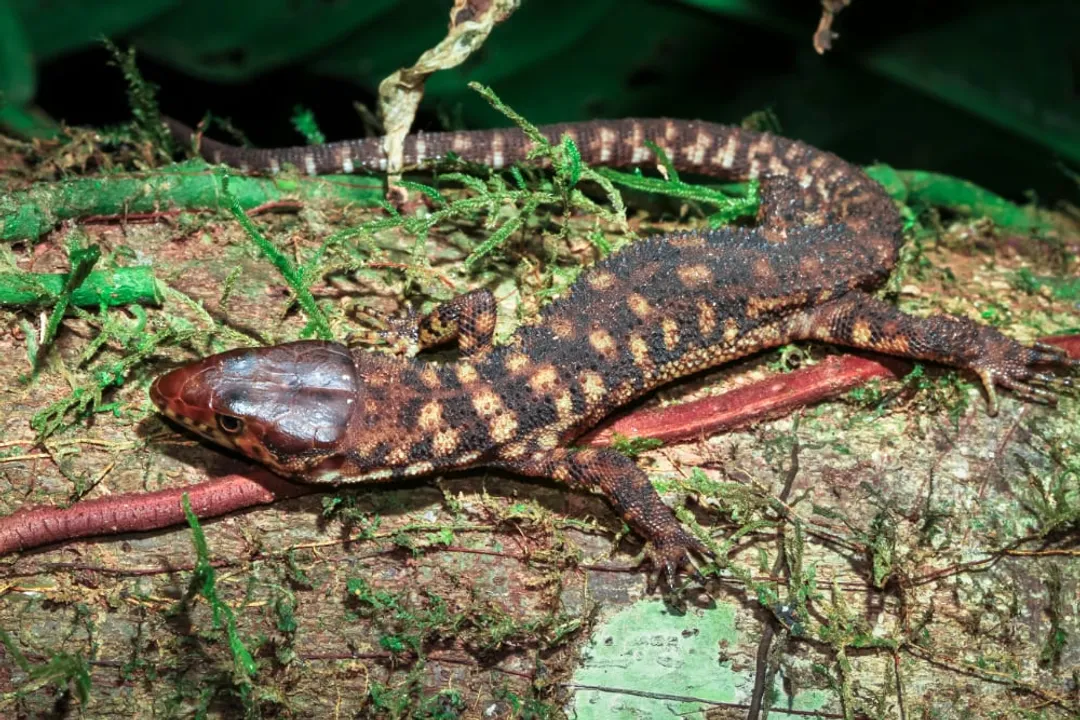
While both *Lepidophyma* and *Xantusia* belong to the Family Xantusiidae (night lizards), their primary distinction lies in their geographic distribution and associated habitat. The genus *Lepidophyma* is specialized for tropical regions, ranging from Mexico down to Panama. In contrast, the genus *Xantusia* is geographically restricted, being endemic specifically to the deserts of the United States. This distribution pattern highlights that *Lepidophyma* represents the tropical component of the night lizard lineage within the family. The third genus in the family, *Cricosaura*, is notable for being confined solely to Cuba.
Related Questions
What Latin roots form the specific epithet *flavimaculatum* of *Lepidophyma flavimaculatum*?What do the Greek roots composing the genus name *Lepidophyma* translate to, referencing a physical trait?Which taxonomic Family unites *Lepidophyma flavimaculatum* with other live-bearing lizards?What reproductive strategy allows *L. flavimaculatum* populations to produce exclusively female offspring without fertilization?What common name is sometimes used by pet dealers for tropical night lizards like *Lepidophyma flavimaculatum*?According to the IUCN assessment, what is the current conservation status of *Lepidophyma flavimaculatum*?What taxonomic feature distinguishes the genus *Xantusia* from the genus *Lepidophyma* within the Xantusiidae family?Which reproductive trait do *L. flavimaculatum* and other members of the Family Xantusiidae share?What unusual physical data discrepancy highlights the difficulty in gathering standardized field data for *Lepidophyma flavimaculatum*?What mechanism is identified as the primary source of venom in *L. flavimaculatum*, despite fictional portrayals?Which authority established the binomial designation *A.H.A. Duméril, 1851* for the species *Lepidophyma flavimaculatum*?