What strategy compensates for the visual risk of *Pieris rapae*'s conspicuous white coloration?
Answer
Learned avoidance by predators due to unpalatability
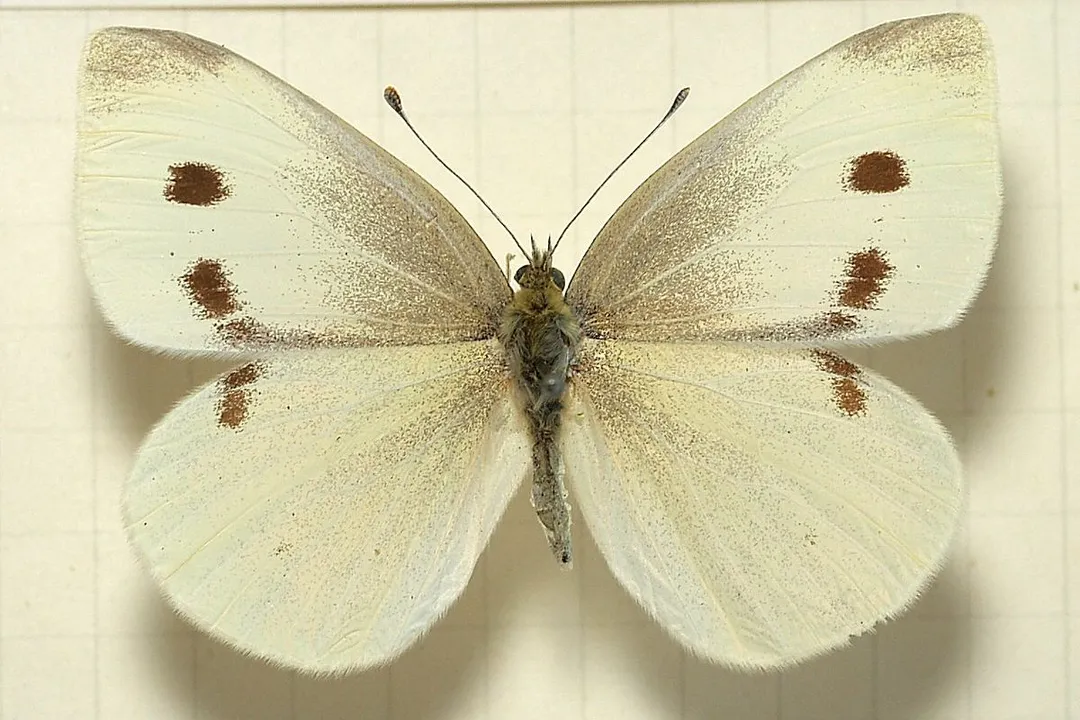
Despite appearing highly visible against a blue sky—a potential evolutionary liability—the white coloration persists because it becomes associated with an unpleasant experience for predators, a process termed aposematism established through trial and error. Many white butterflies, including the *Pieris* genus, sequester defensive compounds from their host plants, making them taste foul. A bird that captures and consumes one white butterfly quickly learns to associate the combination of white color, slow movement, and wing shape with an unpalatable meal, leading to the avoidance of similar-looking insects. This learned avoidance effectively benefits the surviving individuals.
Related Questions
Which plant family serves as the primary food source for voracious *Pieris rapae* caterpillars?What specific plant defense compounds must *Pieris rapae* caterpillars evolve mechanisms to tolerate?How did the vast geographical spread of *P. rapae* outside Eurasia primarily occur?What strategy compensates for the visual risk of *Pieris rapae*'s conspicuous white coloration?What is suggested about *P. rapae*'s evolutionary success in human-altered landscapes?What fundamental genetic concept drives the ability of *Pieris rapae* to rapidly exploit new environments?Which behavior minimizes detection when a *Pieris rapae* butterfly is resting?If divergence in glucosinolate tolerance is mapped globally for *P. rapae*, where might divergence rates in detoxifying pathways be highest?What characteristic feature is specifically noted as being more visible on female *Pieris rapae* wings?When *P. rapae* colonizes a new continent, what factors primarily filter the initial successful individuals?