White Butterfly Evolution
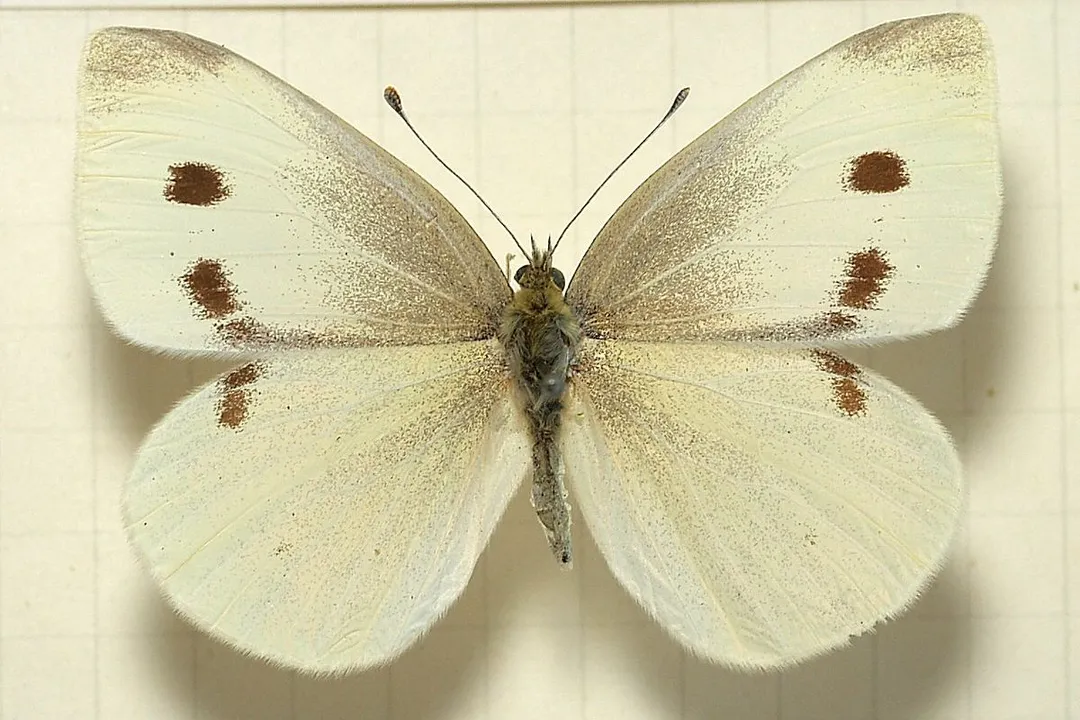
The sight of a pale, fluttering insect against a blue sky is common across many continents, yet the evolutionary journey that placed so many white butterflies in our gardens and fields is anything but simple. Often, we see the Small Cabbage White, Pieris rapae, darting around vegetable patches, an almost unremarkable fixture of temperate zones worldwide. [1] However, this ubiquity masks a dynamic history of adaptation, rapid colonization, and co-evolutionary dance with the plants they rely upon. [5][10] Their very color, which might seem like an advertisement for predators, suggests a survival strategy that relies on factors other than pure camouflage, making their evolutionary success a fascinating study in ecological trade-offs. [7]
# Common Presence
The Pieris rapae is perhaps the most recognized member of the white butterfly family, known for its light, creamy wings, sometimes marked with black spots, especially visible on the females. [1] While visually similar species exist—sometimes leading to confusion—the success of the Cabbage White is geographical, having spread across vast regions including North America, Europe, Asia, and Australia. [1] This immense distribution suggests a high degree of generalist capability or, conversely, extremely rapid, localized adaptation to varied environments following introduction. [9] Their larval stage is often infamous among gardeners because the caterpillars feed voraciously on plants in the Brassicaceae family, such as wild mustard, turnips, and, critically, cultivated cabbage. [1]
# Agricultural Link
The butterfly’s expansion beyond its native Eurasian range is closely tied to human activity, a prime example of how anthropogenic change can drive rapid evolutionary shifts in certain species. [2] The widespread cultivation of brassicas across the globe essentially created a massive, reliable food source that the butterfly was already pre-adapted to consume. [2] Every time farmers planted large fields of cabbage or broccoli, they were inadvertently providing perfect habitat and sustenance for successive generations of these white insects. [2] This human-mediated dispersal, often accidental, meant that P. rapae bypassed the slow, natural barriers that typically limit species spread, immediately putting selective pressure on them to adapt to new climates and perhaps, new natural enemies in their introduced ranges. [2][9] The scale of this agricultural support means their current high numbers are as much a testament to their adaptability as they are to human farming practices. [2]

# Shifting Diets
Evolutionary pressure doesn't stop once a new food source is found; the ongoing interaction with plants constantly refines the butterfly's biology. Research has shown that the tastes of the Cabbage White are continually evolving, suggesting they are not static generalists but active adapters. [3] Their ability to feed on various brassicas is not accidental; it involves specific detoxification mechanisms. The caterpillars must cope with glucosinolates, compounds produced by these plants as chemical defenses. [3][8] The genes governing the ability to tolerate or metabolize these toxins are under selection, meaning that populations feeding on different mustard varieties in different parts of the world might be genetically diverging based on their local chemical challenges. [3][8] One fascinating aspect of this is observing how this dietary flexibility manifests across different continents. For instance, while the ancestral diet might favor certain glucosinolate profiles, populations in North America, feeding on introduced weeds or crops, might show an increased frequency of alleles that handle novel mustard defenses compared to a stable population in their native range. [3][10]
If we were to map the evolutionary divergence of P. rapae populations across the globe based purely on their host plant utilization—tracking which glucosinolate profiles they can tolerate most efficiently—we might find that populations in agricultural zones exhibit faster rates of divergence in detoxifying enzyme pathways than those in more isolated, non-agricultural habitats. [6] This comparison highlights that success in a human-altered landscape often translates directly into measurable genetic shifts over relatively short timescales.
# Predation Paradox
The very whiteness that makes these butterflies so conspicuous in open air seems like a major evolutionary liability. In an environment where many other insects rely on cryptic coloration—like the famous case of the peppered moth evolving darker forms to hide on soot-darkened trees during the Industrial Revolution [4]—why would high visibility persist and even thrive? The answer likely lies in a combination of factors that outweigh the increased risk of visual predation. [7]
For the Pieris genus, one key factor is likely unpalatability. While not as toxic as some brightly colored tropical species, many white butterflies sequester defensive compounds from their host plants, making them taste bad to many avian predators. [7] A bird might capture one, discover it is foul, and quickly learn to avoid all white, slow-moving insects with similar wing shapes, effectively benefiting the survivors through learned avoidance. [7] The initial cost of being easily seen is offset by the eventual "aposematism" or warning signal established through trial and error by predators. [7]
Furthermore, the behavior of the butterfly plays a role. They often fly rapidly or erratically, making them difficult targets, even when spotted. [7] When resting, they often perch with wings closed, presenting a less conspicuous underside. [1] The white coloration itself might also offer some form of concealment against a bright sky background when viewed from below by an upward-looking predator, though this is less effective than the camouflage seen in species matching bark or leaf litter. [7]
# Evolutionary Mechanisms
The underlying mechanisms driving the adaptability of white butterflies involve rapid genetic changes that allow them to exploit new niches. Studies in evolutionary ecology are increasingly looking at the genetic architecture that permits such rapid colonization and diet switching. [9] Evolution doesn't always require brand new mutations; sometimes, it involves shuffling or strongly favoring existing genetic variations that confer a slight advantage in a new environment. [6]
When the Cabbage White entered the Americas, for example, it encountered a completely new suite of predators and parasites. [2] Survival depended on individuals possessing traits—be it faster development, tolerance to new defensive chemicals, or slight behavioral shifts in mate location—that allowed them to out-reproduce their less-suited neighbors. [9] This is evolutionary success through pre-existing genetic plasticity being brought to the forefront by novel environmental challenges. [10] The observation that a species can rapidly move into a new geographical region and establish itself strongly suggests that the genes controlling fundamental life history traits, such as voltinism (number of broods per year) or developmental speed, are highly flexible and responsive to temperature or photoperiod cues in the new region. [9]
Contrast this with highly specialized insects that might vanish when their single host plant declines; the success of Pieris rapae lies in its broad, albeit evolving, palette. The speed at which this genus adapts to human-altered landscapes provides a model for understanding rapid evolution in the Anthropocene, showing that "generalist" can sometimes mean "rapidly evolving specialist" within a broad chemical family like the brassicas. [5] Observing these dynamics in real-time, as published in recent ecological literature, allows researchers to see evolutionary theory playing out not over millennia, but across decades. [9]
# Insights on Spread
Considering the massive global spread of P. rapae, it is instructive to compare its colonization strategy to that of a highly specialized insect. A species highly reliant on a specific native oak might struggle to cross a mountain range separating two suitable oak forests, yet P. rapae, aided by global shipping networks moving its host crops, crossed oceans with relative ease. [2] This dependency on human transport for initial large-scale dispersal means that the primary selection filtering the initial colonizers in a new continent isn't necessarily geographic isolation, but rather the initial shock of the new climate and the local predator guilds. [2]
A practical observation for observers interested in local evolution is to track variation even within a seemingly uniform species. If you live near a large agricultural area growing a single crop type (say, commercial broccoli), and also near an area dominated by a specific invasive weed (like garlic mustard), you might find subtle, yet measurable, differences in the wing spot patterns or emergence timing between the butterflies using these two distinct, yet related, food sources just a few miles apart. [3] This local divergence is the visible footprint of their ongoing, rapid evolution driven by micro-environmental differences in plant chemistry.
Related Questions
#Citations
Pieris rapae - Wikipedia
Every Time the Small Cabbage White Butterfly Flaps Its Wings It Has ...
A brief history of the cabbage butterfly's evolving tastes - The Source
Peppered Moth and natural selection | Butterfly Conservation
Co-evolution's Witness - Pitt Med Magazine
Unprecedented within-species chromosome number cline in the ...
How is that there are so many white butterflies? I thought high ...
FITNESS CONSEQUENCES OF SEASONAL POLYPHENISM IN ...
A global phylogeny of butterflies reveals their evolutionary history ...
Foraging Small White Butterflies, Pieris rapae, Search Flowers ...