What feature often characterizes the underside of the Small White (P. napi) hindwings?
Answer
Noticeable pale or dusky scaling along the veins
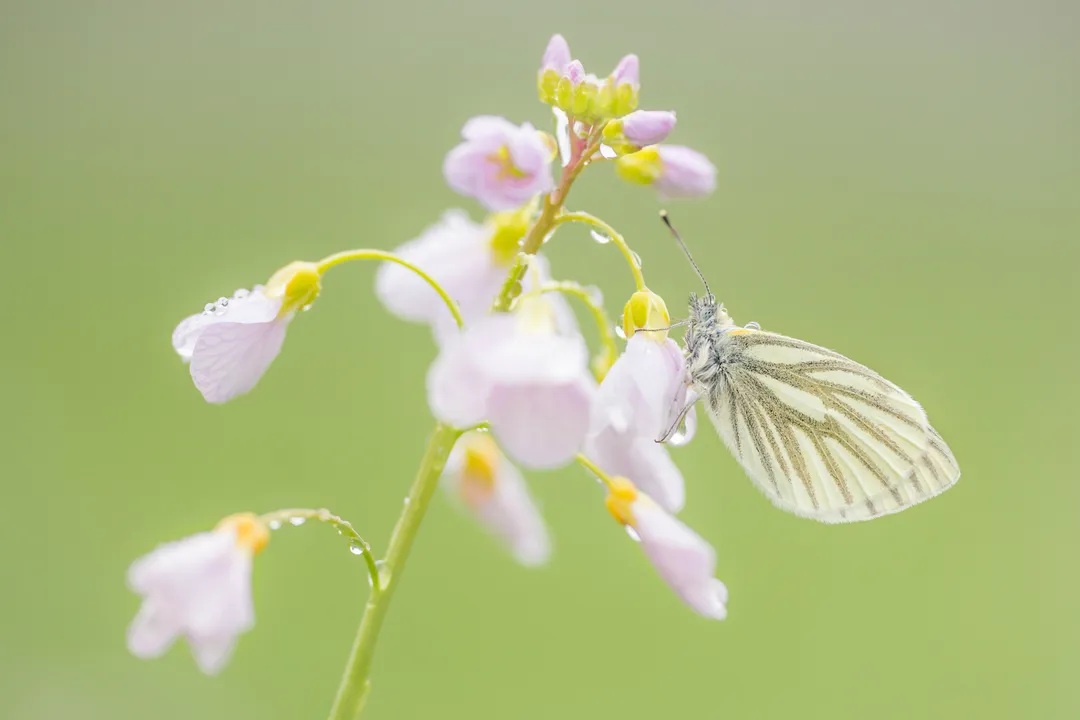
Distinguishing the Small White (*Pieris napi*) from its close relative, the Cabbage White, often requires looking closely at the underside of the wings, particularly the hindwings. The Small White often exhibits a distinct visual characteristic: a more pronounced pale or dusky scaling that heavily outlines the veins traversing the wing surface. This scaling gives the underside a less crisp, slightly smudged appearance compared to the Cabbage White. Conversely, the Cabbage White's underside typically allows the dark spots from the upper surface to show through faintly, but it lacks the heavy, distinct dusky veining characteristic of *P. napi*.
Related Questions
What is the typical forewing spot count for a male Cabbage White (P. rapae)?What family of plants are Cabbage White larvae notorious for feeding heavily upon?What feature often characterizes the underside of the Small White (P. napi) hindwings?To which family do both the Cabbage White (Pieris rapae) and the sulphurs belong?Which environment does the Small White (P. napi) tend to favor, especially for its spring brood?How many black spots do female Cabbage Whites (P. rapae) usually display on each forewing?Where should observation time be focused to best find Cabbage White activity?What is the Small White (Pieris napi) sometimes called in certain contexts?What physical trait might lead people to confuse the Pieridae family with moths?Which mentioned white butterfly species lacks the prominent dark markings used for quick identification?