White Marlin Evolution
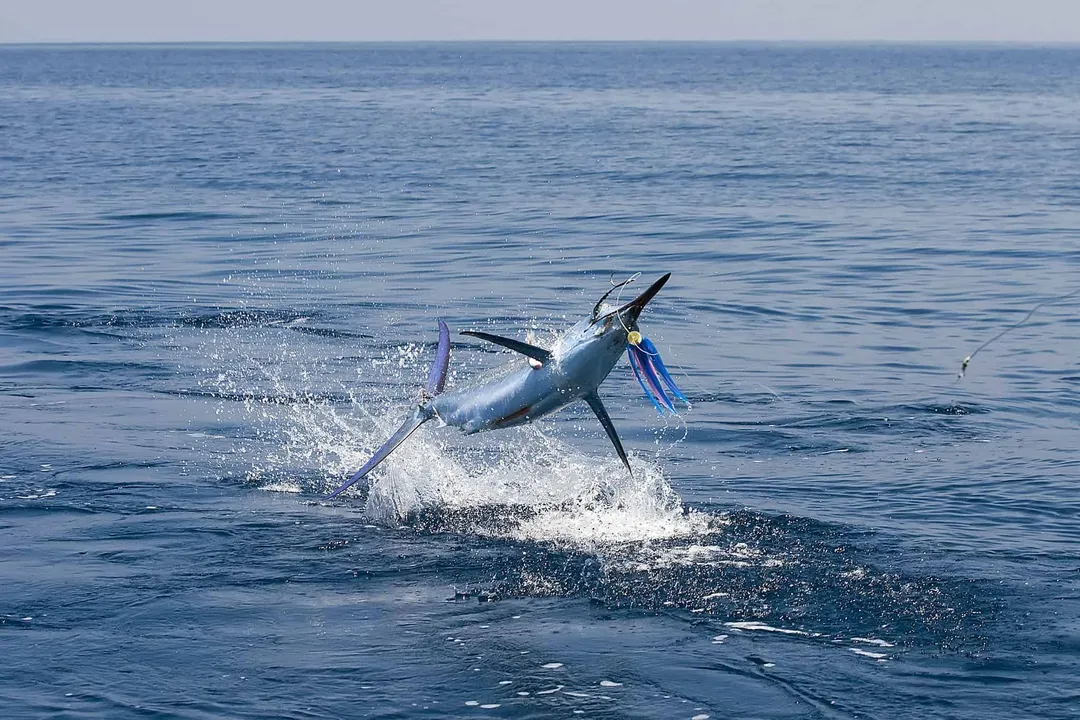
The white marlin, Kajikia albida, stands as one of the ocean’s most recognizable pelagic predators, a streamlined marvel perfectly adapted to the open water. While commonly grouped with its larger, more famous relatives like the blue and black marlins, understanding the white marlin requires looking back at the branching pathways of billfish evolution to appreciate its distinct place in the marine world. [1][6] These fish represent a specific success story within the family Istiophoridae, showcasing evolutionary adaptations for speed, sight, and predatory efficiency in the vast, three-dimensional environment of the sea. [6]
# Billfish Lineage
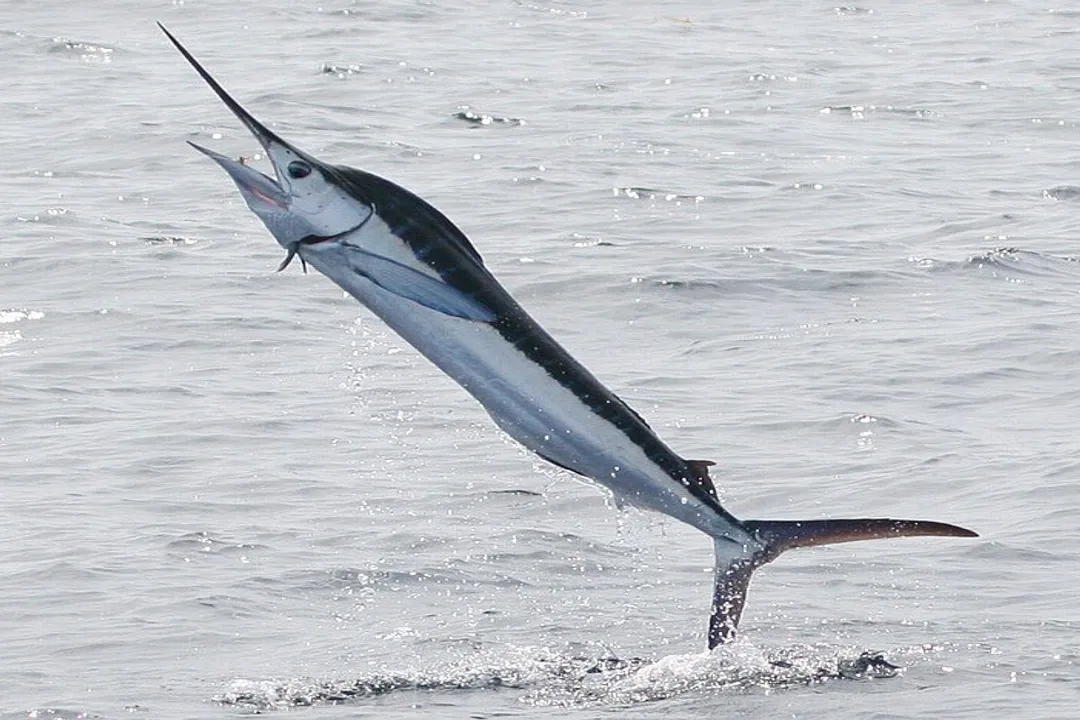
The story of the white marlin begins with the family tree of the billfishes. This group is characterized by the prominent, spear-like bill—a feature hypothesized to aid in stunning or slashing prey rather than spearing it outright. [2][6] Within the Istiophoridae family, evolutionary biology suggests several key divergence points that separate the distinct genera. [6]
One significant split occurred between the sailfish genus, Istiophorus, and the true marlins, which belong to the genera Makaira (blue and black marlins) and Kajikia (white and striped marlins). [6] Furthermore, the Kajikia genus, which houses the white marlin, is itself distinct from the closely related Tetrapturus genus, which contains the spearfish. [6] Genetic research underscores that these divisions are not merely arbitrary groupings but reflect deep evolutionary separation. [10]
The specific evolutionary placement of the white marlin (Kajikia albida) shows that its lineage diverged from that of the Makaira species earlier than the split between the Istiophorus and Makaira clades. [6] This means that while blue marlins and sailfish might share a more recent common ancestor in one branch of the family tree, the white marlin belongs to a separate evolutionary branch that branched off prior to that latest grouping. [6] This deep divergence explains why, despite superficial similarities, the white marlin possesses traits that set it apart from the larger, bulkier blues and blacks. [1][10]
# Marlin Groupings
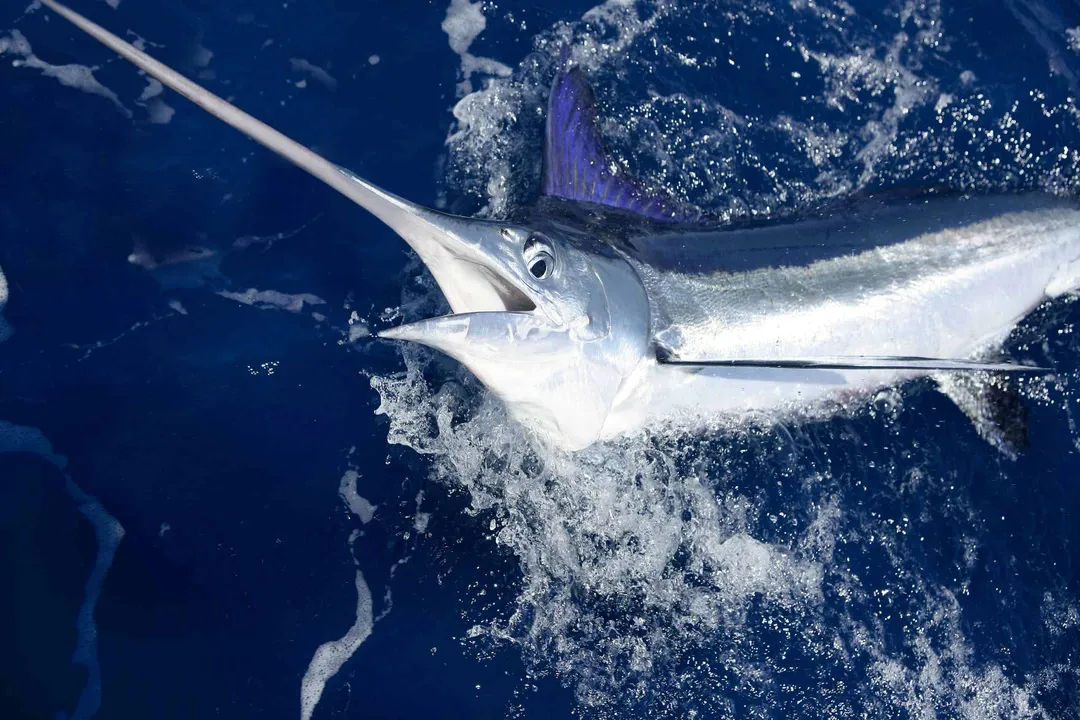
The genus Kajikia itself contains at least two recognized species: the white marlin (K. albida) and the striped marlin (K. audax). [1][10] For many years, there was considerable confusion, with some researchers considering the white, black, and striped marlins to be subspecies of a single species. [10] However, modern genetic studies have strongly affirmed that Kajikia albida (white marlin) and K. audax (striped marlin) are indeed separate species, not just regional variations. [10]
Interestingly, the black marlin, once often classified alongside the white and striped marlins in some systems, is now typically placed in the Makaira genus, alongside the blue marlin. [6][10] This reclassification highlights how morphological similarity can mask deeper evolutionary separation; although white and striped marlins are closely related within Kajikia, the black marlin's placement in Makaira indicates a different evolutionary path, separating it from the Kajikia group earlier on. [6]
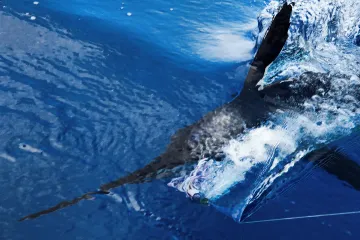
The physical distinctions reflect this genetic separation. White marlins are generally smaller than blue or black marlins, typically reaching lengths around 8 to 9 feet. [1][5] Their coloration is distinct, often featuring a silvery-white underside and flank, with a darker blue or purplish dorsal area that fades quickly after death. [1][7] While all billfish exhibit countershading for camouflage, the specific patterning—including the number and appearance of the lateral line stripes—serves as a key identifier for separating the Kajikia species from the Makaira species. [1][10]

# Identifying Traits
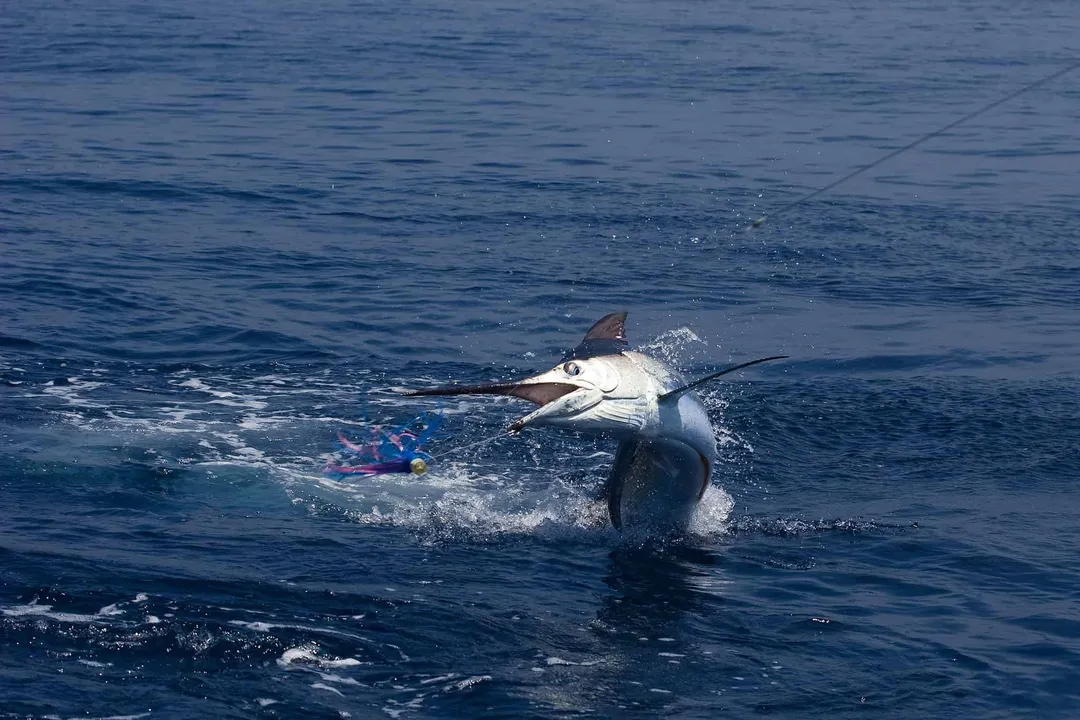
The physical morphology of the white marlin speaks volumes about the environmental pressures it has faced throughout its evolution. It is built for speed, capable of reaching incredible velocities in the water. [2][9] The body is streamlined, designed to minimize drag, and they possess a crescent-shaped caudal fin, or tail, which powers their rapid propulsion. [2]
A key feature differentiating the white marlin from the blue marlin is the size and shape of the dorsal fin. The first dorsal fin on a white marlin is relatively small and low compared to the towering, sail-like structure seen on a blue marlin. [1][5] This structural difference hints at differing hydrodynamic priorities in their ecological niches. Where the sailfish relies on its massive dorsal fin for stability or perhaps even as a visual cue during schooling or hunting, the white marlin seems to have evolved a more compact profile. [6] A deeper analysis of fin mechanics suggests that while blues and blacks might excel in long, powerful thrusts, the white marlin’s morphology might be optimized for quicker acceleration and tighter maneuvering in pursuit of smaller, faster prey typical of the upper water column where they often hunt. [1][2]
The bill itself is another point of comparison. White marlins possess a relatively slender bill compared to the stouter, shorter bills seen on black marlins. [1][5] This slender bill, combined with their generally smaller size, suggests an evolutionary trajectory favoring agility over raw, close-quarters impact force when confronting prey like squid or smaller schooling fish. [6]
# Genetic Structure
Contemporary research has moved beyond simple morphology to solidify the white marlin's evolutionary standing using molecular data. Studies examining mitochondrial DNA and nuclear markers have provided compelling evidence that the white, black, and striped marlin populations are genetically distinct species across their ranges. [10] This genetic clarity has profound implications, particularly for management efforts, as it confirms that treating them as a single, amorphous "marlin" group is scientifically unsound. [3]
Furthermore, the research into the Kajikia genus suggests that even within the white marlin itself, there might be significant population structure that warrants separate consideration. [3] For instance, studies examining populations across the Atlantic and Pacific oceans, or even within large oceanic basins, often reveal distinct genetic units that do not freely interbreed or mix at the rates once assumed. [3][10] This implies that while the species K. albida as a whole evolved in response to broad Atlantic pressures, local populations have undergone micro-evolutionary divergence based on regional oceanographic conditions, prey availability, and migratory barriers. [3] Recognizing these distinct management units is a modern extension of evolutionary understanding applied to conservation.
# Conservation Pressures
The evolutionary success that allowed the white marlin to thrive has been seriously tested by modern anthropogenic pressures. The white marlin is currently listed as Endangered by the IUCN Red List, reflecting significant historical declines due to commercial and recreational fishing pressure. [7][8]
Its life history traits—relatively late maturity, slow growth rates, and moderate fecundity—make it particularly vulnerable to overfishing compared to species with faster turnover rates. [7] The pressures that lead to a species becoming endangered are, in a sense, a new, powerful selective force in its recent evolutionary history. While natural selection favors traits that enhance survival and reproduction against environmental challenges like predation or climate change, heavy fishing pressure selectively removes the largest, most reproductively successful individuals, potentially altering the genetic makeup of future generations. [7][8]
This selective removal could inadvertently favor smaller, faster-maturing individuals, a form of rapid, human-induced evolution. If the fishing mortality rates remain high, the long-term viability of the species depends not just on reducing catch, but on understanding the genetic resilience of the remaining isolated populations identified by geneticists. [3]
If we consider the relatively slender build and smaller maximum size of the white marlin compared to its Makaira cousins, one can hypothesize that its evolutionary niche likely involves slightly faster responses to localized prey movements rather than sheer, sustained top-end speed where the blue marlin might dominate. [1][5] This specialization, which once provided an advantage, may make it less adaptable when faced with the uniform, high-mortality pressure exerted by modern fishing gear across its entire range. [7] Understanding the specific regional adaptation—such as subtle differences in migration timing or preferred temperature bands between distinct K. albida units—is now vital to ensure that conservation zones protect the full breadth of its existing genetic diversity. [3]
# Future Trajectories
The white marlin’s evolutionary story is far from over. Its long history within the Istiophoridae family demonstrates remarkable adaptation to the pelagic zone. [6] The future trajectory, however, is heavily dependent on human intervention balancing conservation needs with fishing activities. [4][8]
The scientific community’s ability to distinguish between the closely related white, striped, and black marlin, thanks to molecular analysis, is now key. [10] For anglers and conservation groups, this knowledge translates directly into better data collection. For instance, when documenting a catch or release, noting subtle bill characteristics, like the faint blue stripes often present on the white marlin's flanks when freshly caught, helps build the observational database that complements the genetic work. [1][7] Properly identifying the Kajikia versus the Makaira species in catch statistics ensures that conservation efforts are accurately targeted at the critically depleted white marlin populations. [3]
In essence, the white marlin's evolution has led it to a specific, specialized niche. The challenge now is whether its inherent biological rate of adaptation—which took millions of years to craft its form—can cope with the rapid, intense selective pressure imposed by our current fishing technology. [7] Its survival hinges on respecting the deep evolutionary boundaries that science has uncovered, ensuring that populations separated by time and genetics are managed individually for the best chance of recovery. [3][10]
Related Questions
#Citations
White marlin - Wikipedia
White Marlin Animal Facts - Kajikia albida
Genomic data resolve long-standing uncertainty by distinguishing ...
White Marlin - The Billfish Foundation
White marlin | fish - Britannica
On the Evolutionary History of Billfish | Andrew Blitman
White Marlin | NC DEQ
White Marlin - Ocean Conservancy
Saltwater Fish - White Marlin | Discover Boating
New Research Sheds Light on Black, Striped and White Marlin ...