White Butterfly Facts
The sight of a bright white butterfly flitting through a garden or field is common across many continents, yet these seemingly simple insects often belong to distinct, sometimes confusingly named, species. While the casual observer might group them all under the general term "white butterfly," understanding the differences between relatives like the Large White, the Small White, and the ubiquitous Cabbage White reveals fascinating details about their history, habits, and impact on agriculture. These species generally belong to the family Pieridae.
# Species Lookalikes
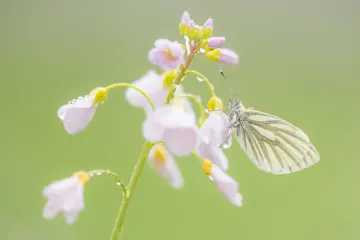
Confusion frequently arises between the three most commonly encountered whites in many regions: the Large White (Pieris brassicae), the Small White (Pieris napi), and the Cabbage White (Pieris rapae). While all share a predominantly white coloration, size and subtle markings differentiate them. For instance, the Large White is noticeably bigger than the Small White. The Small White, also known in some areas as the Green-veined White, exhibits greenish or greyish scaling along the veins on the underside of its wings, which helps distinguish it from the others.
# Appearance Markers

One of the most accessible, though sometimes region-specific, ways to differentiate the Cabbage White is by examining the number of dark wing spots on the upper side of the forewing. In Pieris rapae, the male typically displays only one black spot on each forewing, whereas the female possesses two black spots. This spot count acts as a reliable sex indicator for this particular species. However, relying solely on this count is less helpful when trying to separate the Cabbage White from the Large White, as the Large White tends to have much larger, more defined black markings at the wing tips, often covering more area than just a single spot. Another useful observation for the Cabbage White is that the females are often slightly darker overall than the males. When observing the Small White, its distinguishing feature is the faint green tinting along the wing veins visible on the underside, a feature absent or far less pronounced in the other two related species.
If you are attempting to identify one of these insects in the wild, remember that the spot pattern, especially for P. rapae, is a fantastic quick-reference key, but to be absolutely certain when dealing with the Large White or Small White, you may need to assess the overall size and the specific pattern of the wing edges and veins, as identification guides suggest that P. rapae females' spots can sometimes be slightly obscured or variable, making size comparison the next best tool.
# Geographic Range
The distribution of these white butterflies varies significantly, often reflecting their history of introduction outside their native ranges. The Cabbage White (Pieris rapae) is perhaps the most geographically successful of the group, having established itself across North America and Eurasia. It is believed to have arrived in North America relatively late, around the late 1800s, before spreading widely. Similarly, it has become established in Australia. In contrast, the Large White (Pieris brassicae) has a more restricted presence in the United Kingdom, being more common in the south and east of England, though still found elsewhere. The Small White (Pieris napi) is generally considered widespread across the UK. Given that P. rapae is common in New Zealand as well, its successful colonization across temperate zones makes it a globally recognized member of the Pieridae.
# Caterpillar Diet
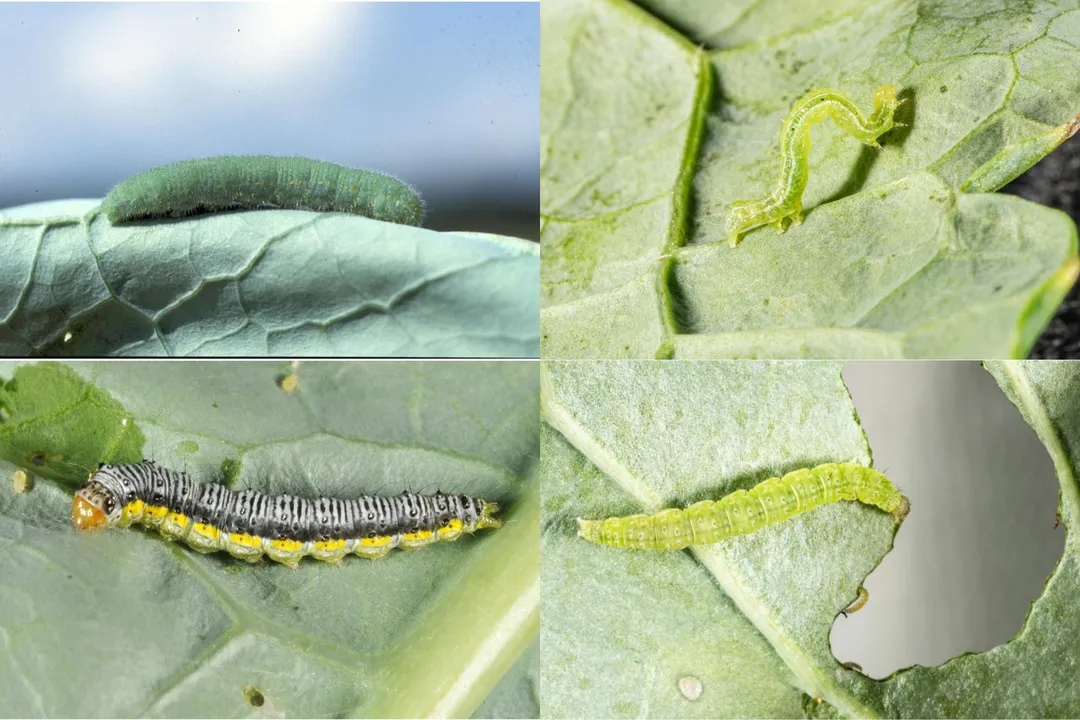
The food preferences of the larval stage are a key difference between these closely related species, and this is where their interaction with human agriculture becomes most apparent. Both the Large White and the Cabbage White display a strong preference for plants in the cabbage family, known scientifically as Brassicas. Caterpillars of these two species readily consume cultivated vegetables such as cabbage, broccoli, and cauliflower. The Large White specifically feeds on brassicas, but also enjoys nasturtiums and horseradish. The Cabbage White shares the love for brassicas and nasturtiums.
The Small White, however, tends to favor different host plants. Its caterpillars are commonly found feeding on plants like Cuckoo Flower, Garlic Mustard, Watercress, and Hedge Mustard. This dietary divergence is quite interesting; while the Cabbage White and Large White have found great success exploiting human-cultivated crops, the Small White appears to rely more heavily on native or less intensively managed flora. For a home gardener aiming to reduce pest pressure, understanding this distinction means that while you must rigorously inspect your brassica beds for the Cabbage White and Large White larvae, checking for Small White caterpillars on non-brassica wild edibles or ornamental borders might reveal a different set of potential food sources, even if those plants aren't the primary target.
# Agricultural Impact
Because both the Large White and the Cabbage White larvae heavily target Brassica crops, they are frequently regarded as significant agricultural pests. The damage is caused entirely by the feeding of the caterpillars, which chew large, often ragged holes in the leaves of their preferred food sources. When populations are high, especially in commercial growing areas focused on monocultures of broccoli or cabbage, the defoliation can lead to substantial crop losses. In Missouri, for example, the Cabbage White is noted for its tendency to remain close to the ground as an adult, which keeps the reproductive cycle tightly linked to low-lying garden crops. The introduction of the Cabbage White to new continents, like North America, meant introducing a new consumer to agricultural systems where native defenses might not have been sufficient to control its numbers.
# Life Cycle Stages
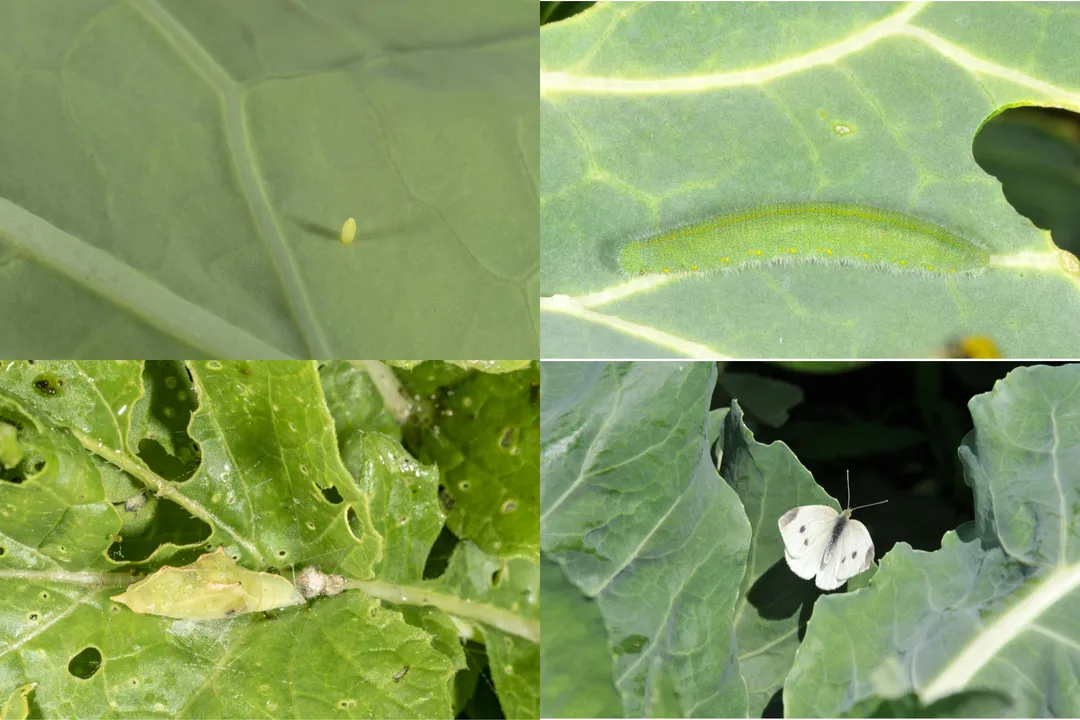
Like all butterflies, these white species undergo complete metamorphosis, passing through four stages: egg, larva (caterpillar), pupa (chrysalis), and adult. The eggs are typically laid singly or in small clusters on the leaves of the appropriate host plant. The resulting larva is the destructive feeding stage, growing rapidly before forming a chrysalis to undergo transformation. The chrysalis of the Cabbage White is often described as pale green or yellowish, sometimes marked with black dots, and is usually attached to a stem or leaf near the food source. The adult stage, characterized by its distinctive white wings, is concerned primarily with mating and locating new host plants for egg-laying. The wingspan for the Cabbage White specifically is generally cited as falling between 1.25 and 2 inches.
# Flight Behavior
While general movement involves typical butterfly flight, specific behaviors can aid in identification. As noted previously, the Cabbage White adult tends to fly quite close to the ground, moving in short, fluttering bursts among vegetation. This low-level activity contrasts with some other butterflies that spend more time soaring at higher altitudes. For those in the field looking for early signs of infestation, observing these lower flight patterns can sometimes lead you to the egg-laying females sooner.
Related Questions
#Citations
Large White | Butterfly Conservation
Pieris rapae - Wikipedia
Cabbage White - Alabama Butterfly Atlas
White butterflies - Science Learning Hub
Small white | The Wildlife Trusts
Insect Spotlight: Cabbage White Butterfly (Pieris rapae)
What Gardeners Should Know About the Cabbage White Butterfly
Cabbage White | Missouri Department of Conservation
Cabbage White Butterfly - The Australian Museum