What specific observable characteristic of the Woolly Bear forms the basis of common weather prediction folklore?
Answer
The ratio of the dark bands to the light bands
Popular legend often asserts that the coloring of the Woolly Bear can forecast the coming winter's severity. The physical measurement that underpins this widespread belief is the ratio or width comparison between the dark (black) bands and the lighter (reddish-brown or rusty-orange) bands encircling the body. Larvae that have fed longer or are developmentally older before hibernation typically exhibit a wider reddish-brown section, which is interpreted by the folklore as an indicator of a milder winter to come, although this relationship lacks scientific validation for long-range forecasting.
Related Questions
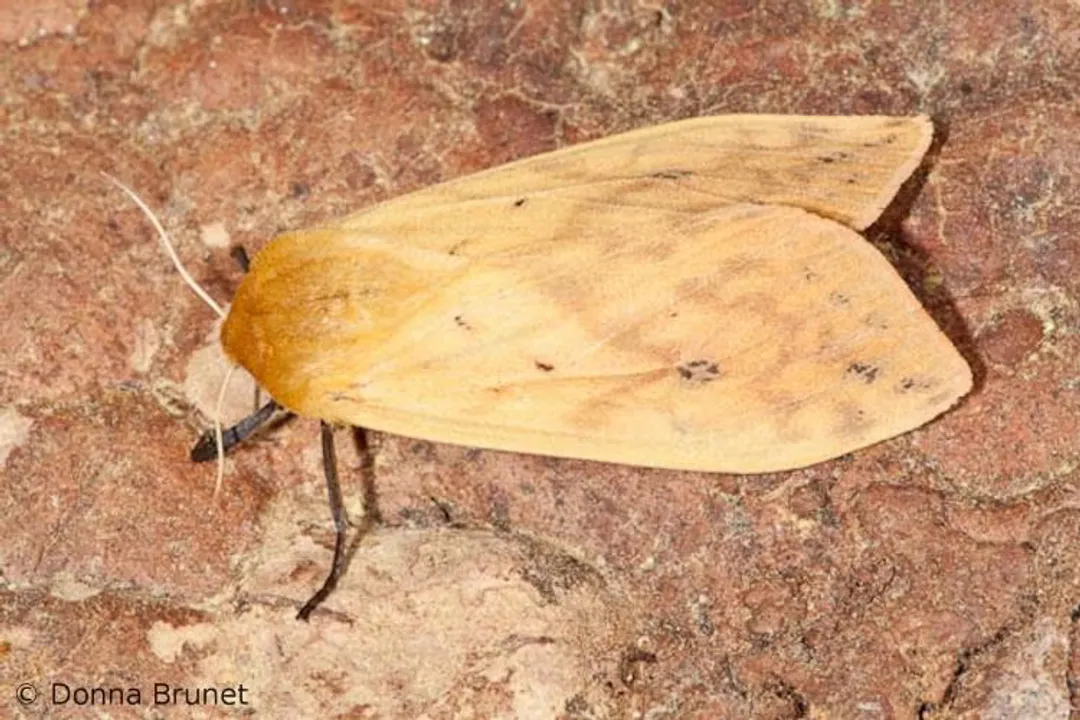
What is the scientific name for the Isabella Tiger Moth larva, commonly called Woolly Bear?Are the stiff hairs, or bristles, covering the Woolly Bear caterpillar venomous or stinging?What colors form the distinct alternating bands typically seen circumferentially on the Woolly Bear?What is the approximate maximum length reached by a Woolly Bear caterpillar when fully developed before seeking shelter?What is the resulting adult insect that emerges after the Woolly Bear pupates?What reflexive defensive behavior does the Woolly Bear exhibit when potentially threatened by a predator?What biochemical compounds does the caterpillar actively produce to survive being partially frozen during winter?What reliable physical marker distinguishes the Isabella Tiger Moth larva from the Giant Leopard Moth caterpillar?How is the wing coloration of the adult Isabella Tiger Moth generally described?What essential survival function is provided by the dense hair covering during the Woolly Bear's overwintering stage?What specific observable characteristic of the Woolly Bear forms the basis of common weather prediction folklore?