What reliable physical marker distinguishes the Isabella Tiger Moth larva from the Giant Leopard Moth caterpillar?
Answer
The specific black-and-brown banding pattern
While both the Woolly Bear and the Giant Leopard Moth caterpillar are hairy species, accurate identification relies on specific visual markers to avoid confusion, especially regarding potential skin reactions (though the Woolly Bear is harmless). The defining characteristic of the *Pyrrharctia isabella* larva is its pattern of relatively even, distinct black and reddish-brown segments banded circumferentially. In contrast, the Giant Leopard Moth caterpillar presents a different appearance, typically being almost entirely black and considerably hairier, lacking the consistent, specific bicolored banding of the Isabella Tiger Moth larva.
Related Questions
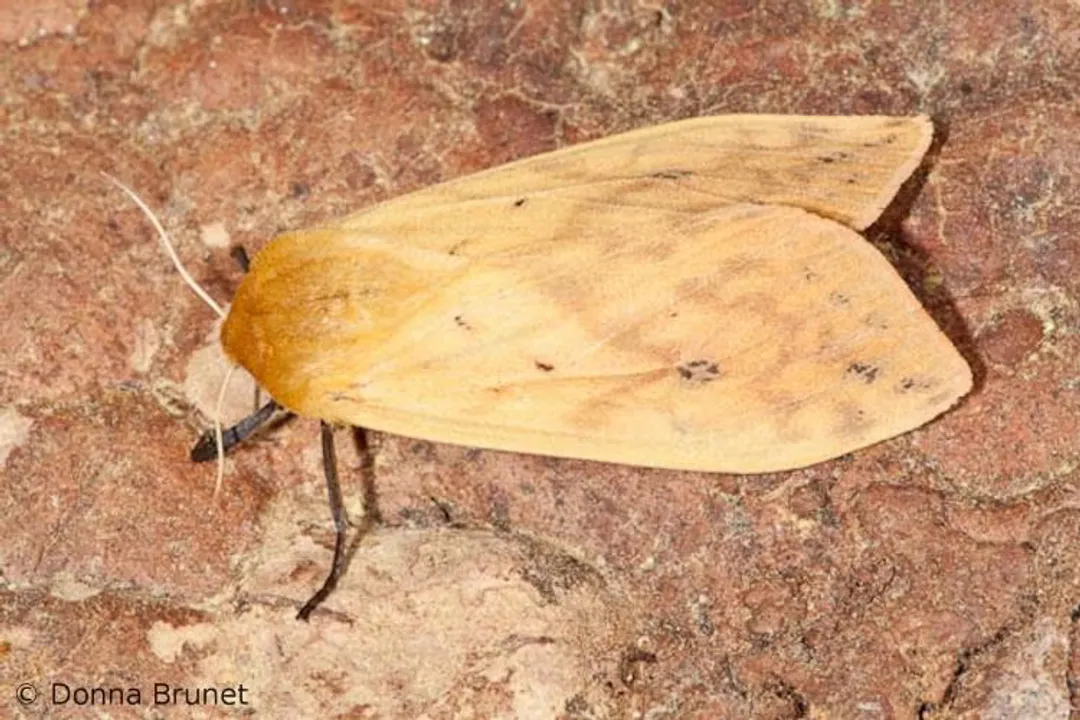
What is the scientific name for the Isabella Tiger Moth larva, commonly called Woolly Bear?Are the stiff hairs, or bristles, covering the Woolly Bear caterpillar venomous or stinging?What colors form the distinct alternating bands typically seen circumferentially on the Woolly Bear?What is the approximate maximum length reached by a Woolly Bear caterpillar when fully developed before seeking shelter?What is the resulting adult insect that emerges after the Woolly Bear pupates?What reflexive defensive behavior does the Woolly Bear exhibit when potentially threatened by a predator?What biochemical compounds does the caterpillar actively produce to survive being partially frozen during winter?What reliable physical marker distinguishes the Isabella Tiger Moth larva from the Giant Leopard Moth caterpillar?How is the wing coloration of the adult Isabella Tiger Moth generally described?What essential survival function is provided by the dense hair covering during the Woolly Bear's overwintering stage?What specific observable characteristic of the Woolly Bear forms the basis of common weather prediction folklore?