Woolly Monkey Physical Characteristics
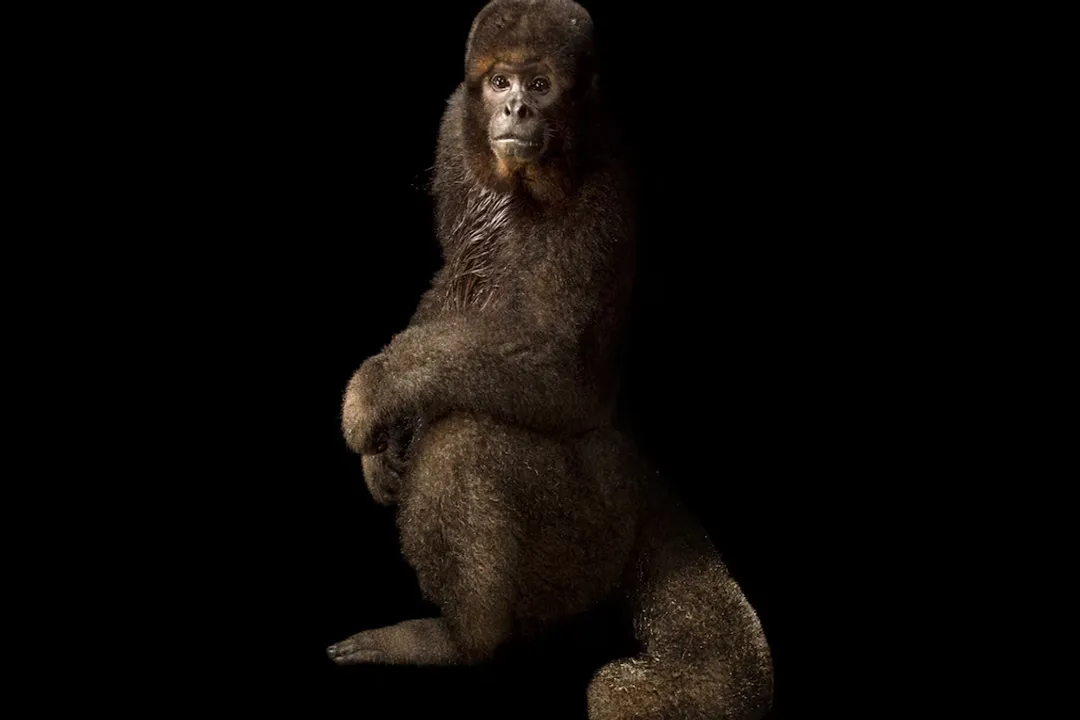
Woolly monkeys represent some of the largest and most visually striking primates inhabiting the humid rainforests of the western Amazon basin. Belonging to the genus Lagothrix, these New World monkeys are characterized by their incredibly dense, thick fur, which lends them their common name. While all share a general robust body structure and a highly specialized tail, physical characteristics, particularly coat color and fur texture, can vary significantly between the recognized species and subspecies. The common, or Humboldt's, woolly monkey (Lagothrix lagotricha) and the distinct Peruvian yellow-tailed woolly monkey (Oreonax flavicauda), which some researchers place in its own genus, exhibit key morphological differences that reflect their evolutionary paths and specialized ecological niches.
# Size and Build
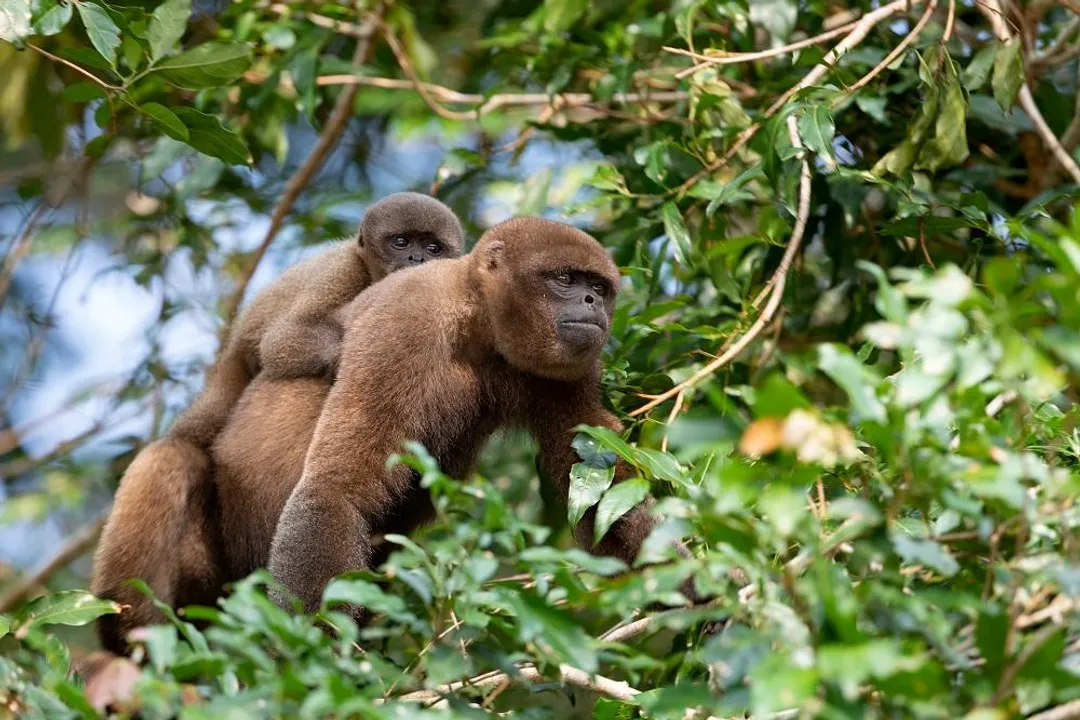
Woolly monkeys are immediately noticeable due to their substantial build relative to many other New World primates. Adult common woolly monkeys generally measure between 40 to 60 centimeters (16 to 24 inches) in head and body length, not including their lengthy tails. Females of L. lagotricha typically average about 7 kilograms (15.5 pounds), while males are slightly heavier. However, more precise measurements for this species show a clearer sexual dimorphism in weight, with males averaging around 9.0 kg (20 lbs) compared to females at 5.75 kg (13 lbs). Their overall body shape is stocky, featuring sturdy limbs and a pronounced abdominal area, which is so noticeable that it earned them the Portuguese nickname barrigudo, translating to "big belly". This description of a protruding belly strongly suggests a significant internal capacity dedicated to processing the high volume of fibrous fruit and leaves that form the bulk of their diet. This physiological specialization for a bulky, frugivorous diet likely dictates the need for their noticeably heavy build, setting them apart from lighter, more insectivorous or smaller-fruit-dependent primates in the same environment.
The Yellow-tailed woolly monkey, endemic to Peru, is described as large and robust, sometimes even slightly exceeding the common species in stature. Museum specimens indicate head and body lengths ranging from 51.5 to 53.5 cm (20.3 to 21.1 inches). Weight estimates for O. flavicauda hover around 10 kg (22.0 lbs) for an unsexed adult, suggesting males may be quite large. Despite the general similarities in overall size, these minor differences in average weight and length between the common and yellow-tailed types are one factor supporting the argument for their separation into different genera. Regardless of the specific species, they are considered among the largest primates found in the Amazonian lowlands.
# Pelage and Color
The common name "woolly" is derived directly from their distinctive covering of thick, dense hair across most of the body. The texture is short and dense, offering protection from the intense tropical sun, rain, and biting insects encountered in their canopy habitat. Coloration within the genus Lagothrix is highly variable, often changing depending on geographic location and subspecies classification. For L. lagotricha and related species, the fur can range across shades of tan, gray, reddish, or black. For instance, individuals in Colombia near the base of the Andes are often gray or black, whereas those found in Brazil frequently display olive coloration. The brown woolly monkey subspecies (L. l. lagothricha) is typically brown-headed, while Geoffroy's woolly monkeys lean toward a brownish-gray. Newborns are often born tan, only developing their final adult coloring later in life.
The Yellow-tailed woolly monkey presents a notably different aesthetic profile. Its fur is described as being longer and significantly denser than that of the other woolly monkeys. The primary color is a deep mahogany or copper, darkening to nearly black across the upper body and head. A notable facial marking is a whitish patch around the mouth that extends between the eyes. In contrast to the general drabber tones of some Lagothrix relatives, the O. flavicauda possesses distinct reddish-auburn coloring on the lower back and tail. Furthermore, males of this species tend to be slightly darker overall than females.
The contrast in fur characteristics—short and variable in L. lagotricha versus longer, denser, and darker in O. flavicauda—highlights an important physical adaptation strategy. While both species inhabit forests, O. flavicauda is confined to high-elevation cloud forests where temperatures can fluctuate widely, ranging from cool lows of 8°C to warmer highs of 25°C. The denser, longer coat of the Yellow-tailed woolly monkey may offer superior insulation against the consistently cooler and damper conditions found in the montane cloud forests compared to the lowland rainforest habitat of the common woolly monkey.
# Prehensile Tail
Perhaps the most defining physical characteristic shared across the woolly monkey genus is the highly developed prehensile tail. This appendage is crucial for their arboreal existence, often being as long as, or even longer than, their head and body combined. Functionally, the tail acts as a powerful, indispensable fifth limb. It is so strong that the animal can support its entire body weight solely by hanging from a branch, which is a feat performed regularly while resting or foraging. This ability to hang securely frees up the hands and feet, allowing the monkey to manipulate food items or secure itself in different positions. A critical feature enabling this grip is the bare, tactile pad located on the underside of the tail's terminal third. This hairless patch, similar in function to a palm, allows for a firm purchase on bark and branches. The tail also serves an essential role in balance while the monkey is moving through the canopy. For the Yellow-tailed species, the tail carries its namesake feature: a distinctive yellowish coloration on the underside of the final section, which is absent in juveniles.
# Head and Limbs
Woolly monkeys possess large, round heads paired with faces that are typically bare, often appearing black or brown. Their eyes face forward, a primate trait that provides the overlapping fields of view necessary for stereoscopic vision, which is vital for accurately judging the distances required for leaping between trees. Research indicates that woolly monkeys have developed specialized sensitivity to the color green, which aids in navigating and identifying ripe foliage within the overwhelmingly green forest environment.
Their hands and feet show adaptations for grasping branches, though with some distinctions from Old World primates. They possess long fingers tipped with curved fingernails, ideal for gripping. Their feet are equipped with opposable big toes, which aid in gripping branches above or below them. In contrast, their thumbs are notably small and described as unopposable. While they lack a fully opposable thumb like that seen in some Old World monkeys or apes, the tactile sensitivity of their digits is highly refined. The palms of their hands and feet, along with the tail pad, contain specialized nerve endings and ridges (dermatoglyphics) that increase tactile sensitivity and help ensure an effective grip. This heightened tactile ability is essential for their diet; the sensitive fingertips act as a finely tuned sorting mechanism, allowing them to accurately assess fruit ripeness and select desirable portions of leaves and buds, compensating for the lack of a fully developed thumb during intricate feeding maneuvers.
# Species Distinction
Although grouped together, the morphological differences between the main groups are substantial enough to warrant taxonomic distinction. The contrast between the common woolly monkey (Lagothrix lagotricha) and the Yellow-tailed woolly monkey (Oreonax flavicauda) is significant enough that the latter has been placed in its own genus, Oreonax, based on morphological and cladistic grounds, though this classification remains under scientific debate.
| Characteristic | Common Woolly Monkey (L. lagotricha) | Yellow-tailed Woolly Monkey (O. flavicauda) |
|---|---|---|
| Fur Texture | Short, thick, woolly | Longer, denser, silky |
| Primary Color | Tan, gray, reddish, or black; variable | Deep mahogany or copper, darker on the head |
| Tail Tip | Generally matches body color | Characteristic yellowish pelage on the last third |
| Facial Markings | Bare face, black or brown | Whitish patch around the mouth extending toward eyes |
| Weight (Male Avg) | kg (20 lbs) | kg (22.0 lbs) (unsexed estimate) |
| Habitat | Tropical lowland rainforests, sometimes flooded areas | Humid montane/cloud forests at higher elevations |
The physical differences extend to secondary sexual characteristics as well. Adult male L. lagotricha possess longer canine teeth compared to females. In O. flavicauda, males often display a prominent, long, yellowish pubic hair tuft, which is much shorter in females, who are distinguished by a long, prominent clitoris. These observable physical variations underscore the fact that while they share the general blueprint of a large, prehensile-tailed primate, each group has evolved unique attributes suited to its specific forest strata.
Related Questions
#Citations
Common Woolly Monkey, Lagothrix lagothricha
Woolly monkeys, facts and information | National Geographic
Woolly monkey - Wikipedia
Woolly monkey | Tropical Rainforest, Primate, Social Behavior
[PDF] Woolly Monkeys
Yellow-tailed woolly monkey
Woolly Monkey - Red Uakari Jungle Tours
Biodiversity-Woolly Monkey - Save America's Forests