What biochemical compounds does the caterpillar actively produce to survive being partially frozen during winter?
Answer
Cryoprotectants
A critical adaptation allowing the Woolly Bear to survive harsh cold environments is an internal biochemical change that occurs prior to full hibernation. As temperatures drop in late autumn, the caterpillar initiates the production of specialized compounds known as cryoprotectants. These substances function as natural antifreeze, lowering the freezing point of the internal fluids, thereby enabling the caterpillar to endure periods where parts of its body tissue might actually freeze solid without sustaining lethal cellular damage.
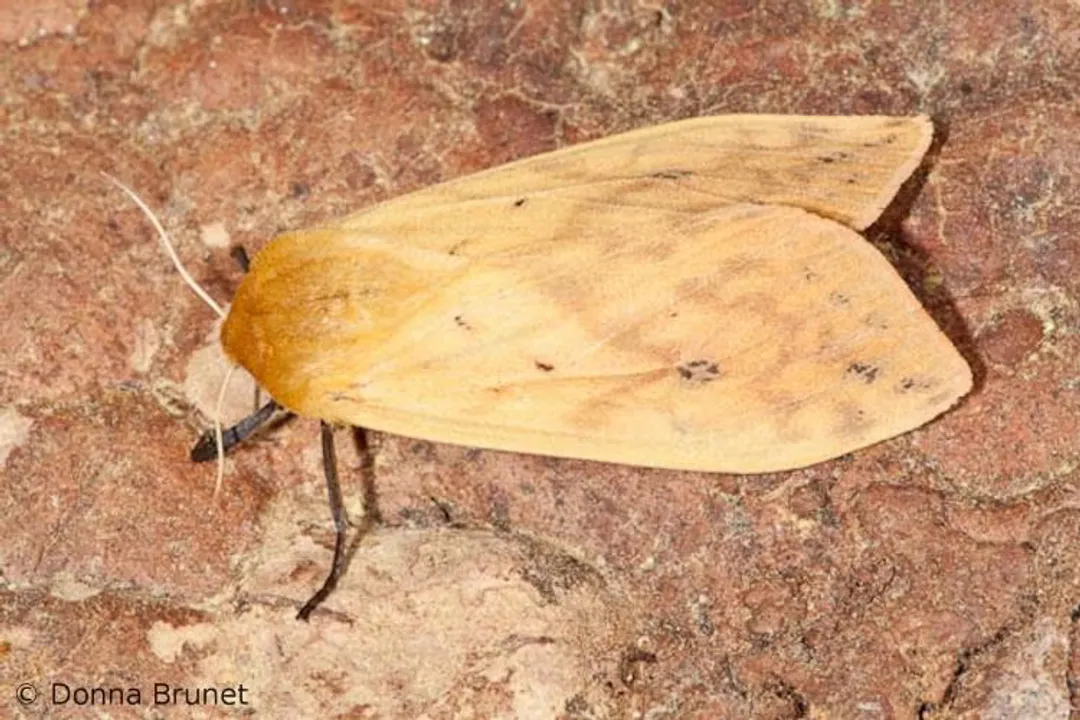
Related Questions
What is the scientific name for the Isabella Tiger Moth larva, commonly called Woolly Bear?Are the stiff hairs, or bristles, covering the Woolly Bear caterpillar venomous or stinging?What colors form the distinct alternating bands typically seen circumferentially on the Woolly Bear?What is the approximate maximum length reached by a Woolly Bear caterpillar when fully developed before seeking shelter?What is the resulting adult insect that emerges after the Woolly Bear pupates?What reflexive defensive behavior does the Woolly Bear exhibit when potentially threatened by a predator?What biochemical compounds does the caterpillar actively produce to survive being partially frozen during winter?What reliable physical marker distinguishes the Isabella Tiger Moth larva from the Giant Leopard Moth caterpillar?How is the wing coloration of the adult Isabella Tiger Moth generally described?What essential survival function is provided by the dense hair covering during the Woolly Bear's overwintering stage?What specific observable characteristic of the Woolly Bear forms the basis of common weather prediction folklore?