What specific fibrous material gives the Wool Carder Bee its common name?
Answer
Soft, hairy fiber scraped from plants
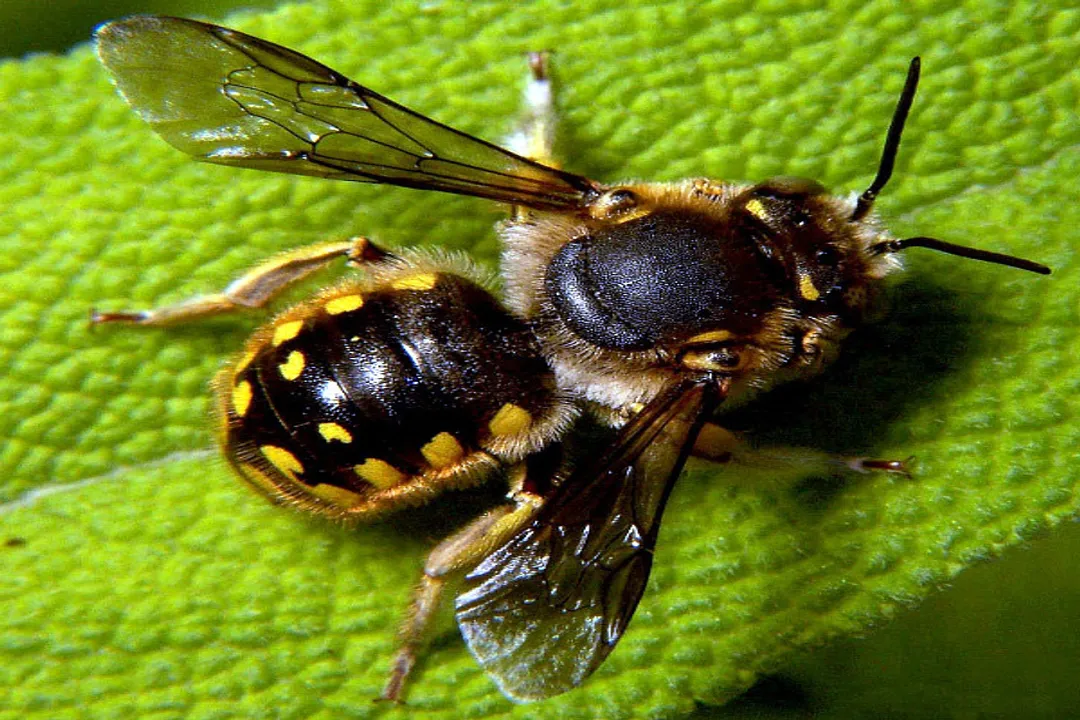
The common name, Wool Carder Bee, directly relates to a unique and essential behavior performed by the female during nest construction. This behavior involves actively seeking out and scraping soft, hairy, or woolly fiber directly from the surface of specific plants. This collected material is then used to construct the individual cells within her solitary nest. This reliance on plant fuzz distinguishes the species and forms the basis for predicting local density, as gardens rich in these fibrous materials are highly attractive nesting sites for the females preparing for reproduction.
Related Questions
When was *Anthidium manicatum* first officially detected in the USA?What distinctive marking identifies the male European Wool Carder Bee?How does the nesting strategy of the female *A. manicatum* contrast with honeybees?What specific fibrous material gives the Wool Carder Bee its common name?Which plant species is often a favored source for nesting fuzz in invasive ranges?Besides fibrous material, what physical substrate must *A. manicatum* females seek for nesting cavities?What role do territorial males play in locating nesting activity?What geographical areas constitute the native home range of *Anthidium manicatum*?Where is the Wool Carder Bee particularly prevalent within the United Kingdom?How does tracking an *A. manicatum* sighting in North America contrast with one in its native range?