Wool Carder Bee Facts
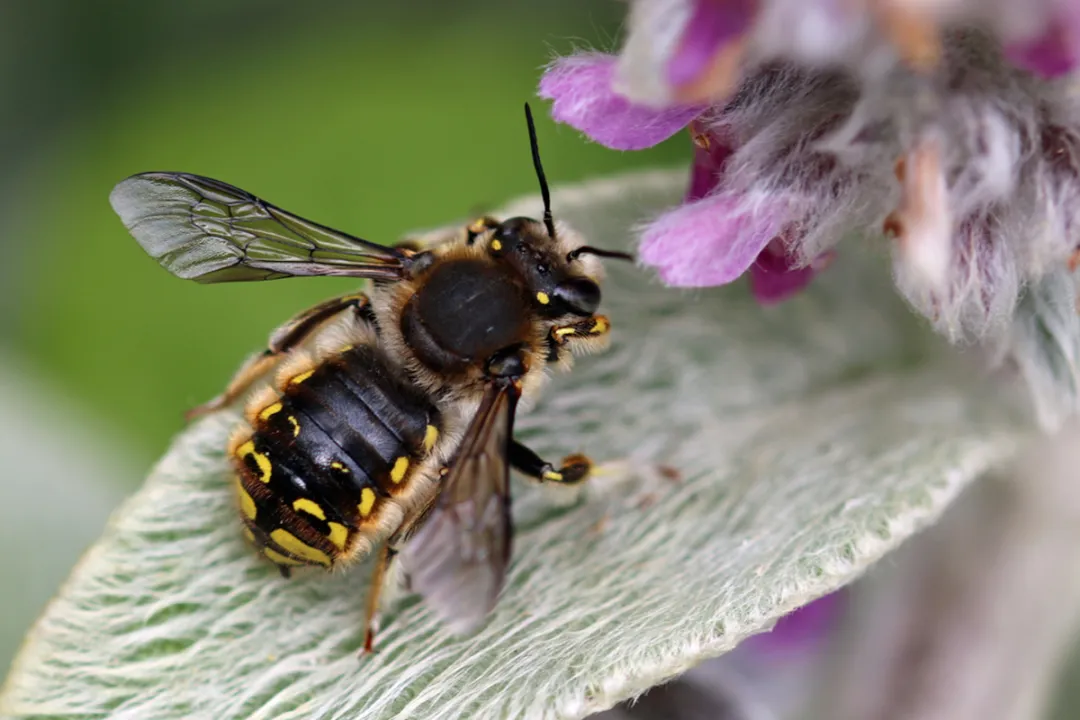
The sight of a large, fuzzy bee buzzing near flowering plants or diligently scraping fibers from leaves might initially cause concern, but in many regions, this visitor is the Anthidium manicatum, commonly known as the Wool Carder Bee. [1][2][3] Unlike honeybees or bumblebees, which build nests in colonies, these solitary bees have a fascinating life cycle centered around meticulous fiber collection and spirited territorial defense. [1][4][6] They are distinctive because the females actively gather plant fluff to line their brood cells, a behavior that gives them their memorable name. [1][5][6] When you observe them, remember that this species is an introduced, non-native pollinator in North America, having arrived from Europe, North Africa, and Asia. [1][4][5]
# Identifying Features
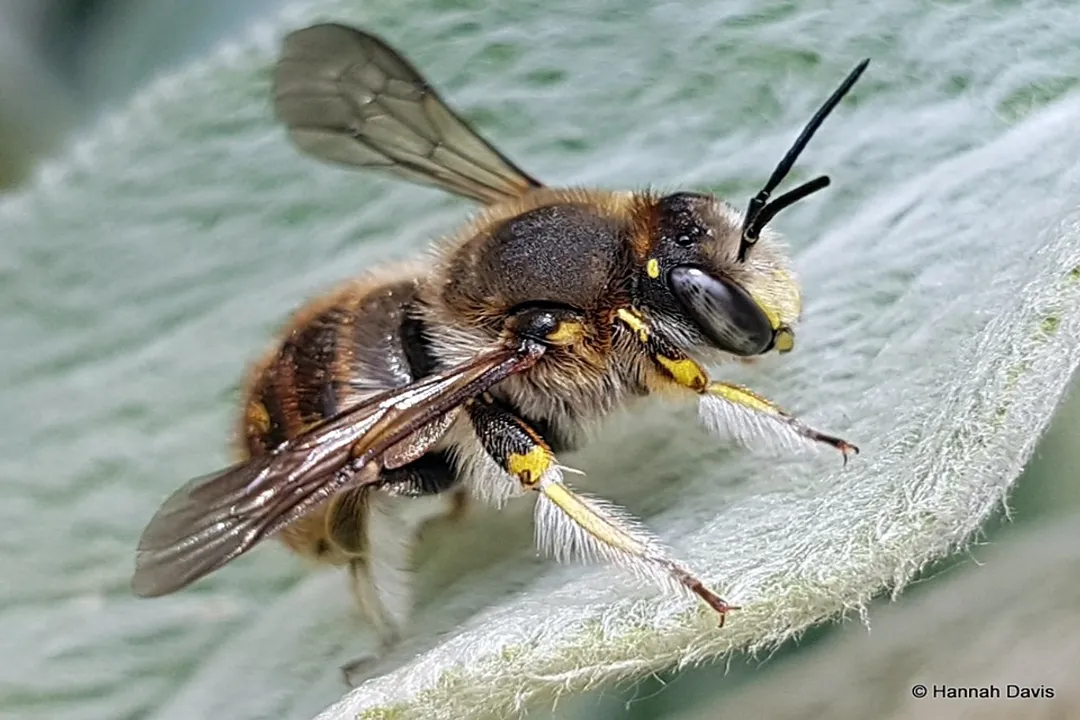
Telling the Wool Carder Bee apart from native bees is key, especially for gardeners who want to know exactly who is visiting their flowers. [1][8] The females are quite robust and often resemble a small, somewhat stocky bumblebee, measuring between 11 and 15 millimeters in length. [1][3][5] They are generally black with yellowish or whitish markings. [1][3] A particularly helpful identification marker for the female is the presence of long, pale hairs, known as scopa, located on the underside of her abdomen; she uses this specialized structure to transport pollen and nest materials. [1][4]
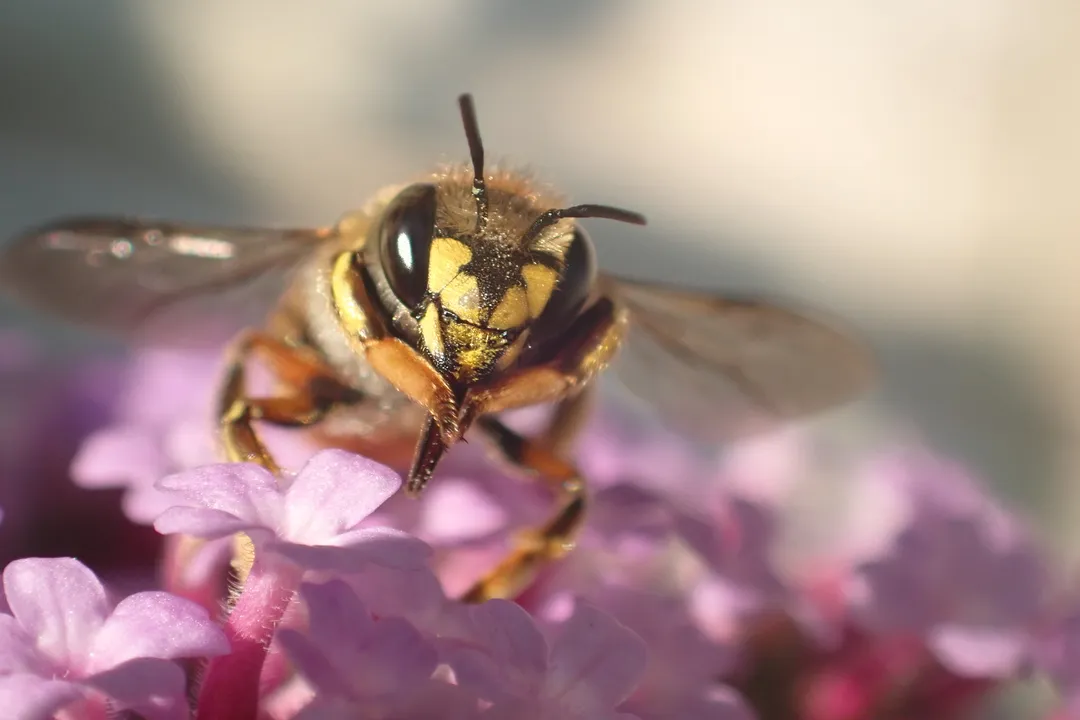
The males, however, look quite different from the females and are often easier to spot once you know what to look for. [1][4][8] Males are typically smaller than the females, usually measuring between 8 and 11 millimeters long. [1][5] Their most defining characteristic is the presence of prominent, pale or white patches on the sides of their faces and abdominal segments. [1][3][4] These striking white markings contrast sharply with their dark bodies. [5] While they do not collect pollen, they are highly visible because they spend a great deal of time guarding favored areas. [1][4] If you see a bee with clear, silvery-white spots on its face, you are very likely observing a male defending his patch. [4][6]
# Fiber Collection

The most unique aspect of this bee's behavior, and the source of its name, is the female's dedication to gathering soft plant fibers. [2][6] The female needs these materials, which resemble wool, to construct the walls and caps for the individual cells within her nest. [1][6] She does not use wax like some other bee species; instead, she actively "carding"—scraping and pulling—fluff from the stems and leaves of specific plants. [1][6]
The selection of these plants is not random. [1] While they will visit a wide variety of flowers for nectar, their construction material preferences tend to focus on plants that produce fine, woolly hairs on their leaves or stems. [1][5] Good donor plants often include lamb's ears (Stachys byzantina), sage (Salvia species), sunflowers, and sometimes even the fuzzy parts of certain woody plants. [1][2][5] Observing a female at work is quite a spectacle; she grips the fuzzy surface with her mandibles and legs and pulls until a clump detaches, which she then flies away with, usually clinging tightly to the fiber ball. [1][6]
This specific need for fibrous material presents an interesting management consideration for gardeners. If a local population is present and active, and a gardener happens to have ornamental plants with naturally fuzzy leaves, they might notice these plants looking slightly tattered or picked over during the nesting season. [1][8] This small amount of damage is generally superficial and does not harm the plant's long-term health, but it is a tangible sign that a Wool Carder Bee is preparing a nursery nearby. [1][8] Understanding this behavior helps place any minor leaf damage in context, seeing it as a necessary supply run for future generations rather than simple pest damage. [1]
# Guarding Territory
The males of the Wool Carder Bee exhibit a level of territorial aggression rarely seen in solitary bees, making them quite noticeable during the summer months. [1][2][6] A male will select a prominent, sunny perch, often on a twig, a fence post, or even a garden stake, from which he can survey his domain. [1][4] This territory usually encompasses a good patch of flowering plants that attract receptive females. [1][4][6]
These male guardians are notably zealous about defending their chosen area against all intruders. [1][4] Intruders include other male Wool Carder Bees, but also other large flying insects, including hoverflies, wasps, and even honeybees. [1][4] When a perceived threat enters the airspace, the male launches into a rapid pursuit, often chasing the intruder away from the area for a significant distance before returning to his station. [1][4] While their behavior can appear intimidating, it is generally directed at other insects, and they rarely sting humans unless they are roughly handled or trapped against the skin. [1][3][6] If you are simply walking through the garden, they will typically ignore you, focusing their defense efforts on rivals. [1] Knowing this, an actionable tip for garden peace is to avoid swatting at them; a quick, calm sidestep is far more likely to result in the bee ignoring your presence entirely as you pass through their flight path. [6]
# Life Cycle Details
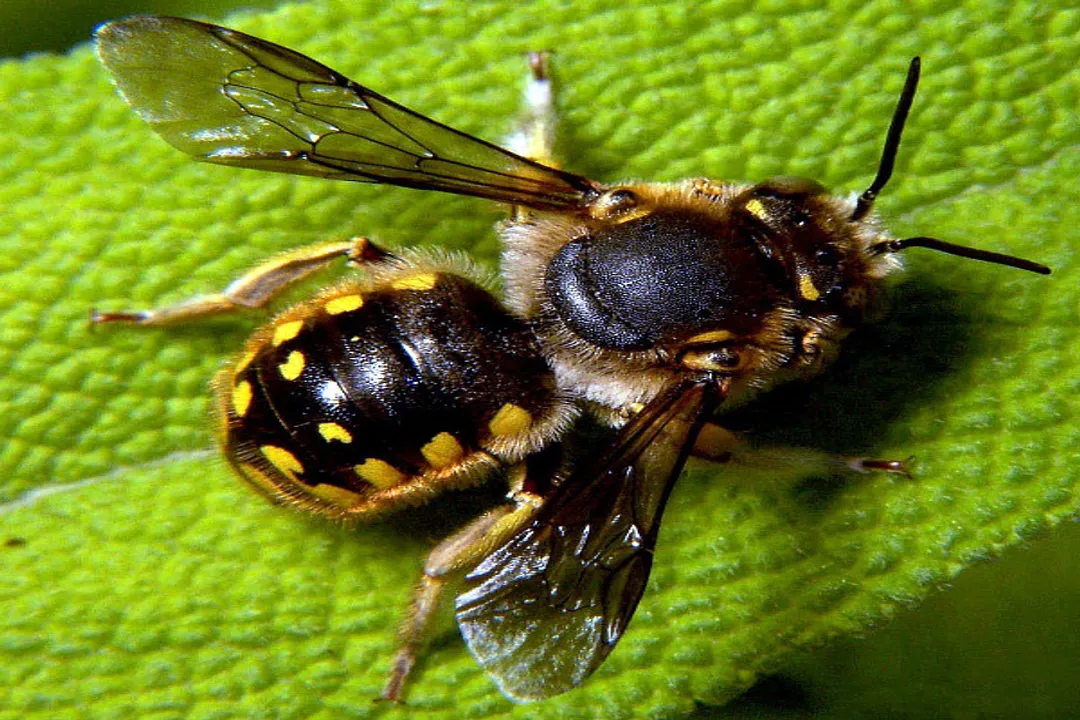
The life cycle of Anthidium manicatum generally follows a predictable pattern dictated by the warmer months. [5] The adult bees emerge, typically starting in late spring or early summer, around May or June. [1][5] The females immediately begin foraging for nectar to fuel their construction and egg-laying activities, while the males establish and defend their territories. [1][4]
The female will build several individual brood cells, often lining a pre-existing cavity or creating a new chamber in soft, pithy stems or pre-existing holes in wood. [1][5] She lays a single egg in each cell, provisioning it with a mixture of nectar and pollen that will serve as food for the developing larva. [1][5] After laying the egg, she seals the cell with the plant fluff she collected. [1] Once all cells are provisioned and sealed, the female will abandon the nest, offering no further parental care. [1][5]
The larvae hatch and feed on the provisions before developing into pupae. [5] The entire immature stage—larva and pupa—spends the winter inside these sealed cells. [1][5] They emerge as new adult bees the following spring or early summer, restarting the cycle. [1][5] This overwintering stage means that while the active season for seeing the bees is relatively short, the species is well-established where it has been introduced. [4][5] The duration of their active season can vary based on local climate, but peak activity is generally during the warmest parts of the year. [5]
# Pollination Role
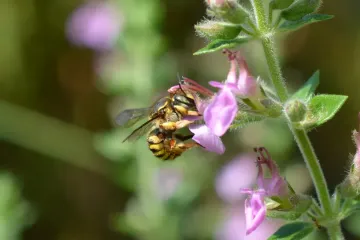
As they move among flowers seeking nectar, Wool Carder Bees are effective pollinators. [1][5][8] They are generalists, meaning they visit a wide variety of flowering plants, which contributes to their value in a mixed garden ecosystem. [1][2] Plants they are known to favor for nectar include borage, lavender, catmint (Nepeta), sage, and many others with easily accessible nectar sources. [1][5]
Their role as pollinators is significant, especially in areas where managed honeybee colonies might be sparse or absent. [5] They have been observed visiting many different flower shapes and sizes. [1] For those attempting to encourage biodiversity in a residential landscape, supporting these active foragers is beneficial, even if they are an introduced species. [5] The availability of both nectar (for adults) and the fuzzy plant material (for nesting females) can create a self-sustaining local population that contributes to the pollination success of various crops and ornamentals. [1][6]
# Managing Presence
For most homeowners, the presence of the Wool Carder Bee requires little intervention, as they are generally beneficial pollinators and their solitary nature means they do not form stinging swarms. [1][3] The primary concern is usually the behavior of the males. [1][6] If a male establishes a territory near a frequently used outdoor workspace or seating area, his repeated aggressive chases of other insects might become bothersome. [1]
Since the males defend areas based on visibility and proximity to flowers, one subtle method of discouraging persistent male presence in one small area is to slightly alter the landscape features he might use as a perch. [4] Removing a few prominent, bare twigs or thin stakes in a specific spot might encourage him to relocate his guard post to an area less intrusive to human activity. [4] Furthermore, maintaining a variety of flowering plants ensures that the females have ample material to choose from, which may spread out the damage across several different plant species rather than concentrating it on one favorite fuzzy specimen. [1]
The bees themselves are not usually considered pests. [3] They are typically active from late spring to mid-summer, meaning their most visible period is relatively brief. [5] They do not typically nest in homes or structures, preferring natural materials or existing cavities in wood or pithy stems. [1][5] If you are keen on supporting all pollinators, including native ones, providing a water source and ensuring a succession of bloom throughout the season will help sustain the female populations that do the necessary nesting work. [5] For instance, planting native mints alongside lamb's ears can provide both food and potential nesting substrate near one another, creating a small, localized hub of activity that might keep them slightly further from high-traffic areas like patios. [1]
Related Questions
#Citations
[PDF] Wool Carder Bee
Wool Carder Bee - Beevive
Wool Carder Bee - Natural History Society of Northumbria
Anthidium manicatum - Wikipedia
The frantic life of woolcarder bees: fighting, fiber, & forage
The Wool Carder Bee - Habitat Aid
Wool carder bees - Wild Pollinator Partners
Who's Who in Your Garden: Wool Carder Bees
[PDF] Information Sheet Wool-carder Bee (Anthidium manicatum)