Wool Carder Bee Physical Characteristics
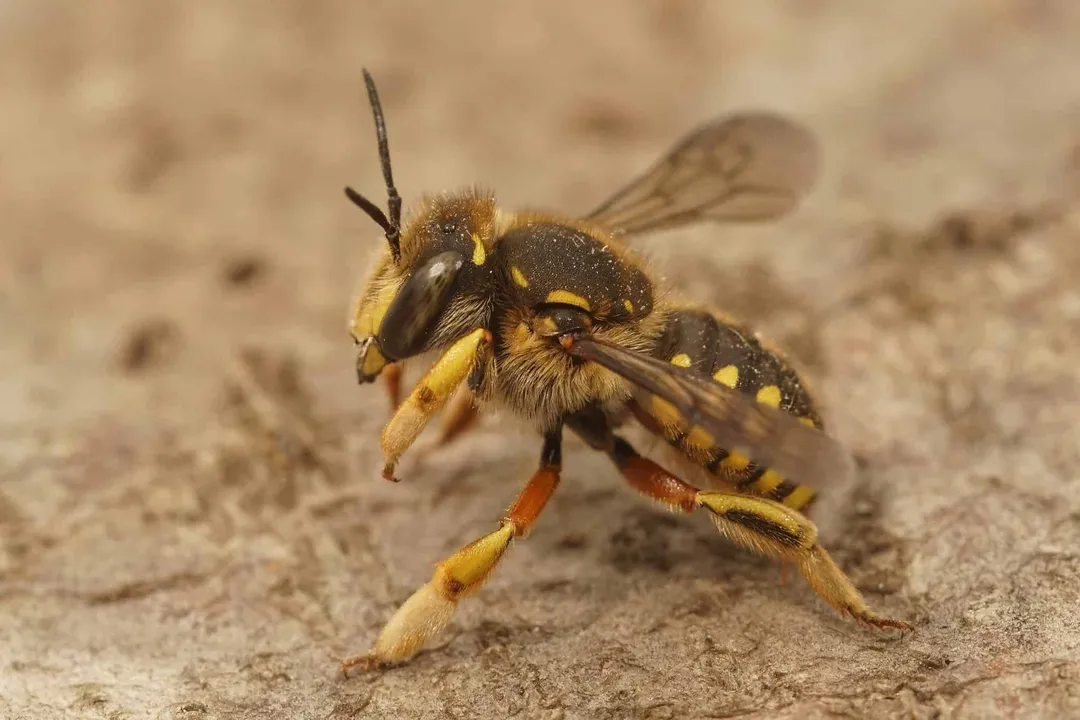
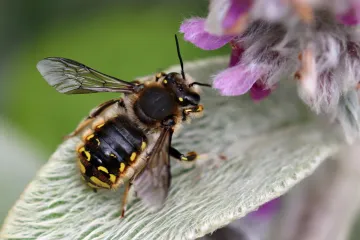
The Wool Carder Bee, scientifically known as Anthidium manicatum, presents a striking appearance that sets it apart from more familiar bee species like the common honeybee. This introduced species, native to Europe, Asia, and North Africa, is readily identifiable by its robust build and distinct pattern of black and yellow, often softened by a noticeable covering of pale hair. While its fuzzy appearance might suggest kinship with bumblebees, its physical makeup reveals several unique characteristics.
# Size and Build

Measuring between 10 to 17 mm in length, the Wool Carder Bee falls into the larger category of solitary bees. Within the species, there is a noticeable size difference between the sexes. Females typically measure around 11 to 13 mm, whereas males can be slightly larger, sometimes reaching up to 17 mm. For reference in North America, an adult in Colorado might range from 11 to 16 mm in length. They possess a relatively stocky body shape. The overall coloration is predominantly black, vividly accented with bright yellow markings across the body.
# Hair Detail

The source of the common name, "Wool Carder Bee," lies in the noticeable covering of pale, dense hair found on these insects. Females, in particular, are recognized by the significant amount of pale yellow or white hair situated on the underside of their abdomen. This hair serves a specific biological function, as the female actively collects these plant fibers—the "wool"—to line her nest cells. This behavior of carding the plant fibers is a defining aspect of the female's morphology in action. While the males also possess pale markings or hair, the dense, woolly covering is most pronounced on the female's ventral side.
# Pollen Structures
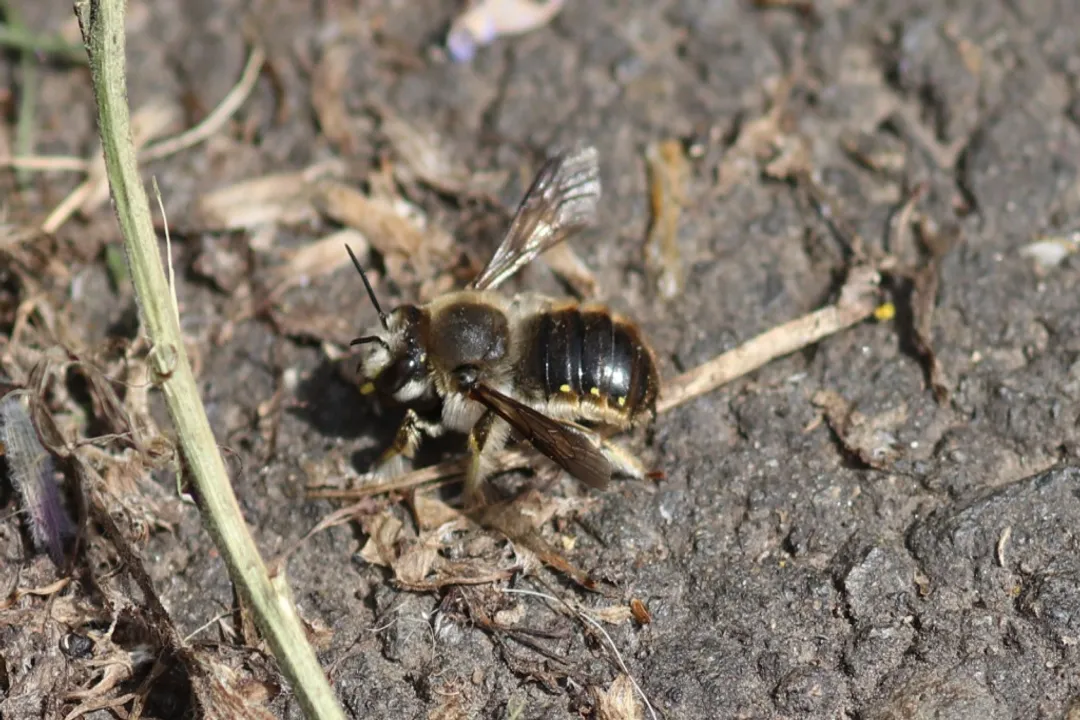
One of the most significant morphological divergences from many other bee types involves how the female carries pollen. Many people associate bees with carrying pollen on specialized structures on their hind legs, often called corbiculae or pollen baskets. However, the female Wool Carder Bee employs a different method. She carries her pollen load on a structure called a scopa, which is located on the underside of her abdomen. This scopa is covered with long, pale hairs designed to hold the collected plant material, making the underside of a foraging female look visibly laden with a yellowish or pale mass. Observing a female collecting nectar can sometimes reveal this feature more clearly than seeing her in flight.
# Sexual Dimorphism
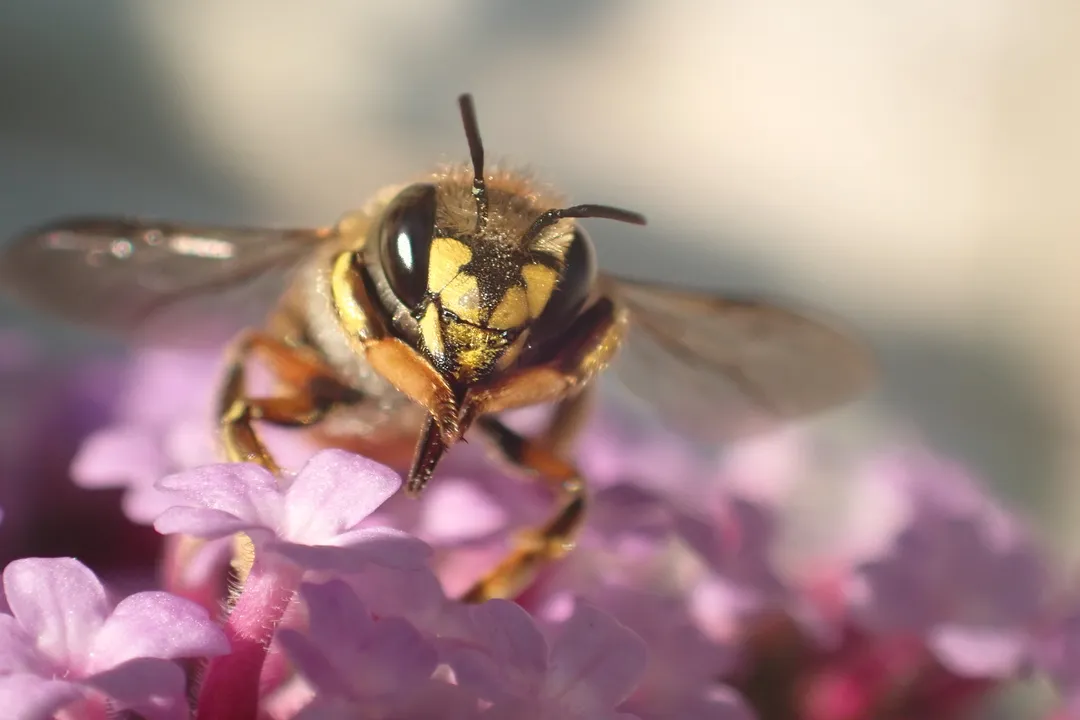
The physical distinctions between males and females are pronounced and serve as the easiest way to differentiate the sexes without closely examining the pollen-carrying structures.
# Male Features
The male Anthidium manicatum is immediately recognizable due to three specific features located at the posterior end of the abdomen.
- Abdominal Spines: Males possess three prominent, pointed projections at the tip of the abdomen. These spines are stiff and conspicuous, contrasting sharply with the smooth, rounded end of the female abdomen.
- Abdominal Markings: In addition to the spines, males display distinct, large pale yellow spots situated on the sides of the last few abdominal segments. These markings, combined with the spines, give the male a distinctly segmented and armed appearance.
- Antennae: Males generally have relatively short, straight antennae.
It is worth noting that these physical attributes correlate with behavior; males are known to be highly territorial, often aggressively guarding preferred flower patches against other males or even larger insects.
# Female Features
The female lacks the aggressive external morphological traits seen in the male, prioritizing structure for reproduction:
- Abdominal Tip: The female abdomen terminates in a smooth, rounded tip and lacks the three conspicuous spines found on the male.
- Scopa: As mentioned previously, the presence of the dense, hairy scopa on the ventral abdomen is the definitive feature identifying a female actively preparing a nest.
When comparing the two, the combination of the male's abdominal armament and the female’s pollen-carrying scopa illustrates a clear morphological division of labor within the species, even though both contribute to pollination.
# Morphological Context and Analysis
The Wool Carder Bee’s physical characteristics offer a fascinating study in adaptation for a solitary lifestyle. The large size (up to 17 mm) compared to a common Western honeybee, which is typically around 12 mm, means this species makes a more substantial visual impact when visiting flowers. This size, combined with their relatively slow, hovering flight pattern, often causes observers to mistake them for wasps or bumblebees, though their distinct black and yellow banding is usually cleaner than that of many bumblebees.
The specialized abdominal scopa in the female has interesting practical implications for gardeners interested in attracting them. Because the pollen is carried underneath the abdomen, it is sometimes deposited in a less neat manner onto the stigma of flowers compared to species that use hind-leg baskets, potentially affecting the efficiency of cross-pollination depending on the flower structure. Furthermore, the density of the hair that the female uses to collect—the "wool"—is so effective that it's a primary reason this species has gained attention in managed environments, as it clearly demonstrates the mechanics of material collection in Hymenoptera. When you see a male displaying his three abdominal spines while hovering near a patch of lavender, you are witnessing a physical structure directly linked to defending reproductive opportunities, a level of overt physical defense rare among many solitary bee species. The structure of the male, designed for defense and display, contrasts sharply with the female’s morphology, which is geared entirely toward material gathering and provisioning her offspring.
The external appearance of A. manicatum is a good reminder that not all bees fit the stereotypical model. Their morphology—from the male's sharp abdominal points to the female's specialized under-belly pollen basket—shows a high degree of specialization for their ecological role and reproductive strategy.
Related Questions
#Citations
Wool Carder Bee - USDA Forest Service
Anthidium manicatum - Wikipedia
[PDF] European Wool Carder Bee - Colorado Insect of Interest
Wool Carder Bee - Anthidium manicatum - A-Z Animals
Wool Carder Bee - Natural History Society of Northumbria
Wool Carder Bee - Beevive
[PDF] Information Sheet Wool-carder Bee (Anthidium manicatum)
European Wool Carder Bee - iNaturalist
European wool carder bee | College of Agricultural Sciences