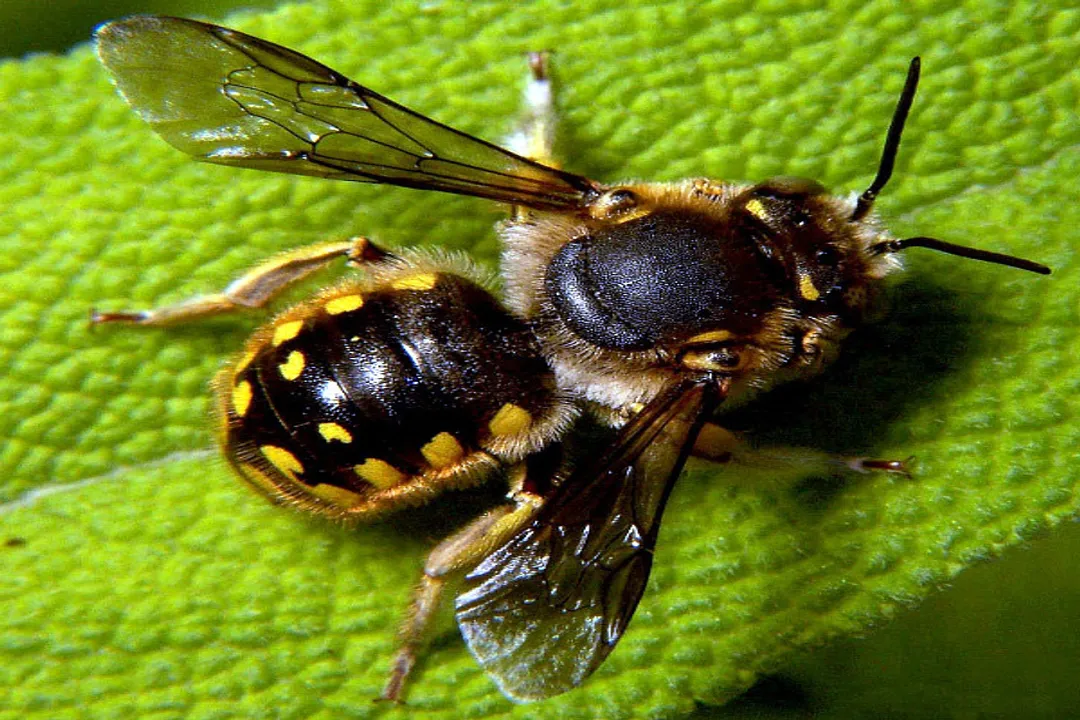
How does tracking an *A. manicatum* sighting in North America contrast with one in its native range?
In North America, it contributes to tracking the invasive front, while in its native range, it confirms an existing resident population.
The analytical approach to monitoring *Anthidium manicatum* differs fundamentally between continents due to its ecological status. In North America, where it is classified as an introduced and invasive species, every new county or state record is highly significant because it directly contributes to mapping the *invasive front*—helping researchers understand the rate and direction of its exotic expansion across the continent. Conversely, within its native distribution, such as in Southern England, a sighting is generally viewed as a routine confirmation of an existing, established endemic resident population, often noted through standard local nature recording schemes, rather than evidence of an advancing ecological boundary.