Wool Carder Bee Diet
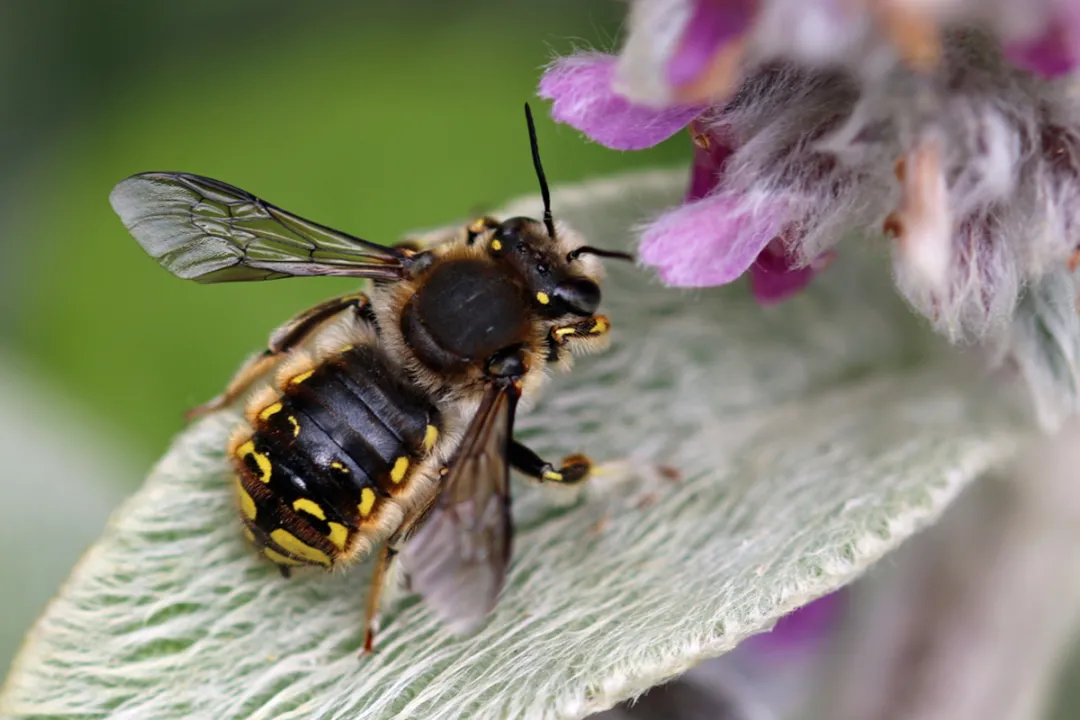
The diet of the Wool Carder Bee, Anthidium manicatum, centers around the fundamental needs of any pollinator: energy for flight and vital protein for reproduction. These medium-sized, distinctive bees, recognizable by the male’s prominent mandibles and often fuzzy appearance, rely exclusively on the resources offered by flowering plants throughout their active season. [1][5][9] As a non-native species established in North America, their feeding habits and preferred flora give gardeners and naturalists specific clues about how to interact with or observe them in local environments. [2][9]
# Nectar Pollen
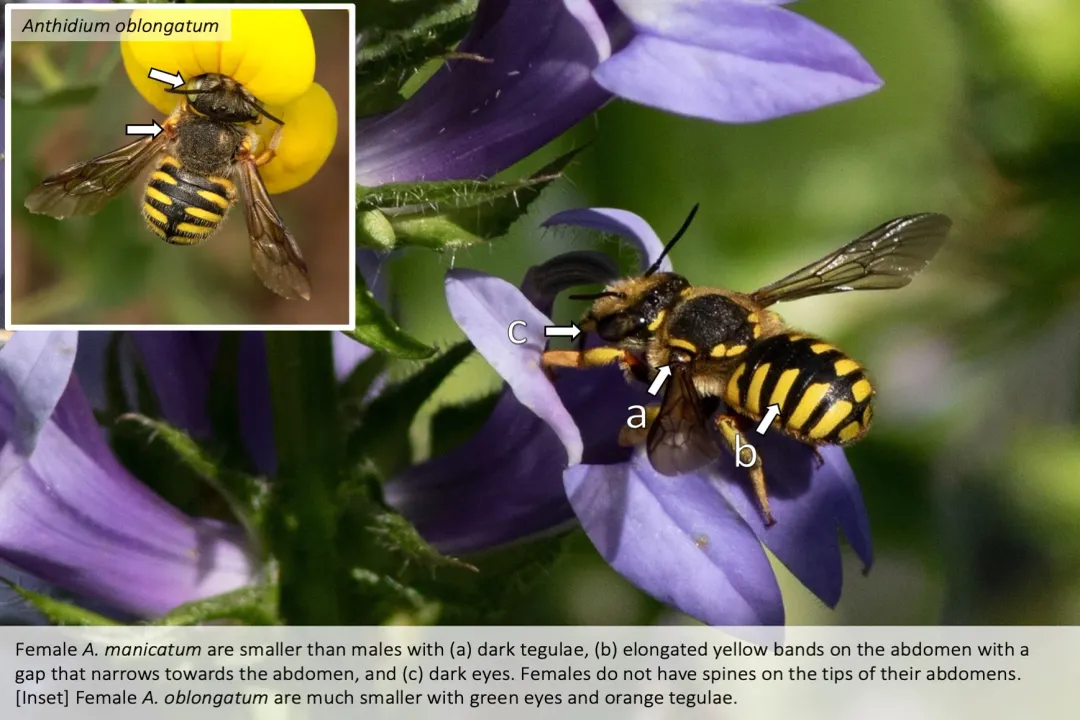
Like most bees, the Wool Carder Bee requires both sugary nectar and protein-rich pollen to sustain its life cycle. [1][5] Nectar serves as the immediate fuel source, providing the necessary carbohydrates for the daily activity of foraging, territorial defense (in the case of the males), and navigating the landscape. [1][5] This liquid resource is consumed directly by both sexes while they are visiting flowers. [5]
Pollen, however, is the critical component reserved primarily for the next generation. Adult females collect large quantities of pollen to form a food mass for the developing larvae provisioned inside their nests. [1][5][9] A female must consume some nectar for her own immediate energy but spends a significant portion of her foraging trips gathering the dry, powdery grains that will become the essential building blocks for her offspring. [5]
# Favorite Flora
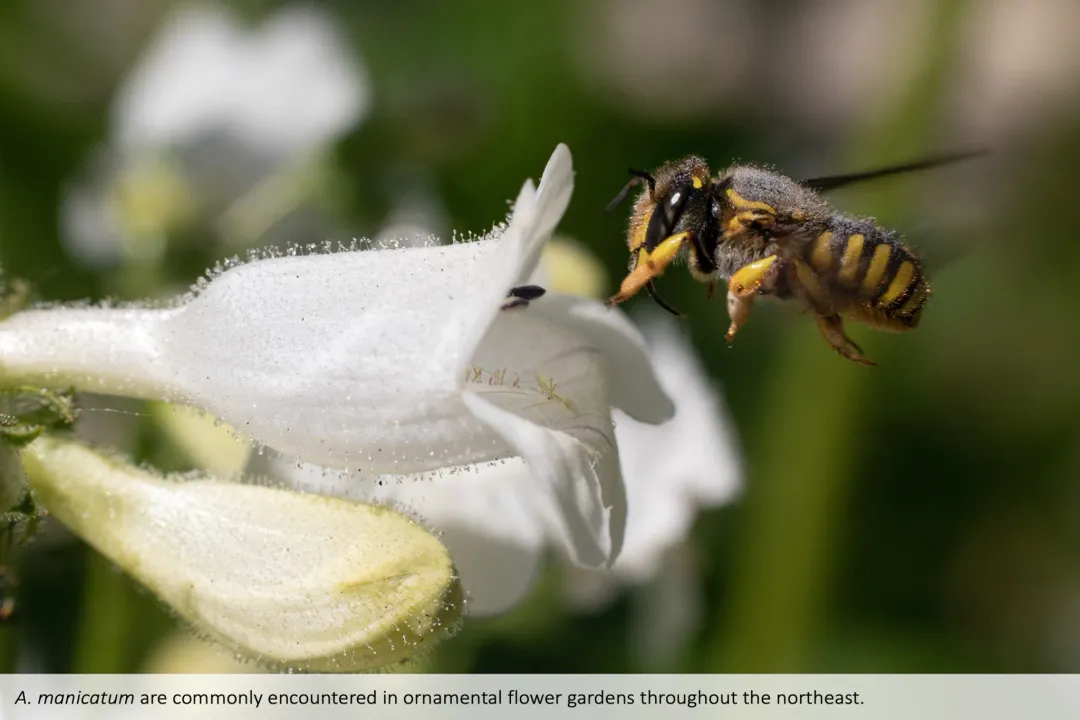
The Wool Carder Bee exhibits distinct preferences when selecting its floral resources, often focusing on specific plant families that yield the nectar and pollen it needs most efficiently. [1][5] The family Lamiaceae, which includes common garden staples like mints, sages, and catnip, is frequently cited as a major food source for these bees. [1][5]
Specific plant genera and species have been repeatedly documented as preferred targets:
- Hedge Nettles (Stachys species): These are particularly attractive, especially those with yellow flowers. [1][2][5] The presence of Hedge Nettle often correlates with high Wool Carder Bee activity in a given area. [2]
- Mints and related herbs: Plants in the Lamiaceae group offer abundant nectar and easily accessible pollen. [1][5]
While they do utilize a range of flowers across different families for nectar, their pollen collection seems more narrowly focused on reliably accessible, high-yield sources. [5] If you observe a Wool Carder Bee diligently working a specific patch of wildflowers, chances are you are looking at a member of the mint family or a plant with similarly structured, easily accessible anthers. [2]
Since these bees are relatively large, their energy requirements for flight are substantial. The female’s need to shuttle between collecting nectar for herself and gathering pollen loads for the nest means she is constantly optimizing her foraging route. This translates into a preference for floral patches that offer a high caloric return for the effort expended, which often means returning to the same successful plant species multiple times throughout the day rather than visiting a wide, scattered array of different flowers. [1]
# Male Female
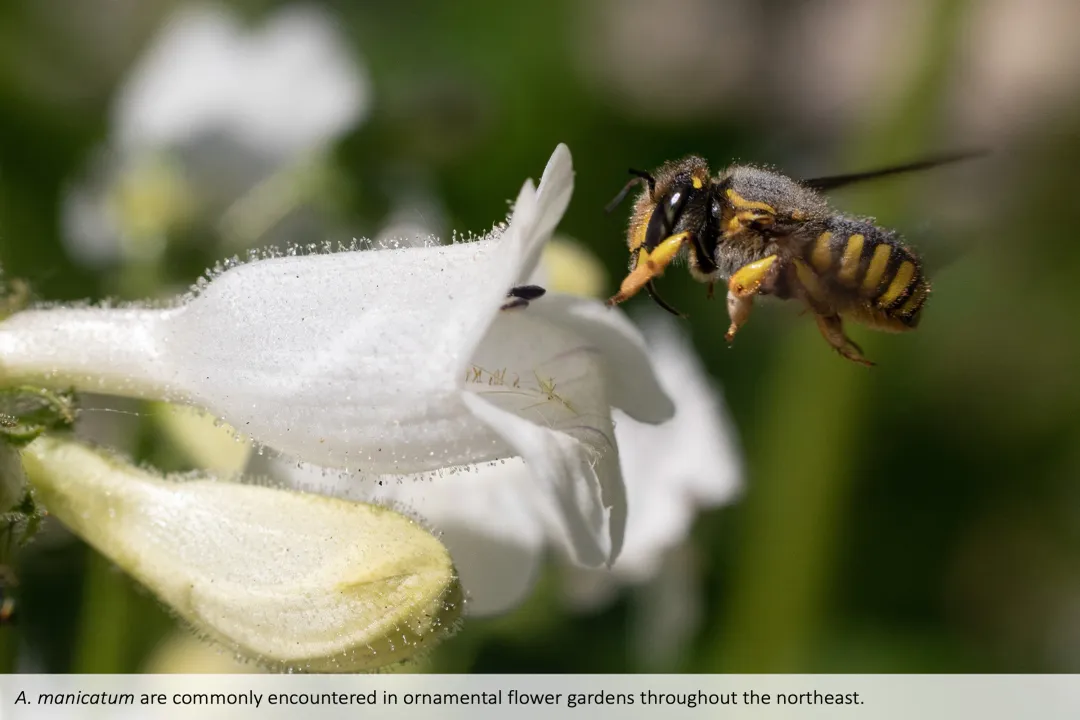
The dietary roles between the sexes of A. manicatum are not equal, reflecting their different reproductive duties. [5]
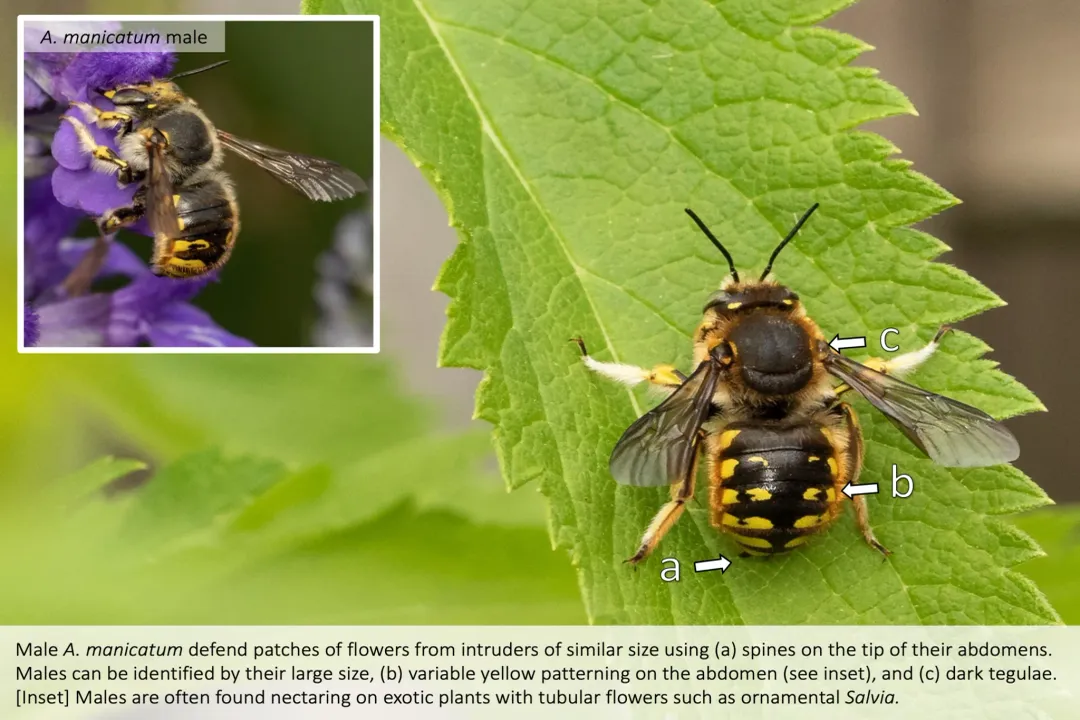
Male Wool Carder Bees do not provision nests or feed larvae, as they are not involved in parental care beyond mating. [1] Consequently, the male’s diet is almost entirely restricted to nectar. [5] They are often observed patrolling areas near abundant flower patches or near potential nesting sites where females are active. [1] Their goal is rapid energy acquisition to fuel territorial defense against rival males and courtship flights. [5]
Conversely, the female is the dedicated provider, consuming nectar while actively collecting pollen. [1][5] Her foraging behavior is directed toward ensuring she gathers enough protein-rich material to provision multiple cells within her nest structure before she exhausts her foraging window. [5]
| Bee Sex | Primary Food Goal | Resource Focus | Key Activity |
|---|---|---|---|
| Male | Energy for defense/mating | Nectar only | Territory patrolling near flowers [1][5] |
| Female | Offspring provisioning | Nectar and Pollen | Collecting pollen loads for nest cells [1][5] |
# Beyond Food
It is very common for people encountering this species to confuse their nesting material requirements with their dietary intake, often due to the striking sight of the female gathering fiber. [3][7] The characteristic behavior that gives the bee its name—carding wool—involves the female scraping or tearing off strands of fuzzy hairs, or trichomes, from plant leaves and stems. [1][7] Plants like Lamb's Ear (Stachys byzantina) are signature sources for this material. [1][3]
This collected "wool" is strictly used to line and seal the individual cells within her chosen nesting cavity, insulating the developing larva and its pollen/nectar provisions. [3][7] This fibrous material is not consumed by the bee, nor is it mixed into the larval food. [1][7] The pollen mass, which is rich in protein, is packed separately within the cell, distinct from the insulating lining. [3][9]
When observing a Wool Carder Bee carrying a load back to her nest, it is helpful to note the appearance of her cargo. Unlike European honey bees, which pack their pollen onto specialized structures called corbiculae, or pollen baskets, located on their hind legs, the female Wool Carder Bee carries her pollen tucked underneath her abdomen. [1][5][9] This gives her a distinctly fuzzy, often yellowish-orange, underside when she is successfully laden with pollen, differentiating her appearance from a bee that has just been collecting nesting fibers. [5][9] This specialized abdominal structure is essential for efficient transport of the larval food source. [1]
# Local Support
For gardeners interested in supporting local pollinator populations, whether native or naturalized, understanding the Wool Carder Bee's diet provides clear directives. [9] Since they have established populations, providing food security can benefit the local ecosystem, even if the species itself is an introduced one. [2]
To encourage their presence and health during their flight season, gardeners should prioritize nectar flow throughout the late spring and summer, ensuring a continuous supply of blooms from their favored families. [1][5] Focusing on growing robust patches of Stachys species or other members of the mint family offers a high probability of attracting both the nectar-seeking males and the pollen-collecting females. [2][5] Furthermore, leaving areas undisturbed that might contain plants like Hedge Nettle ensures that the essential pollen sources remain available, as the female must gather enough protein to successfully rear several offspring. [1][9] A garden planned with succession blooming in mind, heavily featuring Lamiaceae, functions as a reliable refueling station for these large, active bees. : [1][5][1] https://en.wikipedia.org/wiki/Anthidium_manicatum: [2] https://www.canr.msu.edu/news/michigan-insects-in-the-garden-season-2-week-6-wool-carder-bees: [3] https://bohart.ucdavis.edu/sites/g/files/dgvnsk4616/files/media/documents/note_50_wool_carder_bee.pdf: [4] https://www.fs.usda.gov/wildflowers/pollinators/pollinator-of-the-month/wool-carder-bee.shtml: [5] https://bugs.media.uconn.edu/wp-content/uploads/sites/1135/2021/07/Carder-Bees.pdf: [6] https://www.honeybeesuite.com/native-pollinator-wool-carder-bee/: [7] https://www.reddit.com/r/Awwducational/comments/1bzclpi/female_woolcarder_bees_genus_anthidium_harvest/: [8] https://watchingbees.com/species-accounts/anthidium-manicatum/: [9] https://www.facebook.com/groups/Serendipity101/posts/1899616117280375/
Related Questions
#Citations
Anthidium manicatum - Wikipedia
Michigan insects in the garden – Season 2 Week 6: Wool carder bees
[PDF] Wool Carder Bee
Wool Carder Bee - USDA Forest Service
Wool carder bee — possibly Anthidium oblongatum. While not a ...
[PDF] Carder Bees - UConn
Female wool-carder bees (Genus Anthidium) harvest the soft, downy ...
European woolcarder bee (Anthidium manicatum) - Bee Watching
The frantic life of woolcarder bees: fighting, fiber, & forage