Wool Carder Bee Scientific Classification
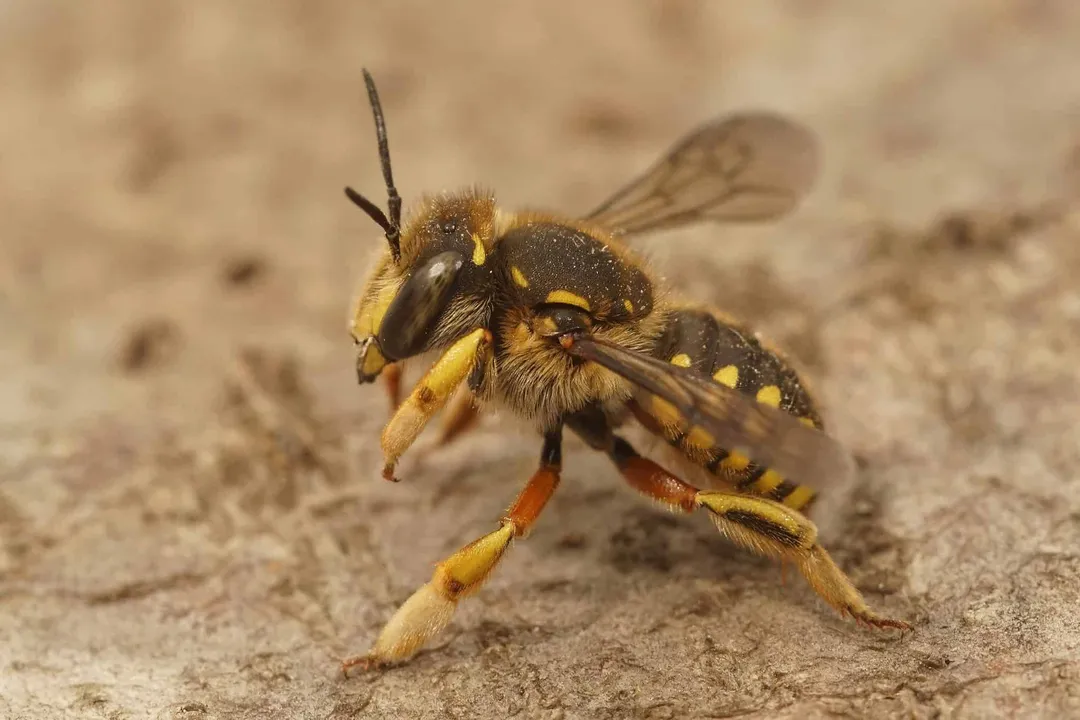
Understanding the precise placement of any organism within the vast tree of life requires delving into its scientific classification, a system that provides a standardized way to communicate relationships and characteristics across the globe. For the Wool Carder Bee, this process reveals its position among insects, its relationship to honey bees and bumblebees, and what sets it apart, even within its own unique family. The most commonly discussed species, the European Wool Carder Bee, finds its identity established through a series of nested categories, starting from the broadest kingdom and narrowing down to the specific species epithet. [1][5]
# Kingdom Animalia
Every living creature that is not a plant, fungus, or microbe falls under the Kingdom Animalia. [1] This classification immediately tells us that the Wool Carder Bee is multicellular, heterotrophic (it must consume food for energy), and generally mobile at some stage of its life cycle. This places it alongside everything from sponges to whales, offering the most general point of reference for its biological grouping. [1]
# Phylum Arthropoda
Moving down the hierarchy, the Wool Carder Bee belongs to the Phylum Arthropoda, a massive group characterized by several key features: a segmented body, a pair of jointed appendages, and a hard exoskeleton made of chitin. [1][2] This phylum includes insects, spiders, crustaceans, and centipedes. The presence of a tough outer shell that must be periodically shed to allow growth is a defining trait shared by all members of this phylum, including our subject bee. [2]
# Class Insecta
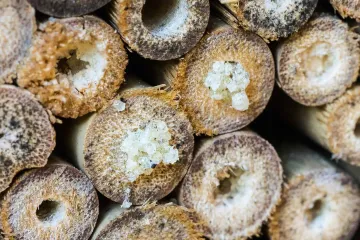
Within Arthropoda, the Wool Carder Bee is firmly situated in the Class Insecta. [1][2] Insects are distinguished from other arthropods, like arachnids, by having three distinct body parts—the head, thorax, and abdomen—and typically three pairs of legs (six total legs) attached to the thorax. [2] They also usually possess one pair of antennae and, critically for many species, one or two pairs of wings. [1] The presence of wings places them in the subclass Pterygota, a grouping that highlights their winged nature, a feature shared with wasps and butterflies. [4]
# Order Hymenoptera
The next level down is the Order Hymenoptera, a group that encompasses sawflies, wasps, ants, and bees. [1][8] This order is significant because its members are often recognized for their membranous wings—the name Hymenoptera literally refers to this characteristic—and for possessing biting or sucking mouthparts. [8] A more specialized feature often associated with this order is the modification of the hind ovipositor into a stinger in many female members, though not all bees use it aggressively. [8] It is in this order that the Wool Carder Bee begins to share its immediate ancestry with highly social insects like honeybees (Apis) and bumblebees (Bombus). [4]
# Family Megachilidae
The classification becomes much more specific when we arrive at the Family level: Megachilidae. [1][8] Bees belonging to this family are often referred to as mason bees, leafcutter bees, or, in this case, wool carder bees. [8] A key characteristic that separates Megachilidae from other bee families, like Apidae (which includes honeybees and bumblebees), is how the female bee carries pollen. Instead of packing it onto specialized hairs on their hind legs (pollen baskets or corbiculae), Megachilid females carry pollen on specialized hairs located on the underside of their abdomen, known as the scopa. [8] This anatomical difference is a major diagnostic feature when identifying the family. [9]
It is interesting to note that while the European Wool Carder Bee (Anthidium manicatum) is a well-known member of Megachilidae, the family is diverse. For instance, some sources indicate that other species, such as Anthidium platyfrons, also fall under this broad grouping, though they may possess slightly different ecological roles or geographic distributions. [3] Considering that the Megachilidae family contains approximately 6,500 species worldwide, placing the Wool Carder Bee here shows it belongs to a large, widespread group of solitary or semi-social bees. [8]
# Genus Anthidium
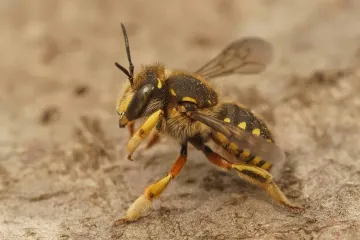
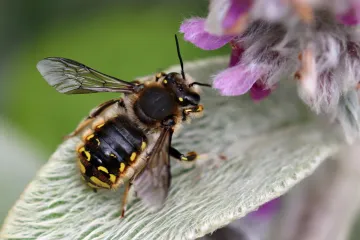
The genus level, Anthidium, is where the Wool Carder Bee gains its common name association. [6][9] Bees in this genus are often referred to as "carder bees" due to a highly unusual and observable nesting behavior exhibited by the females. [6] They do not use mud or leaf pieces for nest construction like some of their close relatives; instead, they collect fine, fuzzy hairs—or "wool"—from the leaves and stems of certain plants, such as Lamb's Ears (Stachys byzantina). [6][9] The female then "cards" these fibers, much like preparing wool for spinning, to line the cells within her nest, which is often built in pre-existing cavities. [9]
This unique provisioning method sets the Anthidium genus apart behaviorally within the broader family Megachilidae. Furthermore, the males of many Anthidium species are known for being highly territorial, often aggressively defending nesting sites or favored patches of flowers against other insects, including other male Wool Carder Bees. [6][9] This territorial nature is a strong behavioral trait that helps observers identify the genus in the field, especially when coupled with the characteristic fuzzy appearance.
# Species Differentiation
The common name "Wool Carder Bee" most frequently refers to Anthidium manicatum, the European Wool Carder Bee, which has become established in North America as an introduced species. [5][7] This species is scientifically recognized by its binomial nomenclature: Anthidium manicatum. [8] The scientific name is crucial because it distinguishes this particular species from others within the genus Anthidium. [3]
The specific features that define A. manicatum often relate to size, coloration, and markings. For instance, males typically exhibit distinct yellow markings on their face and abdomen, contrasting with the predominantly black or dark bodies. [5][7] They are notably large solitary bees, which often leads to initial misidentification as a bumblebee. [7]
However, the scientific world recognizes that "Wool Carder Bee" is not exclusive to A. manicatum. Other species within the genus exist, and some sources document related taxa, such as Anthidium platyfrons. [3] When researchers encounter a carder bee, they must look closely at features like the shape of the female's scopal hairs or the precise arrangement of the yellow markings on the male's abdomen to accurately assign the specific species name, as minor variations can place a specimen in a different species entirely. [3][9] The consistent study of these fine morphological details is what prevents confusion between native Anthidium species and the introduced A. manicatum.
| Taxonomic Rank | Classification | Defining Trait Reference |
|---|---|---|
| Kingdom | Animalia | Multicellular, heterotrophic life |
| Phylum | Arthropoda | Segmented body, exoskeleton, jointed legs |
| Class | Insecta | Three body parts, three pairs of legs, wings |
| Order | Hymenoptera | Membranous wings, modified ovipositor |
| Family | Megachilidae | Pollen carried on abdominal hairs (scopa) [8][9] |
| Genus | Anthidium | Females collect and "card" plant hairs for nest lining |
| Species (EWB) | A. manicatum | Specific pattern of yellow abdominal markings |
The distinction between the introduced European Wool Carder Bee (A. manicatum) and potential native Anthidium species in a given area is important for ecological management. [7] For example, in regions where A. manicatum has been established for some time, understanding its competitive interactions with native pollinators requires accurately classifying individuals found in the field, confirming whether they belong to the introduced species or a local counterpart. [7]
# Insight into Naming Conventions
The Linnaean system, established by Carl Linnaeus, provides this stability. The use of binomial nomenclature—the two-part name consisting of the Genus followed by the species epithet (e.g., Anthidium manicatum)—is the gold standard for biological communication. [8] This system ensures that scientists anywhere in the world referencing A. manicatum are referring to the exact same biological entity, regardless of local common names that might shift or overlap. [5] The specific epithet, manicatum, often relates to a distinctive feature; in this case, it refers to the male's hairy front legs, which resemble little muffs or gloves, a characteristic often detailed in entomological keys used for identification. [9]
When observing a bee that seems to fit the description, the level of detail required for absolute certainty highlights the expertise inherent in taxonomy. For instance, a casual observer might see a large, fuzzy bee and assume it is a bumblebee due to its size and robust appearance. [7] However, confirming it as a Wool Carder Bee requires checking for that abdominal scopa instead of leg pollen baskets, and then looking for the male's characteristic aggressive patrolling behavior or the female's distinct wool collection. [6][8] If the bee is identified as an Anthidium, further scrutiny of the markings or geographic context might confirm it as the non-native A. manicatum or perhaps a native relative like A. platyfrons. [3][7] This hierarchical sorting is not just academic; it informs conservation, pest management (as A. manicatum can be viewed as a pest in some contexts), and understanding pollination dynamics. [2][7]
For anyone documenting a new observation, especially in regions where this bee is considered exotic or newly arrived, providing the full classification down to the species level—even if just noting the family Megachilidae and genus Anthidium—adds significant scientific weight to the sighting. [2] The consistent application of this classification system allows researchers to track the spread of invasive species or monitor the health of native populations across continents based on shared, precise identification data. [7] The formal structure, from Animalia down to manicatum, is the blueprint for all biological knowledge about this fascinating, fuzzy insect.
Related Questions
#Citations
Wool Carder Bee - Anthidium manicatum - A-Z Animals
Anthidium | Exotic Bee ID - IDtools
Anthidium platyfrons - NatureServe Explorer
Species Anthidium manicatum - European Wool-carder Bee
European Wool-carder Bee - Anthidium manicatum - NatureSpot
Wool Carder Bee - USDA Forest Service
European wool carder bee | College of Agricultural Sciences
Anthidium manicatum | BWARS
[PDF] Wool Carder Bee