Besides fibrous material, what physical substrate must *A. manicatum* females seek for nesting cavities?
Answer
Pre-existing holes like abandoned beetle burrows in dead wood.
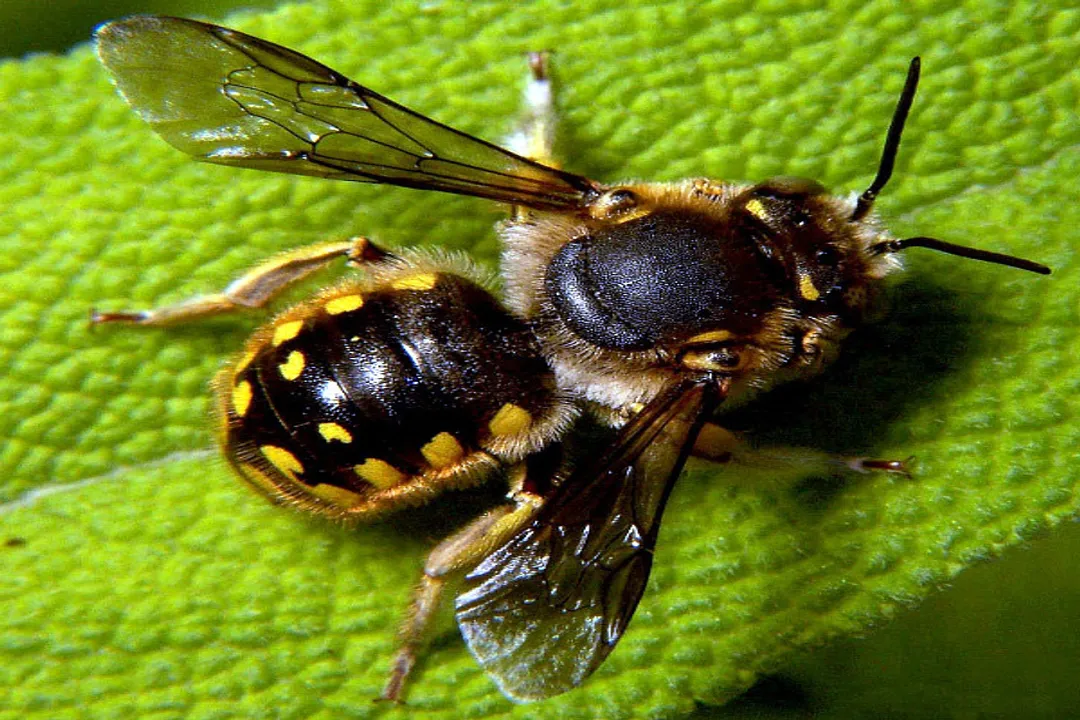
Successful reproduction for the solitary female Wool Carder Bee depends on fulfilling two concurrent needs: obtaining the woolly fiber for cell lining and securing a suitable structure in which to lay her eggs. Crucially, these bees do not excavate new tunnels themselves. Instead, they are cavity nesters that rely on repurposing existing voids. This includes searching for abandoned burrows previously created by wood-boring beetles within dead wood, or utilizing existing hollow plant stems. This dependence on pre-formed structural habitat means that even areas rich in preferred fiber might not host nesting if suitable, undisturbed dead wood or hollow structures are absent.
Related Questions
When was *Anthidium manicatum* first officially detected in the USA?What distinctive marking identifies the male European Wool Carder Bee?How does the nesting strategy of the female *A. manicatum* contrast with honeybees?What specific fibrous material gives the Wool Carder Bee its common name?Which plant species is often a favored source for nesting fuzz in invasive ranges?Besides fibrous material, what physical substrate must *A. manicatum* females seek for nesting cavities?What role do territorial males play in locating nesting activity?What geographical areas constitute the native home range of *Anthidium manicatum*?Where is the Wool Carder Bee particularly prevalent within the United Kingdom?How does tracking an *A. manicatum* sighting in North America contrast with one in its native range?