What is the gypsy cuckoo bumble bee habitat?
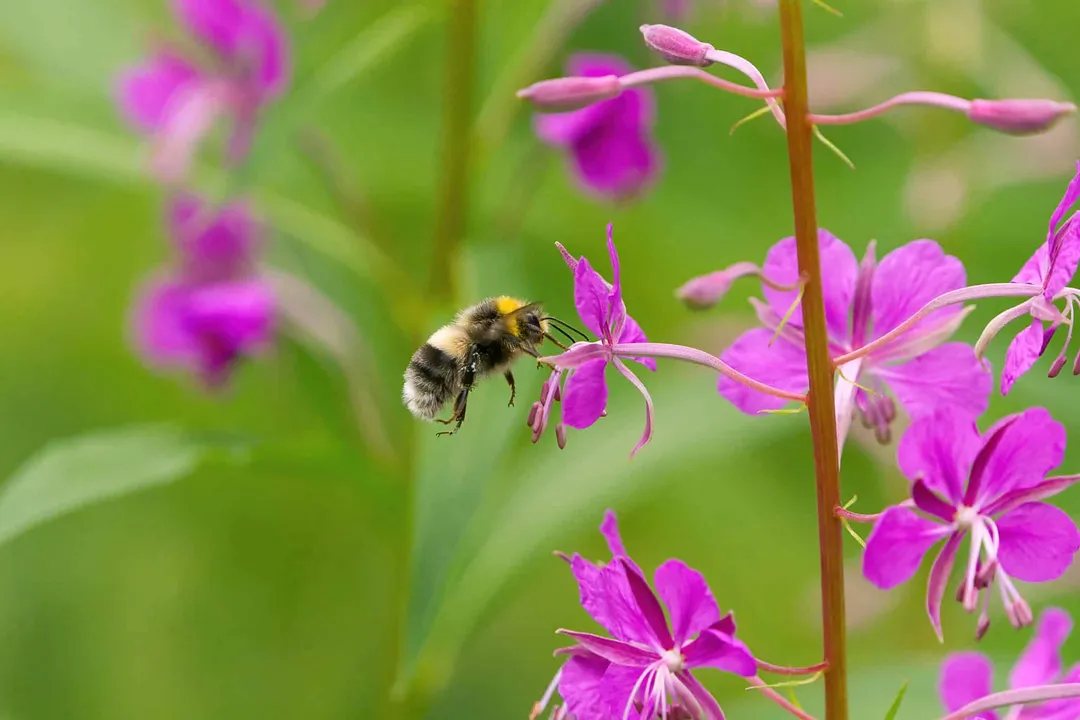
The Gypsy Cuckoo Bumble Bee, scientifically named Bombus bohemicus, presents a fascinating study in specialized ecology, primarily because its habitat requirements are intrinsically linked to the success of other bumble bee species. This insect is not a typical solitary or eusocial bee that selects a patch of ground or tree cavity for its own colony's founding; rather, its very existence is predicated on finding and usurping an already established nest belonging to a compatible host species. [1][6] Understanding where the Gypsy Cuckoo thrives, therefore, requires looking beyond typical floral resources to the landscape where its hosts—like the Common Eastern Bumble Bee (B. impatiens) or the Red-tailed Bumble Bee (B. ternarius)—are actively nesting. [2][4]
The species is classified as Endangered in Canada under the Species at Risk Act (SARA), which places an extra layer of urgency on understanding the precise environmental needs that have allowed its populations to persist, however precariously. [2][3] Its distribution is wide, spanning diverse ecosystems across North America and Eurasia, suggesting adaptability in certain environmental parameters, yet its parasitic lifestyle imposes rigid constraints on its localized habitat use. [1][5]
# Geographic Reach
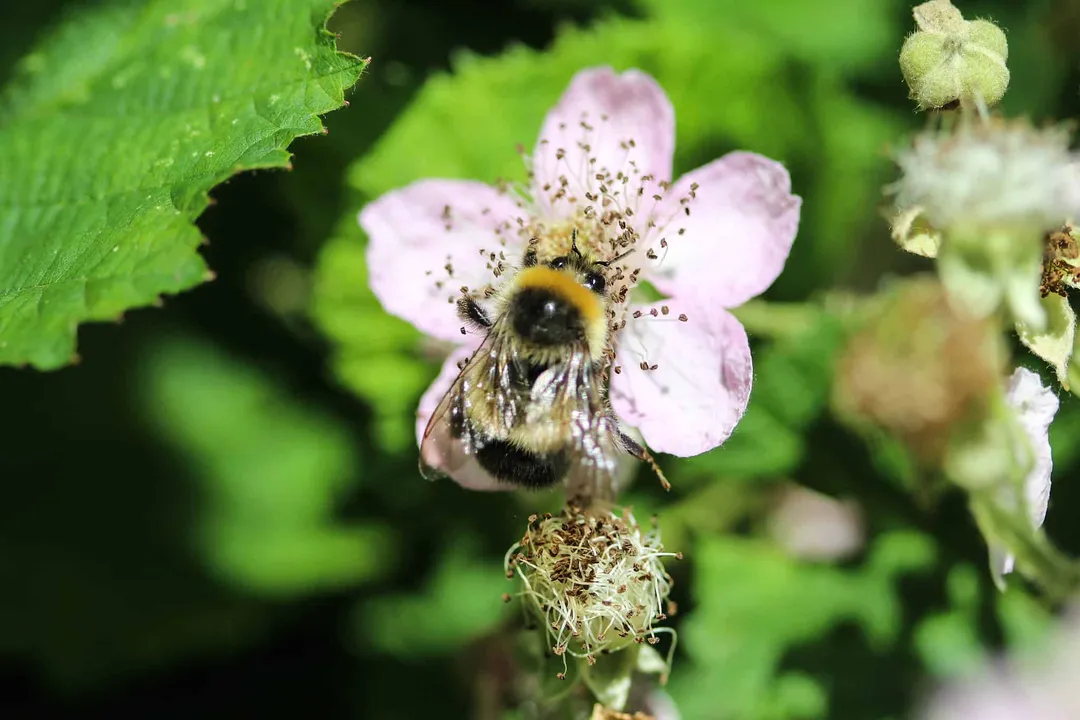
The North American range of B. bohemicus is expansive, generally covering areas from the Arctic tundra southward through the Boreal Forest, Parkland, and Prairie ecozones. [2][6] This north-south gradient means the bee can be found in environments ranging from the far north of territories like Nunavut and the Northwest Territories down into the northern United States, generally stopping around latitude 40° North. [2][6]
Within Canada, its presence has been recorded across most provinces and territories, including British Columbia, Alberta, Saskatchewan, Manitoba, Ontario, Quebec, New Brunswick, Nova Scotia, and Prince Edward Island, as well as the Yukon. [2][6][7] It is notably absent from Newfoundland and Labrador in this survey data. [2] In the United States, historical and current records place it in northern states such as Washington, Montana, North Dakota, Minnesota, Wisconsin, Michigan, New York, and Maine. [2][6] Across this vast area, the bee is found wherever its host species are prevalent, demonstrating a distribution pattern dictated by host ecology rather than purely by latitude or climate zone alone. [10]
# Landscape Features
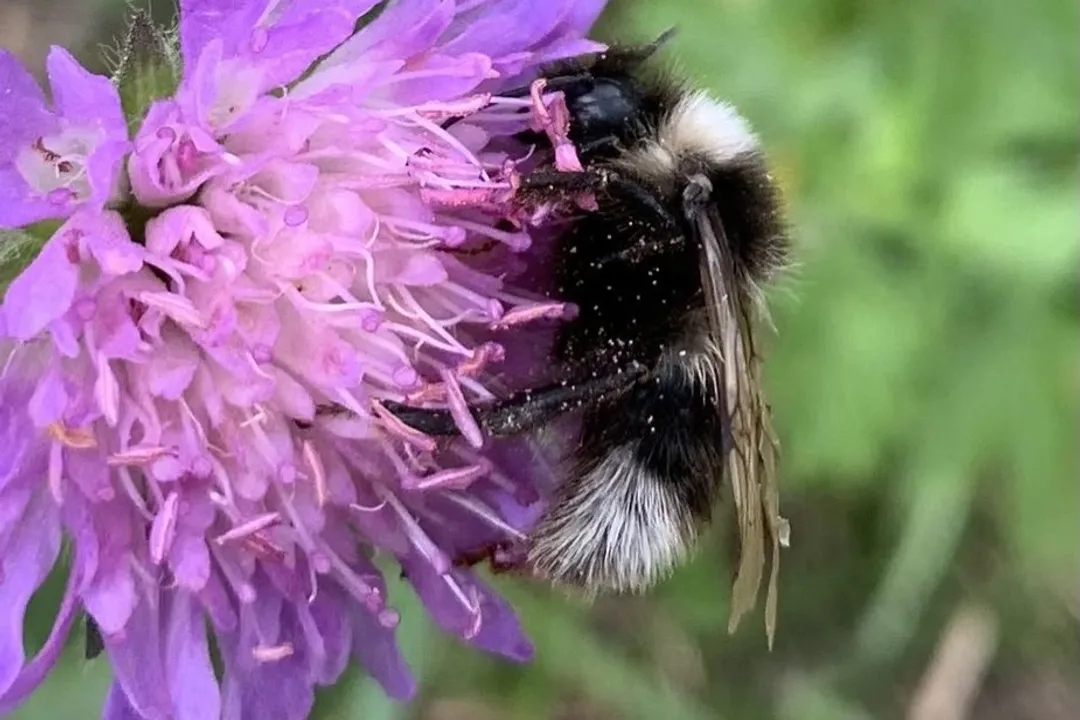
While the Gypsy Cuckoo can be found across a spectrum of habitats, the overall landscape composition must support both the bee and its hosts. [2] Generally, B. bohemicus favors open, semi-open, or disturbed habitats. [6] This includes meadows, open woodlands, fields, and prairie environments. [2][4][7]
These open areas provide two critical necessities:
- Ample floral resources for the host colonies to build up large worker forces, which is essential for the Gypsy Cuckoo queen to successfully invade and take over the nest. [10]
- Suitable substrate and cover for the host species to establish their ground nests. [6]
When considering the environmental niche, the bee appears to be strongly associated with the Boreal Forest, Prairie, and the transitional Parkland Ecozones in Canada. [2][6] The fact that it exists from the tundra edge down into prairie environments indicates a tolerance for significant temperature and growing season variation, as long as the necessary nesting substrate and host density are present. [2] The ecological breadth of its distribution is perhaps more a reflection of the adaptability of its hosts (like B. impatiens) than the cuckoo itself. [10]
# Nesting Site Dependence
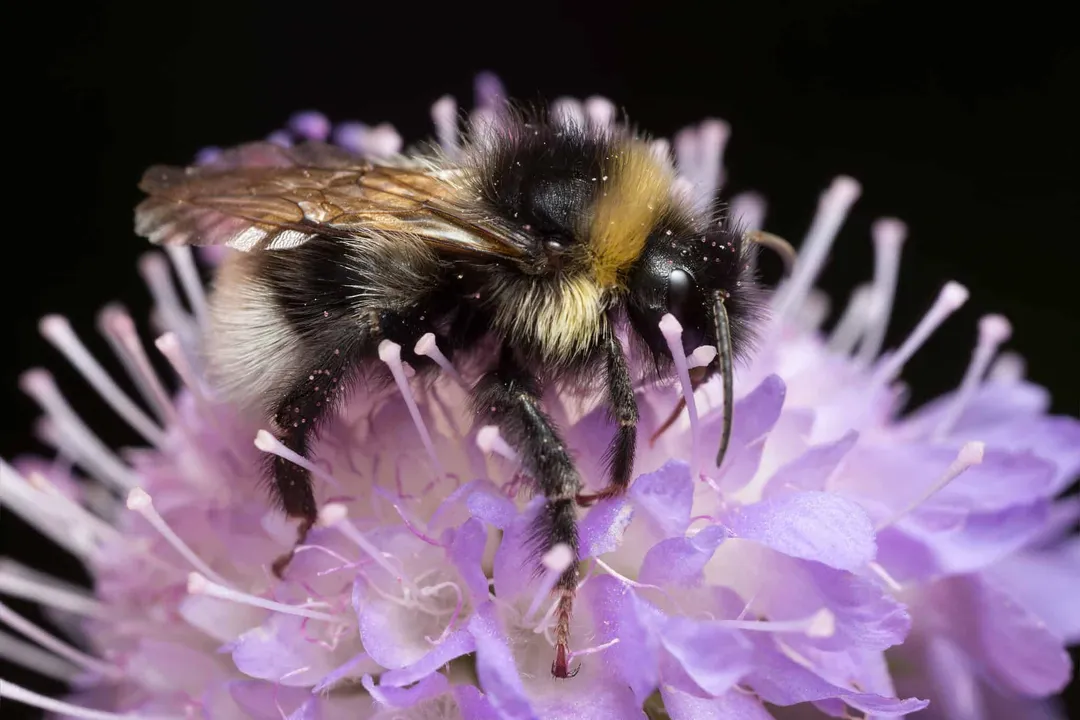
The most defining characteristic of the Gypsy Cuckoo's habitat requirement is its obligate social parasitism. [1][6] Unlike typical bumble bees, the founding queen of B. bohemicus does not gather pollen, nor does she excavate a nest in the soil. [1][6] Instead, her 'habitat' is the active, established nest of another bumble bee species. [1][2]
The preferred nesting sites for the hosts dictate where the Gypsy Cuckoo queen will search:
- Underground Burrows: The most common sites are abandoned rodent burrows beneath the ground surface. [6]
- Dense Cover: Nests may also be found within dense grass tussocks or thick ground vegetation. [6]
The success of the parasitic invasion is directly tied to the colony's developmental stage. The Gypsy Cuckoo queen must find a host colony that has already produced workers—the workers are then manipulated into raising the cuckoo's brood while the host queen is typically killed. [10] This means the habitat must support a host colony robust enough to reach this productive stage, which often takes time and abundant, readily available forage—a factor that connects back to the quality of the surrounding meadow or field. [1]
It is crucial to recognize that the Gypsy Cuckoo's habitat suitability is a composite score: (Floral Abundance) (Host Density) (Suitable Ground Nesting Sites). A location rich in the flowers B. bohemicus prefers to feed on, but lacking the specific soil conditions or structures that B. impatiens requires for its underground nest, will not support the cuckoo bee. This dependency creates a unique conservation challenge, as efforts to protect the cuckoo must necessarily overlap with, and often prioritize, the protection of its hosts' critical nesting grounds. [2][10]
# Foraging Ecology
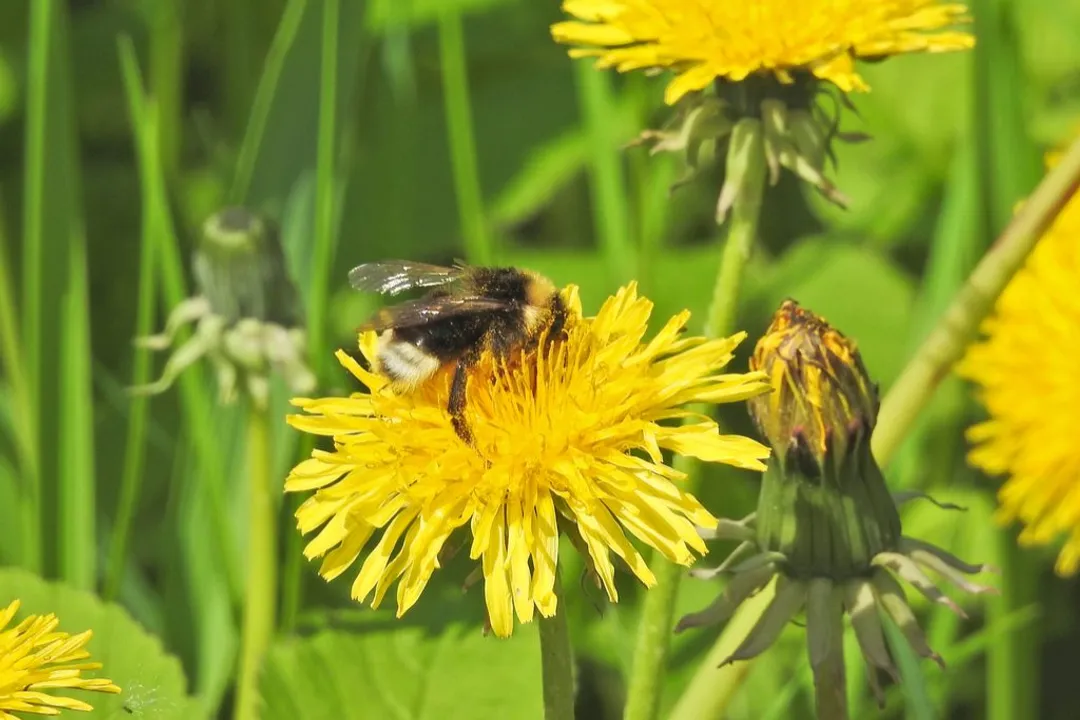
While the habitat is defined by its nesting parasitism, foraging requirements are still essential, as the parasitic queen must feed herself before invasion, and the resulting hybrid colony relies on collected resources. [1] The foraging habitat is generally described by the presence of suitable flowers across the open, sunny areas where host nests are likely to be located. [2]
The Gypsy Cuckoo has been documented visiting a wide variety of flowering plants, showing relatively broad dietary plasticity when it is foraging for itself or when the host colony is foraging for the mixed brood. [1][4] However, the host species' preferred forage plants indirectly define the cuckoo's habitat quality. If the dominant host relies heavily on early spring bloomers that are now declining due to land use changes, the cuckoo population will suffer, even if other generalist flowers bloom later in the season. [10]
# Conservation Context
The precarious nature of the Gypsy Cuckoo's habitat needs is underscored by its official status. Being listed as Endangered in Canada signifies that its current distribution is fragmented or shrinking, and the ecological conditions required for its survival are becoming increasingly rare. [2][3] Habitat loss and degradation are major contributing factors to this decline. [2][4]
This degradation occurs on two fronts simultaneously:
- Loss of the physical habitat (meadows, fields) that supports the abundance of nectar and pollen required by the host colonies.
- Loss of suitable, undisturbed ground cover or soil structure that allows the hosts to build their subterranean nests undisturbed by heavy machinery or deep tillage. [6]
The threat is not just general habitat reduction; it is the fragmentation that isolates remaining host populations, making it harder for a Gypsy Cuckoo queen to locate a suitable target colony before her own reproductive window closes. [2]
# Supporting the Cuckoo Through Host Management
For those interested in supporting this unique species, understanding the habitat means understanding how to support the species it relies upon. Simply planting flowers that the Gypsy Cuckoo might visit is only half the battle. [4] A more effective approach integrates the needs of both the parasite and the hosts.
One way to approach local habitat creation is to focus on ensuring un-tilled, undisturbed ground areas adjacent to high-quality forage patches. Since many hosts nest in abandoned rodent burrows, maintaining areas where soil structure remains intact—perhaps unmowed strips at the edges of fields or allowing sections of lawn to grow long—can directly increase the availability of nesting substrate for species like B. impatiens. [6]
Consider this practical thought experiment for local land management: If an area supports 10 active, healthy B. impatiens nests per hectare, it can potentially support one or two B. bohemicus queens. If habitat degradation reduces that density to 2 nests per hectare, the likelihood of a parasitic queen successfully finding an income source drops dramatically, even if the total flower biomass remains high. Therefore, the spatial clustering and underground security of host nests are arguably more sensitive habitat features for the Gypsy Cuckoo than the overall acreage of flowering land. [2][6]
The Eurasian counterpart to B. bohemicus, Bombus sylvarum, shares a similar parasitic strategy, and studies of Eurasian populations often highlight the extreme sensitivity of these cuckoo species to habitat disturbance that affects host nest initiation. [5] While North American data focuses heavily on B. impatiens and B. ternarius hosts, the underlying principle remains: the habitat of the Gypsy Cuckoo is, fundamentally, a healthy, thriving, and undisturbed colony of another bumble bee species, underground and sheltered from human activity. [1][6] Protecting its future means safeguarding the quiet, undisturbed corners of the landscape where ground-nesting bees can safely build their homes.
# Distribution Summary
To provide a clearer picture of where this bee is found, it can be useful to visualize the primary ecological zones that constitute its habitat preference:
| Ecozone Association | Key Characteristics | Primary Host Association (East/West) |
|---|---|---|
| Prairie | Open grasslands, historically vast expanses. [2][6] | B. impatiens |
| Parkland/Transition | Areas between prairie and boreal forest. [2][6] | B. impatiens, B. ternarius |
| Boreal Forest | Coniferous and mixed woods, often with clearings and meadows. [2][6] | B. ternarius (East), B. fervidus (West) |
| Tundra/Subarctic | Northernmost edge of range, short growing season. [2] | Specific northern hosts |
This table summarizes how the habitat is less about a single biome and more about the intersection of these biomes with sufficient host population density and nesting availability. [2] The difference in host species between eastern (B. impatiens) and western (B. fervidus) North America means that the precise physical characteristics of the required nesting substrate (soil type, depth) might vary geographically, even though the general requirement remains "undisturbed ground nest". [1][6]
Final thoughts on habitat suggest that conservation efforts must look for microhabitats within the broader landscape framework. A small patch of land that remains fallow, unplowed, or unmowed for several consecutive years, bordered by areas offering diverse, sequential blooms from spring through late summer, represents the optimal habitat unit for B. bohemicus indirectly, by securing the necessary infrastructure for its hosts to thrive and build large enough colonies for successful usurpation. [2][4] This specialized reliance makes the Gypsy Cuckoo Bumble Bee an excellent bio-indicator for overall landscape health and functional ecological connectivity between different trophic levels. [10]
Related Questions
#Citations
Bombus bohemicus
Gypsy Cuckoo Bumble Bee,Bombus bohemicus
Gypsy Cuckoo Bumble Bee
Gypsy Cuckoo Bumble Bee- Species At Risk ...
Bombus bohemicus
GYPSY CUCKOO BUMBLE BEE - ALUS Canada
Gypsy Cuckoo Bumblebee Insect Facts - Bombus bohemicus
Gypsy Cuckoo Bumble Bee
Gypsy Cuckoo Bumble Bee
What these bumble bees do isn't pretty, but they're ...