Why are they called carder bees?
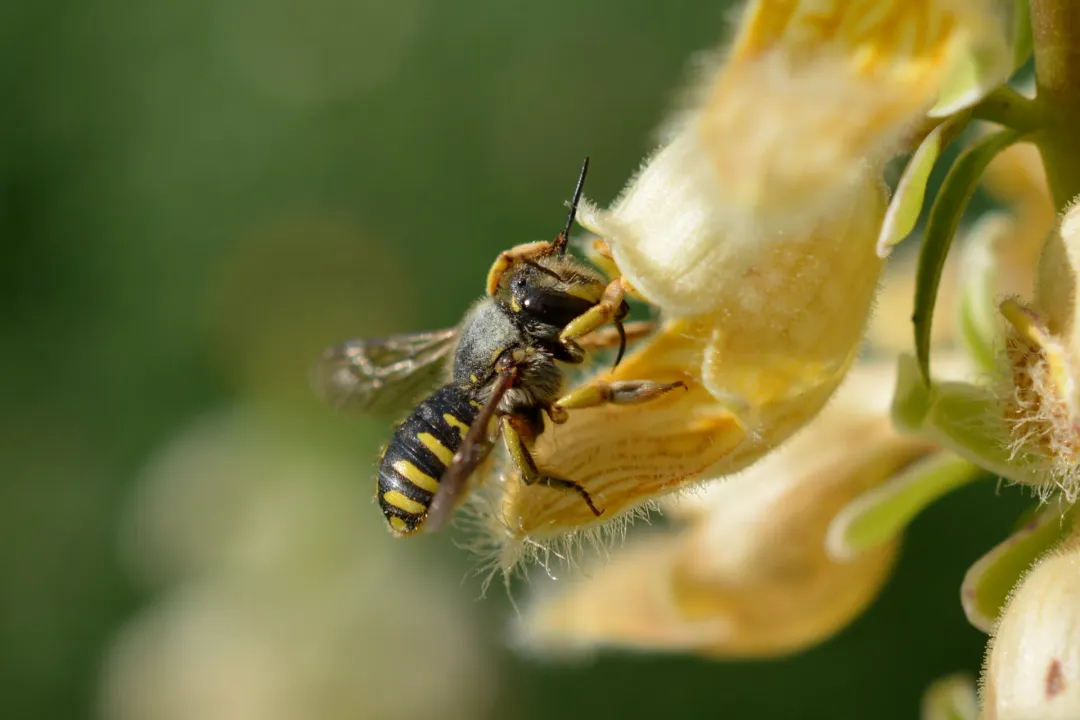
The curiosity surrounding the name of the carder bee stems entirely from an industrious, textile-like behavior exhibited by the female members of this group. They are not named for their sting or their fuzzy appearance, although both are notable characteristics. Instead, the descriptor carder refers directly to their unique method of gathering building materials for their homes, a process that closely mimics the historical practice of carding wool to prepare it for spinning. [1][3][6][8]
# Scraping Fibers
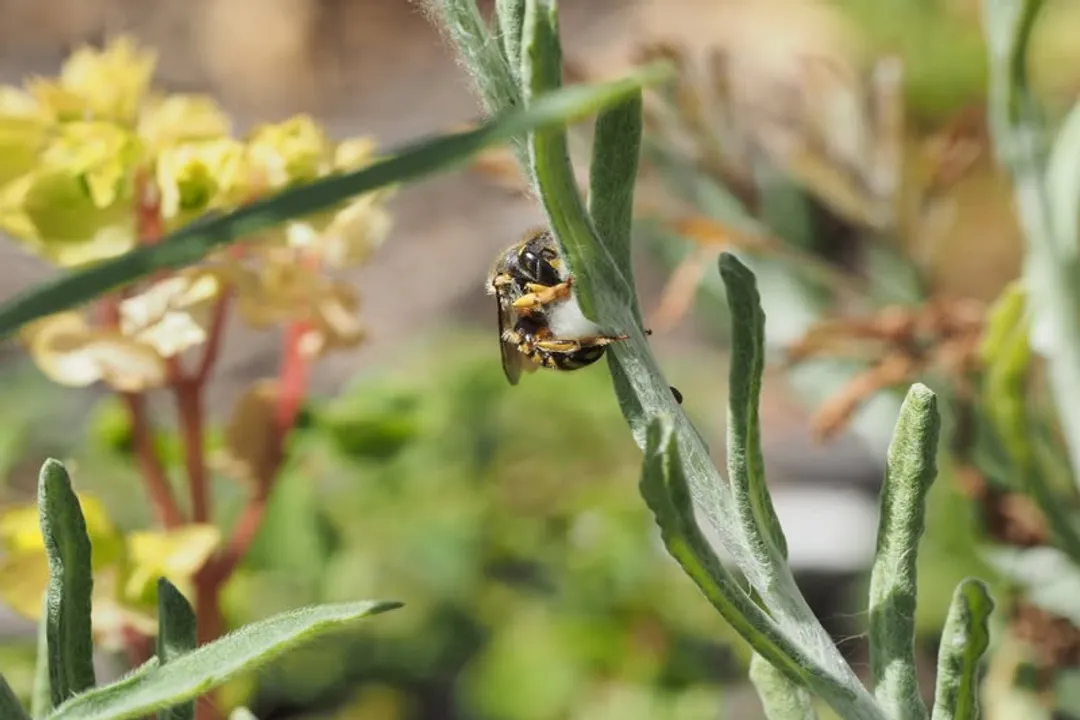
The core reason these bees earn their moniker lies in how the females construct their individual nest cells. Unlike honeybees or bumblebees which use wax, the female European Wool Carder Bee (Anthidium manicatum) actively harvests soft, often silvery or grayish, plant hairs. [1][3][6] This behavior is essential for providing insulation and structure to the small, thimble-sized brood cells they fashion inside available cavities. [1][6][8]
The process is deliberate and quite specific. The female lands on a suitable plant and uses her mandibles—the jaws of an insect—to carefully scrape or cut loose the fine fibers growing on the leaves or stems. [1][3][8] She doesn't just gather the material haphazardly; she collects it and packs it onto specialized structures on the underside of her abdomen, known as a scopa. [1][3][8] This dense patch of specialized hairs acts like a carrying basket, designed specifically to transport bulk materials like pollen or, in this case, plant fluff. [1][3] It is fascinating to observe this transport method, as it contrasts sharply with the behavior of many other bees, such as the bumblebees, which primarily rely on pollen baskets (corbiculae) located on their hind legs for carrying materials. [1] The name carder bee is thus an apt descriptor of this specialized material transport and preparation technique that is visually distinct from the pollen-packing methods of many other bee families. [3]
# Lining Nests
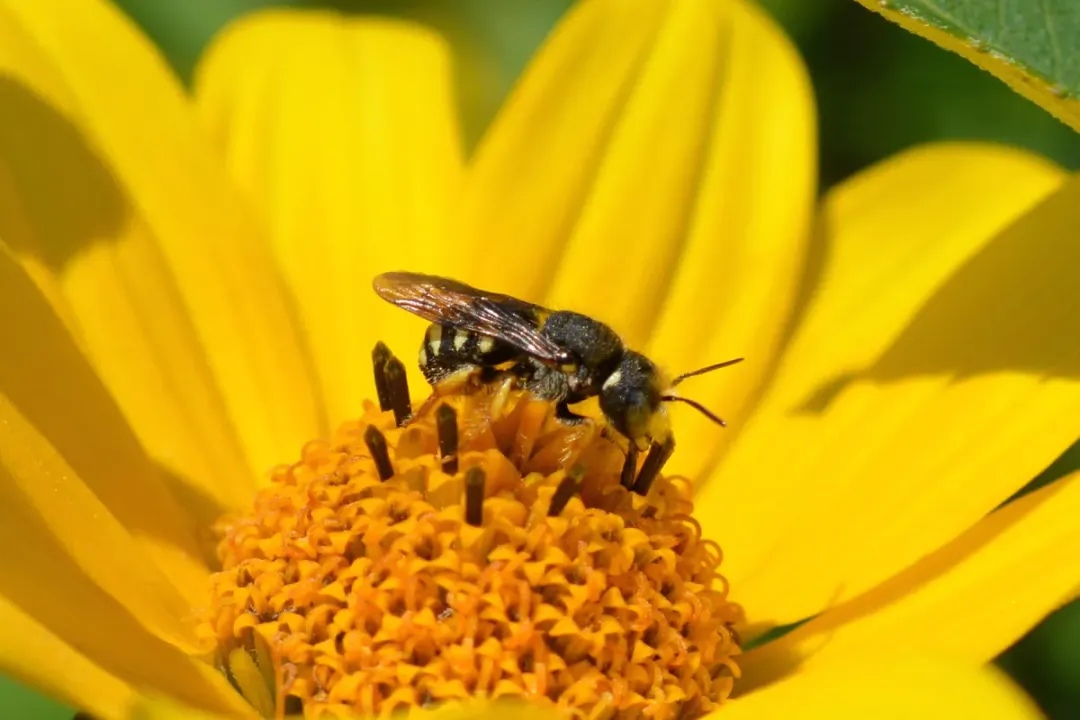
Once the female has secured a mouthful or abdomen-load of these soft materials, she transports them back to her chosen nesting site. [1][6] The carder bee is a solitary species, meaning each female is responsible for provisioning and sealing her own set of brood cells, rather than working cooperatively in a large colony. [5]
Inside a pre-existing cavity—perhaps a hollow reed, a beetle burrow in deadwood, or even a purposely drilled hole in a wooden block—she constructs individual cells, often separated by partitions made of the same plant fiber material. [1][6] The collected hairs are then pressed and molded to form a dense, protective lining around each developing larva. [3][6][8] This lining serves multiple purposes: it insulates the developing pupa from temperature fluctuations, acts as a cushion, and likely helps maintain the humidity necessary for successful metamorphosis. [1][6] This meticulous construction, involving the gathering, transport, and deliberate molding of fibrous material, is precisely what evokes the image of a textile worker carefully carding wool before spinning. [3][9]
# Preferred Plants

The specific type of fiber dictates which plants the carder bee frequents. While they are generalists in terms of nectar and pollen sources—visiting many different types of flowers—their nesting material preference is quite narrow. [6] The most frequently cited sources for this fibrous material are plants that possess a dense covering of fine, soft hairs, giving them a fuzzy or velvety appearance. [3][5]
Two common garden plants often provide the necessary material for the European Wool Carder Bee:
- Lamb's Ear (Stachys byzantina): This plant is famous for its densely felted, silvery leaves, making it a prime target for the carder bees. [3][5]
- Mullein (Verbascum species): These tall, often biennial plants also feature hairy stems and leaves that provide excellent nesting fluff. [3][6]
It is worth noting that while the bee is seeking the fibers from these plants, both Lamb's Ear and Mullein are themselves excellent sources of nectar for the bees, meaning the female often performs dual duties—foraging for food and collecting housing insulation on the same trip. [6] If you notice a bee gently plucking hairs from the stem of a Mullein plant, you are witnessing the exact behavior that gave this entire group of insects its common name. [3][5] For those of us who manage gardens, intentionally leaving some Mullein or allowing patches of Lamb's Ear to grow undisturbed during the nesting season provides a tangible resource for these beneficial, albeit sometimes assertive, pollinators. [6]
# Guarding Males

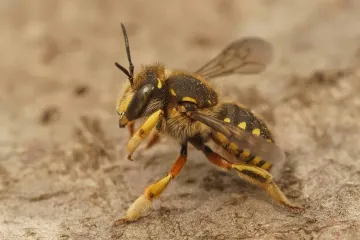
While the females are the ones performing the defining "carding" activity, the males of the Anthidium genus, particularly the European Wool Carder Bee, are often the most visible and memorable to casual observers due to their highly defensive nature. [5][8] The male bee establishes a territory centered around resources—often a patch of preferred flowers or, critically, a desirable nesting site—and aggressively defends this area. [2][5][8]
This territoriality is what sometimes leads people to label them as bullies or aggressive insects. [2][5][8] A male carder bee will actively patrol his chosen territory, chasing away any perceived intruder. [2][5] This pursuit can be quite startling, as they are known to pursue large insects, other bees, wasps, and even small birds away from their area. [2][8] Despite their aggressive displays, the males do not sting unless handled or trapped, as they lack the pollen-carrying structures of the females and their primary role revolves around defense and mating. [2][8] This striking difference in behavior—the industrious, fiber-gathering female versus the fiercely protective, often large-bodied male—makes understanding the species crucial for appreciating their full life cycle. [2][5]
# Not Bumblebees
A common point of confusion is mistaking the Wool Carder Bee for a bumblebee due to their size and fuzzy, black and yellow patterning. [1][5] However, taxonomically, they are quite distinct. [4] Bumblebees belong to the family Apidae, whereas the European Wool Carder Bee is a member of the family Megachilidae. [4]
This distinction is biologically important; for instance, it relates back to their nesting and transport methods described earlier: bumblebees are highly social, while carder bees are solitary. [5] Furthermore, the Wool Carder Bee has fewer segments visible on its abdomen compared to a bumblebee, and the male's territorial behavior is much more pronounced than that of most bumblebee males. [2][5] Recognizing this difference is key to understanding their ecological function; they are solitary specialists, not members of the large, cooperative social structures we associate with true bumblebees. [5]
# Identification Clues
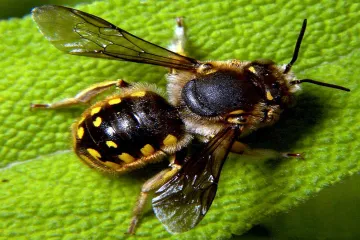
Beyond the key behavior that lends them their name, there are physical characteristics that help separate the carder bee from its look-alikes. [1] Adult females are often slightly smaller than males and are the ones equipped with the scopa for carrying nesting materials. [1][3] Males, in contrast, possess distinct white or pale yellow patches on the underside of their abdomen, which are absent in the females. [4]
If you encounter a bee visiting your garden flowers, taking a moment to observe its behavior can confirm its identity and contribution to the local ecosystem: [6]
- Observe the Transport: Is the bee flying back to a nest cavity carrying a visible clump of fluffy, pale fiber packed underneath its abdomen? If yes, it is a carder bee gathering nesting material. [1][3]
- Observe the Defense: Is a large, fuzzy bee aggressively chasing away other flying insects from a specific clump of flowers? If yes, you are likely watching a territorial male. [2][8]
- Observe the Nest: If you can locate the nest entrance, carder bees use organic debris like leaves or hairs to plug the entrance after sealing the last brood cell, which is another clue related to their fibrous tendencies. [1]
The very act of gathering and molding these fibers makes the Wool Carder Bee a unique pollinator. Its entire nesting strategy hinges on finding high-quality, soft plant hairs, directly linking its common name to an observable, vital part of its life cycle that supports the next generation of solitary bees. [1][6]
Related Questions
#Citations
Carder bee - Dynamic Dunescapes
European wool carder bees (Anthidium manicatum) are invaders ...
Those Foxy Wool Carder Bees | Bug Squad
Anthidium manicatum - Wikipedia
How did the Carder (Bumble) Bee acquire that name?
Carder Bee - Native Beeology
Wool Carder Bee - Beevive
European Wool Carder Bees: Likable Bullies
Wool Carder Bee - USDA Forest Service