Where were short-faced bears located?
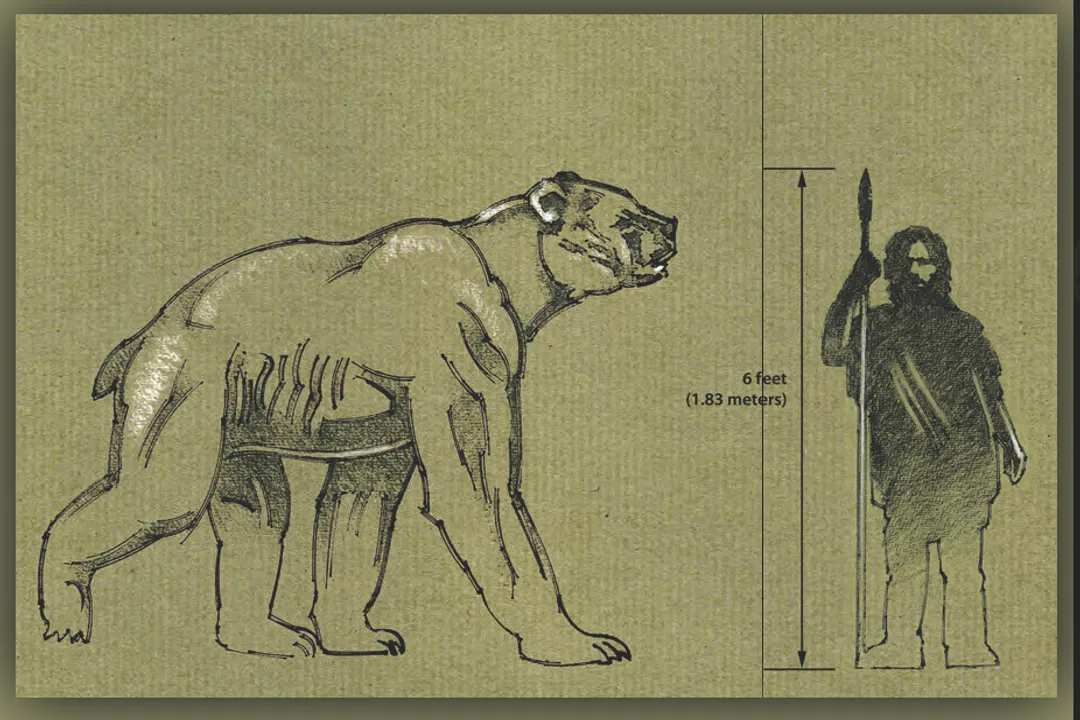
The giant short-faced bear, Arctodus simus, occupied an immense swath of territory across the ancient continent of North America. Tracing its fossil localities reveals a creature that was not confined to a single ecological niche or climatic zone, suggesting a degree of adaptability rarely seen in apex predators of that time. When mapping where this extinct giant lived, the picture that emerges is one of near-total continental coverage during the Pleistocene epoch.
# Broad Range
The geographical scope of the short-faced bear’s presence stretches from the northernmost limits of the continent down into the southern reaches of modern-day Mexico. This vast north-south distribution implies that the species successfully navigated drastically different environments, from frigid glacial landscapes to warmer, more arid regions. Moving from east to west, the evidence also points to an occupation across the entire width of North America, meaning fossils have been discovered along the Pacific coast, deep within the interior plains, and reaching as far as the Atlantic coastlines. This sheer longitudinal extent contrasts sharply with the more restricted ranges of many other megafaunal species that vanished alongside it.
It is worth noting that the period of their existence—the Pleistocene—was characterized by significant climate fluctuation, including glacial and interglacial periods. The species managed to persist across these environmental shifts, which supports the idea that its dietary flexibility or habitat tolerance was superior to many contemporaries. Had they been strictly tied to, say, dense boreal forests, their presence across the plains or southern desert margins would be highly improbable.
# Beringian Presence
One critical area for understanding the distribution of Arctodus simus involves the land bridge that connected Asia and North America: Beringia. The fossil record confirms that the giant short-faced bear was a resident of Beringia. This northern environment, often characterized by mammoth steppe or tundra conditions during the Ice Age, represented the northern edge of their confirmed habitation zone.
The identification of Arctodus in Beringia is significant because it suggests that the species may have originated in or at least migrated through this region. While the precise origin remains a subject of paleontological study, finding them there confirms their ability to thrive in environments markedly different from the lower 48 states. While the plains and forests might seem like the natural habitat for a large bear, their presence in the frigid, open expanse of the Beringian land bridge illustrates a remarkable physiological and behavioral plasticity. When considering the ecological pressures of the Ice Age, surviving in Beringia implies they were not exclusively reliant on dense forest cover for hunting or shelter, unlike some later, smaller bear species.
# Fossil Finds
Specific fossil localities help ground the general continental overview with concrete paleontological data. Evidence of the short-faced bear is scattered across numerous museums and research sites throughout the United States and Canada.
In the American Midwest, for example, fossil remains have been recovered from states like Illinois. Discoveries in this region help fill in the central corridor of their range, suggesting continuous occupation through the continent’s interior. Similarly, research sites in the area around the University of Iowa have contributed to the understanding of their presence across the central plains.
Moving south, the distribution pushes toward the warmer latitudes. White Sands National Monument (now National Park) in New Mexico has yielded evidence of the giant short-faced bear. This location—characterized by gypsum sand dunes—represents one of the southern extremities of their documented North American range. Finding Arctodus remains in the White Sands area requires us to account for a creature that could evidently tolerate the harsh, dry conditions of the southwestern North American deserts or grasslands, rather than just the lush forests or cold steppes.
A detailed comparison of reported localities, often visualized on distribution maps compiled from various scientific papers, consistently demonstrates that while they were widespread, they were not evenly distributed. There appear to be areas of higher density, often correlating with regions that supported large herbivore populations—their likely primary food source.
Here is a simplified representation of the confirmed longitudinal and latitudinal extremes based on paleontological evidence:
| Extreme | Location | Environment Type (Inferred) |
|---|---|---|
| Northernmost | Beringia | Tundra/Steppe |
| Southernmost | Mexico | Arid/Grassland Margins |
| Westernmost | Pacific Coast | Coastal/Mountainous |
| Easternmost | Atlantic Coast | Broad Range Confirmed |
Synthesizing these scattered findings—from the Arctic boundary of Beringia to the southern reaches near Mexico, and spanning from coast to coast—presents a compelling case for Arctodus simus being one of the most geographically successful large mammals of the late Pleistocene.
# Ecological Spread
The sheer geographic breadth of the short-faced bear’s distribution offers an insight into its ecological role, which often sparks debate among paleontologists. The question isn't just where they were, but why they could be everywhere.
If we project the known fossil locations onto a paleogeographic reconstruction of the Ice Age, we see that Arctodus fossils are associated with diverse environments: open tundra, vast grasslands, and perhaps even scrublands. This contrasts with the modern Grizzly (Ursus arctos horribilis) or American Black Bear (Ursus americanus), whose ranges are generally more constrained by factors like forest cover or specific vegetation density.
One way to conceptualize the success of Arctodus across such varied terrain is to consider its potential niche. If the animal was indeed the massive scavenger or predator suggested by its morphology—tall, long-legged, and built for pursuit or rapid movement—it would require a wide habitat base to sustain its large population size across the continent. A specialist relying on a narrow band of resources would likely have a much tighter geographic signature, much like the specialized megafauna that eventually went extinct. The fact that Arctodus seems to have been a generalist across the continent’s broadest geographic strokes suggests that the essential requirements for its survival—whatever they were—were met in the Beringian north, the midwestern plains, and the southwestern borderlands alike. This adaptability likely gave it an edge over competitors whose ecological needs were more finely tuned to a single biome type.
Furthermore, considering the sheer distance between, for instance, a confirmed fossil find in Alaska and one in New Mexico, we can appreciate the time scale involved. These locations are not merely close outliers; they represent populations separated by thousands of miles and vastly different climatic regimes that existed over hundreds of thousands of years. The persistence of the species across this entire environmental gradient strongly implies that the Arctodus lineage was genetically and behaviorally equipped to handle regional variation, making its wide location distribution a testament to its evolutionary success during the Ice Age. Its final disappearance coincides with the end of the Pleistocene, suggesting that the ecological shifts at that time ultimately proved too rapid or too severe even for such a widely distributed and adaptable giant.
Related Questions
#Citations
Arctodus - Wikipedia
Giant Short-Faced Bear | University of Iowa Museum of Natural History
Map showing locations of reported Arctodus simus localities with ...
The short-faced bear is an extinct ancient bear that lived in North ...
White Sands National Park - Facebook
Giant Short-faced Bear | Yukon Beringia Interpretive Centre
Extinct Short-faced Bear (Arctodus spp.) Fact Sheet [archived ...
Short-faced Bear | Explore the Ice Age Midwest