What geographical areas constitute the native home range of *Anthidium manicatum*?
Answer
Europe, North Africa, and temperate Asia.
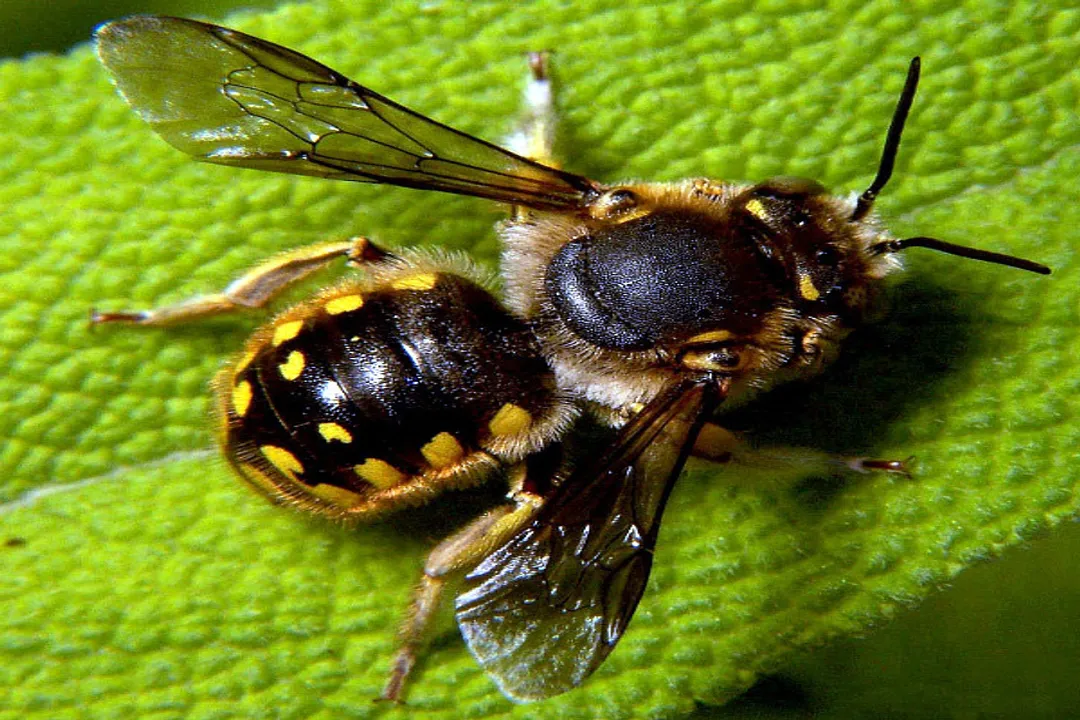
The origins of the European Wool Carder Bee define its native range, which is extensive, covering significant portions of the Old World continents. The species’ established home ground encompasses the continent of Europe, stretching south into North Africa, and extending eastward across temperate regions of Asia. Within this native distribution, the bee’s population dynamics are integrated into the natural pollinator community, having adapted over long periods to the local climates and indigenous flora found across these vast areas.
Related Questions
When was *Anthidium manicatum* first officially detected in the USA?What distinctive marking identifies the male European Wool Carder Bee?How does the nesting strategy of the female *A. manicatum* contrast with honeybees?What specific fibrous material gives the Wool Carder Bee its common name?Which plant species is often a favored source for nesting fuzz in invasive ranges?Besides fibrous material, what physical substrate must *A. manicatum* females seek for nesting cavities?What role do territorial males play in locating nesting activity?What geographical areas constitute the native home range of *Anthidium manicatum*?Where is the Wool Carder Bee particularly prevalent within the United Kingdom?How does tracking an *A. manicatum* sighting in North America contrast with one in its native range?