For a migratory species like the Willow Flycatcher, where does adaptation pressure manifest besides the breeding grounds?
Answer
During migration or wintering
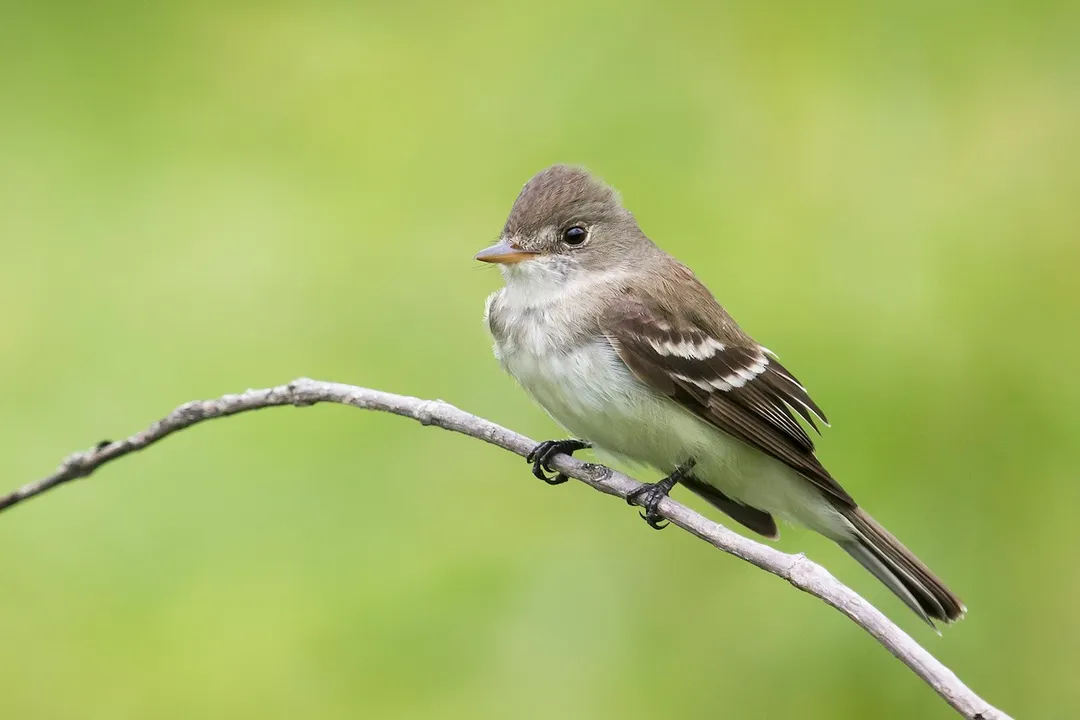
The Willow Flycatcher faces a twofold requirement for adaptation due to its migratory lifestyle. While significant scientific focus is placed on the breeding grounds where phenology (timing) and local tolerance to heat must adjust, the pressures do not cease there. Because the species travels between North America and Mexico/Central America, adaptation may also need to occur, or at least be accommodated, during the arduous migratory phases or while surviving the conditions encountered on the wintering grounds, though breeding ground adaptation currently receives more intensive research focus.
Related Questions
How is the Willow Flycatcher often recognized, contrasting with its subtle appearance?What specific ecological feature do Willow Flycatchers strongly depend on for breeding habitat?Which recognized Willow Flycatcher subspecies generally tends to breed at higher elevations than *E. t. traillii*?What is the primary anthropogenic engine currently influencing the rapid evolution of *Empidonax traillii*?What is the typical foraging strategy employed by the insectivorous Willow Flycatcher within its habitat?How does the documented genetic adaptation rate in the Willow Flycatcher compare to typical rates inferred from the fossil record?What concept might supersede neat geographical lines when describing future population structure based on modern genetic data?What subtle facial feature is often described as incomplete or weak on the Willow Flycatcher?In the Rocky Mountains, what local selective driver might favor Willow Flycatchers genetically predisposed to earlier breeding?For a migratory species like the Willow Flycatcher, where does adaptation pressure manifest besides the breeding grounds?