Are scissor-tailed flycatchers rare?

The question of whether the Scissor-tailed Flycatcher is a rare bird depends entirely on where you happen to be standing when you look up. To an observer in the grassy expanses of central Oklahoma, this species is a common and expected visitor during the breeding season, celebrated for its breathtaking aerial acrobatics. However, for a birder standing in the hardwood forests of coastal Alabama or the valleys of the Pacific Northwest, spotting one constitutes a genuinely rare and noteworthy event, often sparking excitement across local birding communities. [4][8][9] This magnificent creature, with its disproportionately long, deeply forked tail, is truly an icon of the American Great Plains, but its status shifts dramatically outside that core range. [2]
# Striking Plumage
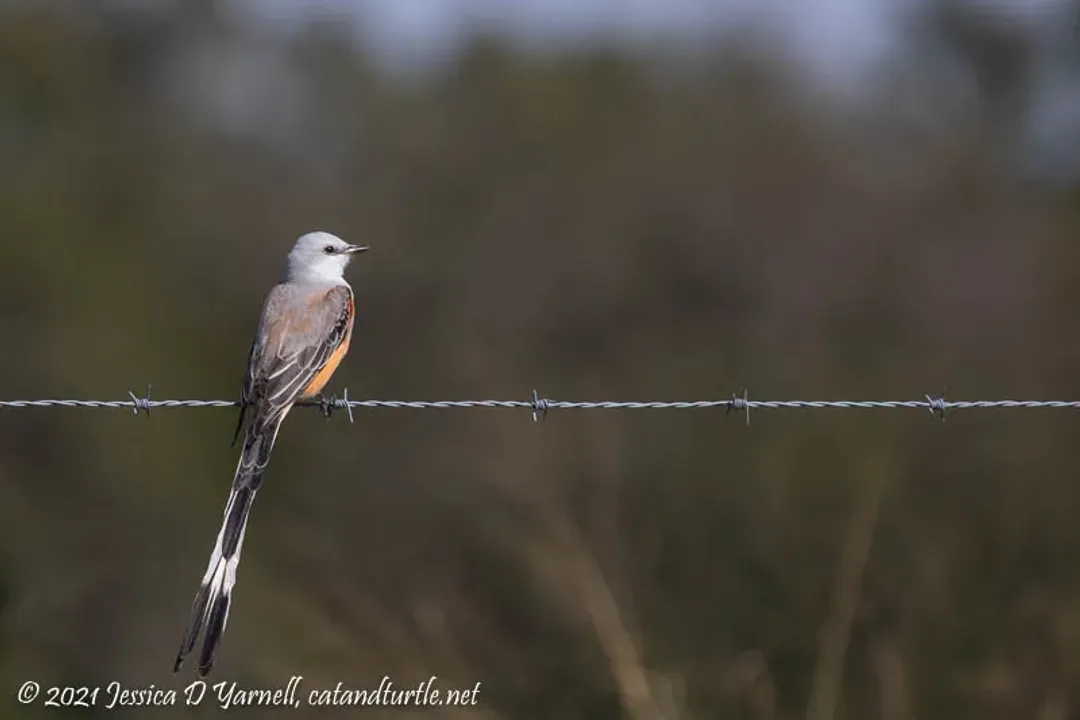
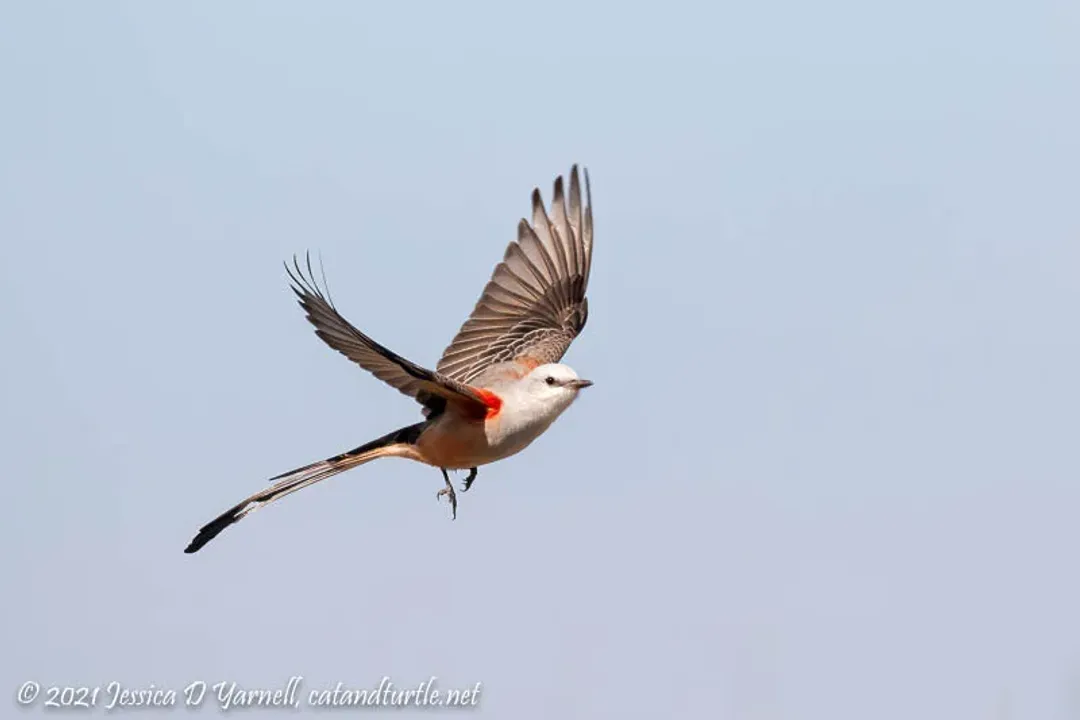
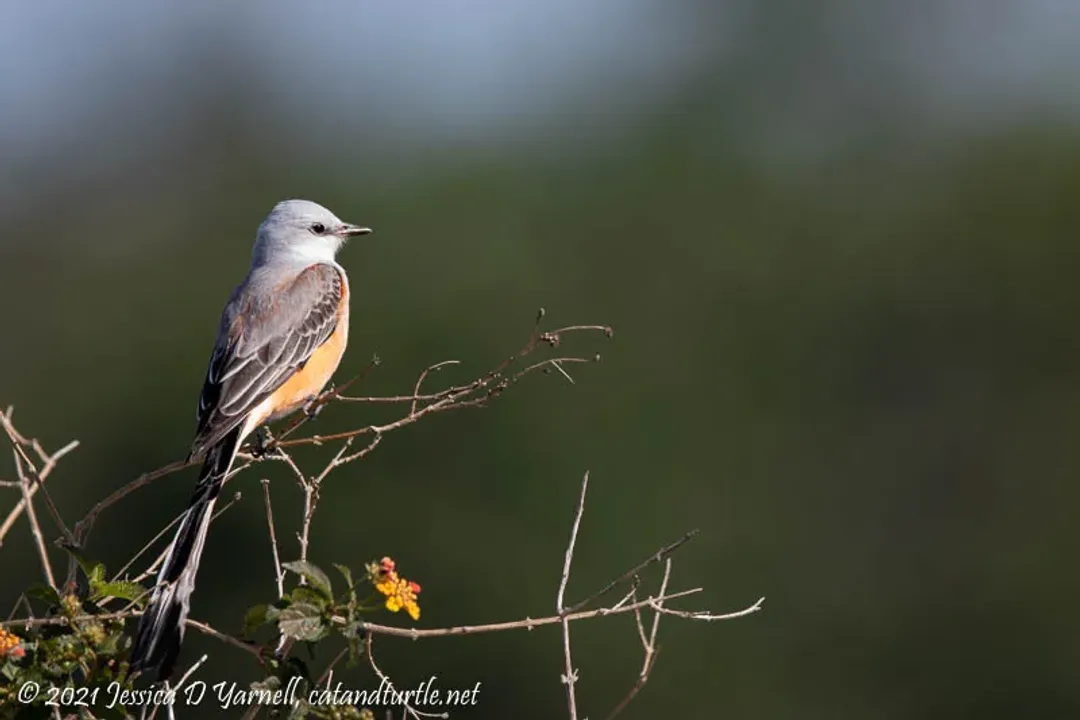
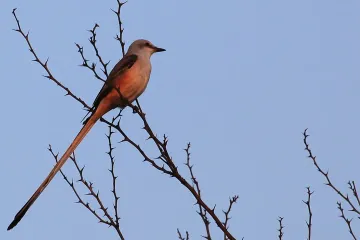
The physical description of the Scissor-tailed Flycatcher immediately explains why birders go to such lengths to find them. The bird is unmistakable due to its tail, which can measure up to a foot long in breeding males, deeply notched like a pair of open scissors. [1][2] While the tail is the main feature, the rest of the body is also striking. The upperparts are generally blackish or dark gray, contrasting sharply with the pale gray head and breast. [2] A distinct, subtle pinkish or salmon hue is often visible on the underside and the lining of the wing, especially visible during flight or display. [1][2] Juveniles possess a shorter tail than adults, which can sometimes cause brief confusion, but the overall structure and coloration remain distinctive. [6]
# Core Breeding Ground
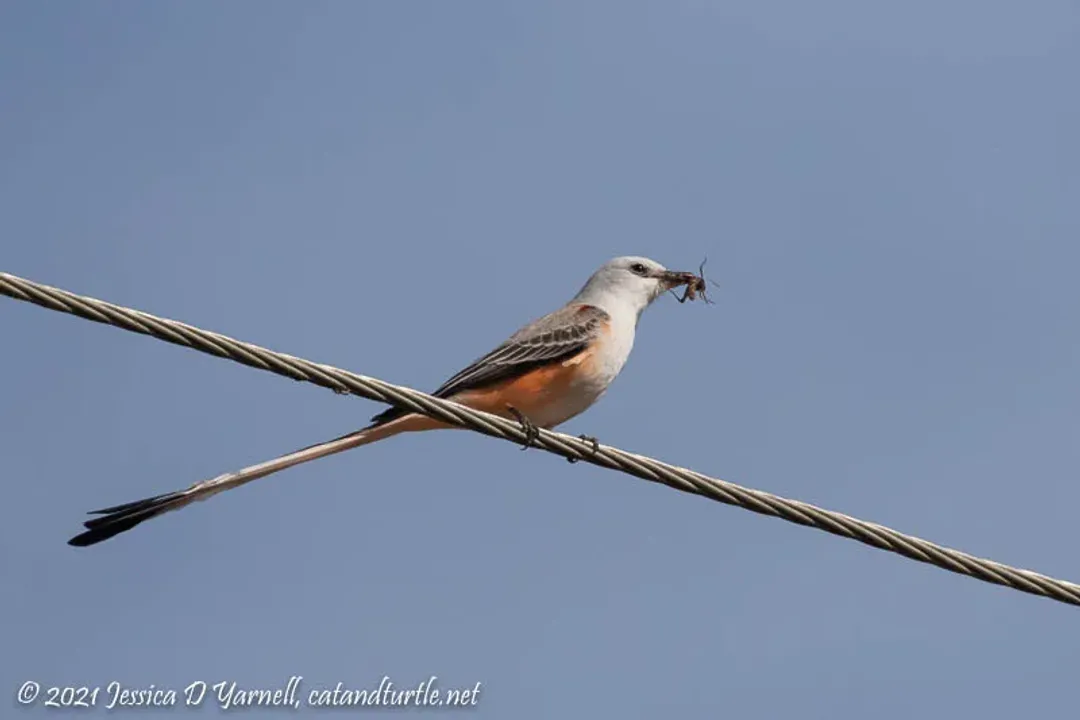
The species is primarily known as a breeding bird across the central part of North America, specifically favoring the grasslands, prairies, and open country of states like Texas, Oklahoma, Kansas, and parts of the surrounding region. [2][6] Within this area, they thrive in environments characterized by scattered perches like fence posts, telephone wires, or isolated trees, which they use as lookout points from which to launch their aerial sallies. [1][2] Their life is tied closely to these open landscapes, as they feed almost exclusively on flying insects caught mid-air. [2] In these core regions, they are not rare; they are an expected, if sometimes sparse, component of the summer avian population. [3]
# Peripheral Sightings
The perception of rarity sharply increases when moving eastward or westward from this central heartland. In Alabama, for example, the Scissor-tailed Flycatcher is considered a rare breeder, sometimes appearing in specific habitat pockets such as the Black Belt region, but its presence is inconsistent enough to be considered a special sighting. [4][8] Similarly, reports from areas significantly outside the typical migratory or breeding pathways often become headline news for local birding groups. [9] A documented appearance in the Yakima Valley of Washington State is noted as a rare event, underscoring how far the bird can occasionally stray from its established routes. [9] When these birds appear in such peripheral locations, they are likely early arrivals, late departures, or birds that have veered significantly off course during migration south toward Mexico or Central America. [2]
# Navigating Rarity Perceptions
Understanding rarity requires acknowledging the difference between a vagrant and a resident. A bird that breeds regularly, even if in low numbers, in a state like Oklahoma is fundamentally different from one that shows up once every five years in Washington state. [6] For those living in the core range, rarity might only apply to specific years where local conditions—perhaps an abundance of cattle grazing has unintentionally removed all suitable fence-post perches, or local weather patterns are unfavorable—lead to fewer nesting pairs than usual. In contrast, for birders on the edges of the range, any confirmed sighting confirms the species' extraordinary dispersal capabilities. [3] It is an interesting thought exercise to compare the expected nesting density across the vast cattle country of North Texas versus the occasional, almost accidental nesting in a niche habitat in eastern Alabama; one is a staple, the other is an anomaly. [4][6]
# Effective Viewing Strategy
If you are hoping to confirm whether this bird is common or rare in your area, knowing where to look is as important as knowing what to look for. Since they require open space and elevated observation posts, spending time observing large pastures, agricultural fields, or areas near scattered utility poles is far more productive than searching dense woodland or suburban backyards. [1][2] A worthwhile practice for the dedicated observer is to track the local agricultural cycles; areas with recent, active grazing often provide better insect populations and clearer sightlines for the flycatchers than fields that have become overgrown, as the cattle disturb ground insects, making them easier targets for the birds perched above. [4] This dependence on open, sometimes human-modified, landscapes means that the bird's local abundance can fluctuate yearly based on land use patterns, sometimes making the bird locally scarce even within its accepted breeding zone. [8] Observing the behavior, rather than just the presence, offers a deeper appreciation of its ecological needs.
# Migration Timing
The timing of arrival and departure plays a role in how frequently the bird is noticed, which sometimes feeds into the perception of rarity. They generally arrive on their breeding grounds in spring, often by April, and begin their southward migration once the summer heat begins to wane. [2] A bird seen in early March or late September outside the core range is far more likely to be a transient migrant than a breeding resident, increasing the perceived rarity of the sighting simply due to the unusual time of year for that location. [9] For instance, seeing one in Alabama in mid-June suggests nesting activity, whereas seeing one there in late October suggests a bird that has significantly overshot its intended southern trajectory, making the latter scenario statistically rarer. [4]
The Scissor-tailed Flycatcher remains one of the most visually spectacular species available to North American birdwatchers. Its rarity is purely a factor of geography; it is an abundant, expected resident across the central plains, yet it transforms into a highly sought-after rarity the moment it ventures far east, west, or north of its established domain. [2][9]
Related Questions
#Citations
Scissor-Tailed Flycatcher - Bird Watcher's General Store
Scissor-tailed Flycatcher - All About Birds
He Does Exist! Scissor-tailed Flycatcher - catandturtle
Scissor-tailed Flycatchers in the Black Belt - Alabama Birding Trails
Scissor-tailed Flycatcher at Willow Tank near Portal, AZ ... - Facebook
SCISSOR-TAILED FLYCATCHER | The Texas Breeding Bird Atlas
Scissor-tailed Flycatcher - | Outdoor Alabama
This iconic bird is rare in Alabama but 'man is it fun to watch' - al.com
Wildlife Moment: Scissor-tailed flycatcher makes rare appearance in ...