How can you identify a willow warbler?
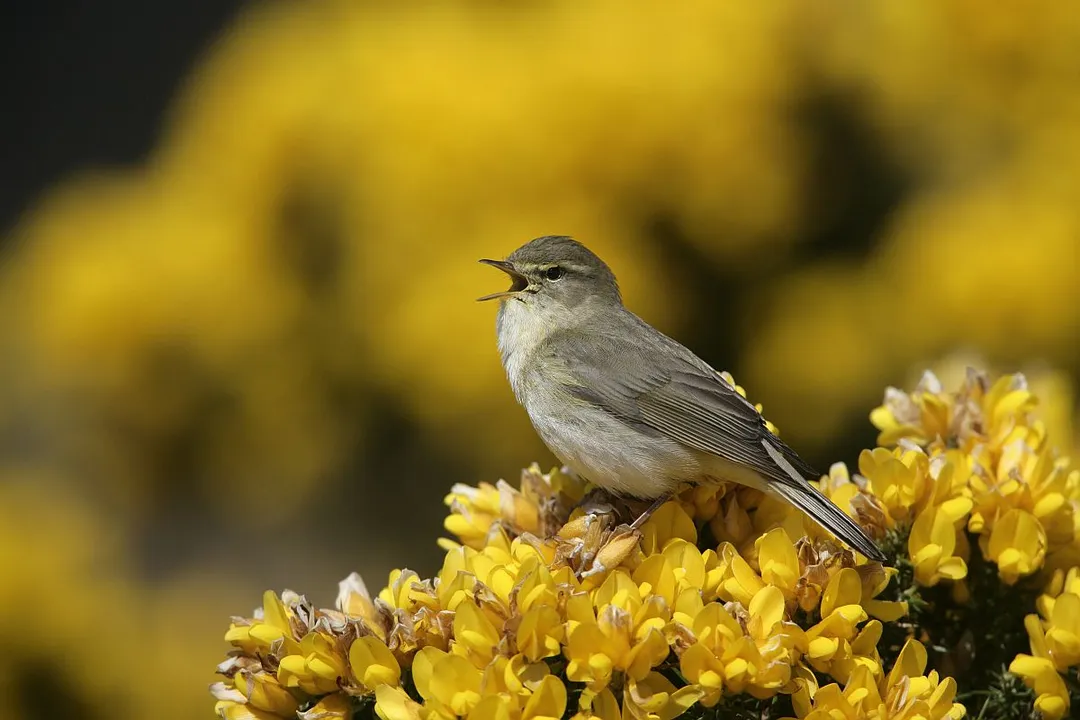
The arrival of spring in many parts of Europe and Asia brings with it a flurry of activity from two of our most common, yet most confusing, little brown jobs: the Willow Warbler (Phylloscopus trochilus) and the Chiffchaff (Phylloscopus collybita). They look incredibly similar, often sharing the same scrubland, parks, and woodland edges, leading even seasoned observers to pause and scrutinize their every move. Distinguishing between them is less about spotting a single, defining feature and more about building a profile based on a combination of song, structure, and subtle colours—a profile that needs to be built quickly in the field. [1][8]
# Song First
For many birders, the quickest and often most reliable way to separate these two congeners is by sound, long before a clear view is obtained. [5][6] The Willow Warbler possesses a distinctly melodious, flowing song. It is often described as a cheerful, descending, liquid whistle, perhaps sounding like a string of descending notes, or a gentle cascade of notes that trail off. [3][7] The song has a clear, bright quality to it. In contrast, the Chiffchaff offers a much simpler, more repetitive call and song: the classic, emphatic "chiff-chaff, chiff-chaff". [5][6] While the Willow Warbler's song is varied and musical, the Chiffchaff’s song is starkly utilitarian and somewhat monotonous, giving it its common name. [5] If you hear a clear, almost bubbly warbling that fades downward in pitch, you are almost certainly listening to a Willow Warbler. [7] If the sound is a sharp, two or three-note repetition, then it is the Chiffchaff. This auditory identification is often the first piece of evidence you collect, even if you eventually get a visual confirmation. [6]
# Plumage Tone
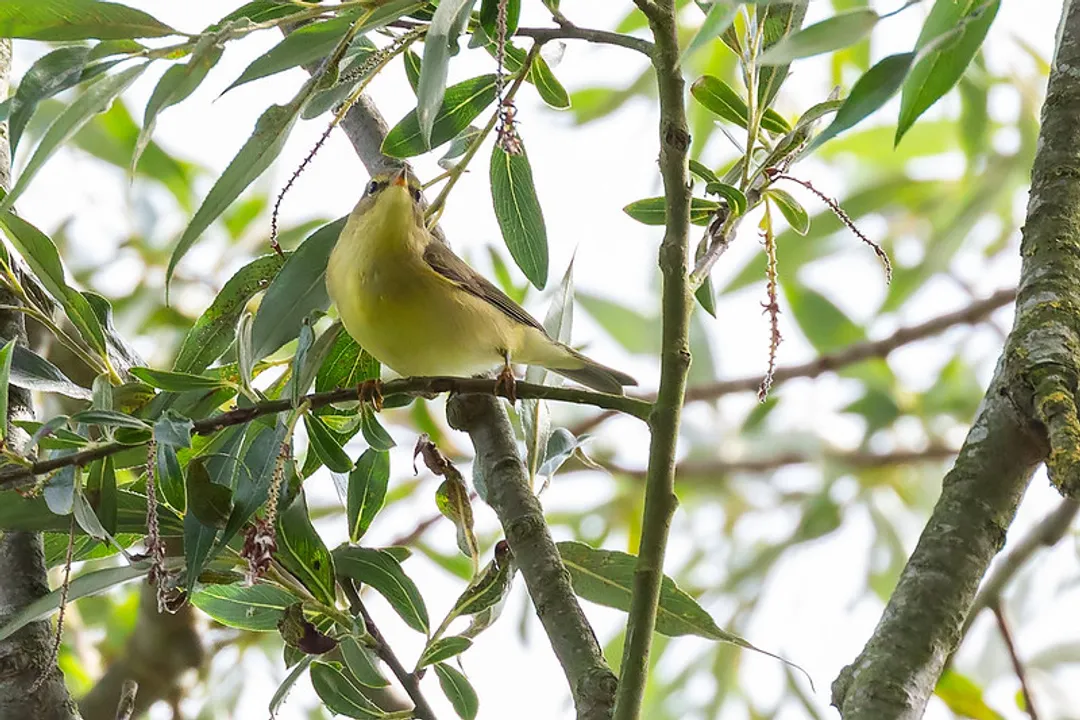
Once sound fails or you are observing a silent bird, you must turn to plumage, where the differences become annoyingly subtle. [9] Generally speaking, the Willow Warbler tends to appear paler and yellower overall compared to the Chiffchaff. [1][9] Look for a brighter, fresher yellow wash, particularly on the flanks and the undertail coverts. [9] The Chiffchaff, conversely, often looks duller, greyer, and browner. [5] This contrast in overall tone is a helpful starting point, but it is heavily influenced by the quality of light and the bird's feather condition. [9]
# Eyebrow Stripe
A more reliable visual marker involves the supercilium, or eyebrow stripe, which runs above the eye. [5] Willow Warblers typically exhibit a long and distinct supercilium that is often a pale, creamy yellow. [1][9] It contrasts nicely with the darker eye-stripe that runs through the eye. Chiffchaffs also have a supercilium, but it is frequently shorter, less conspicuous, and often paler or buffy, sometimes seeming almost non-existent when the bird is agitated or viewed from certain angles. [5][9]
When assessing the supercilium, try to observe the bird when it is slightly stationary, perhaps pausing briefly between foraging hops. A supercilium that seems to stretch back noticeably behind the eye, lending the face a more "open" look, points strongly towards the Willow Warbler. [8]
# Structural Comparison
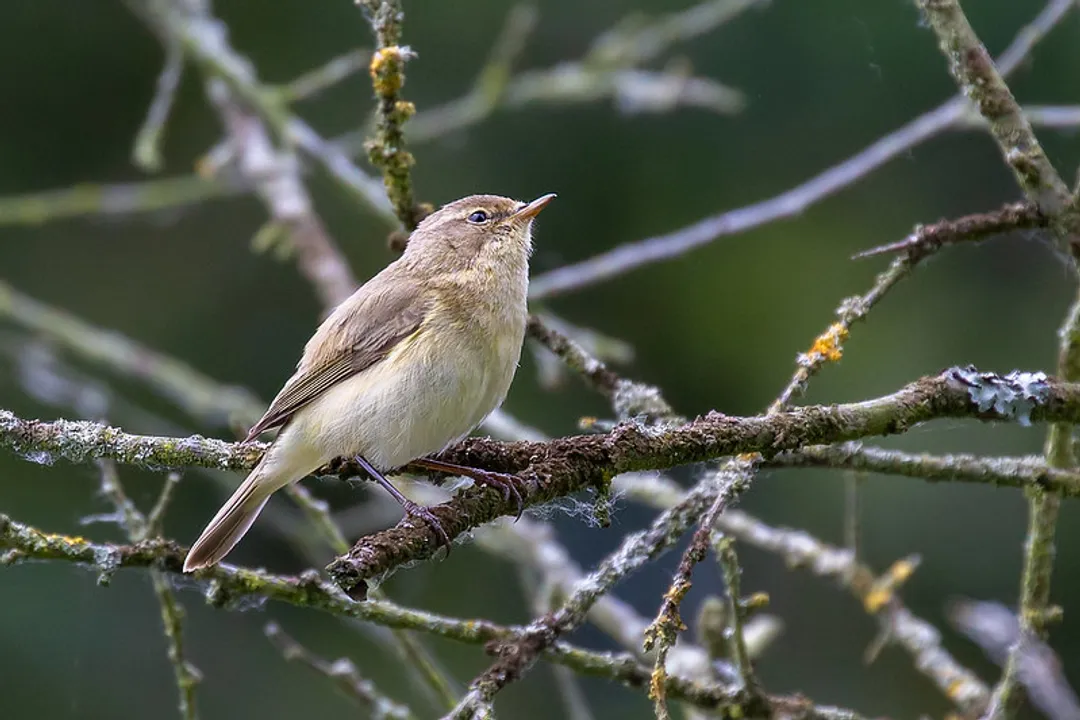
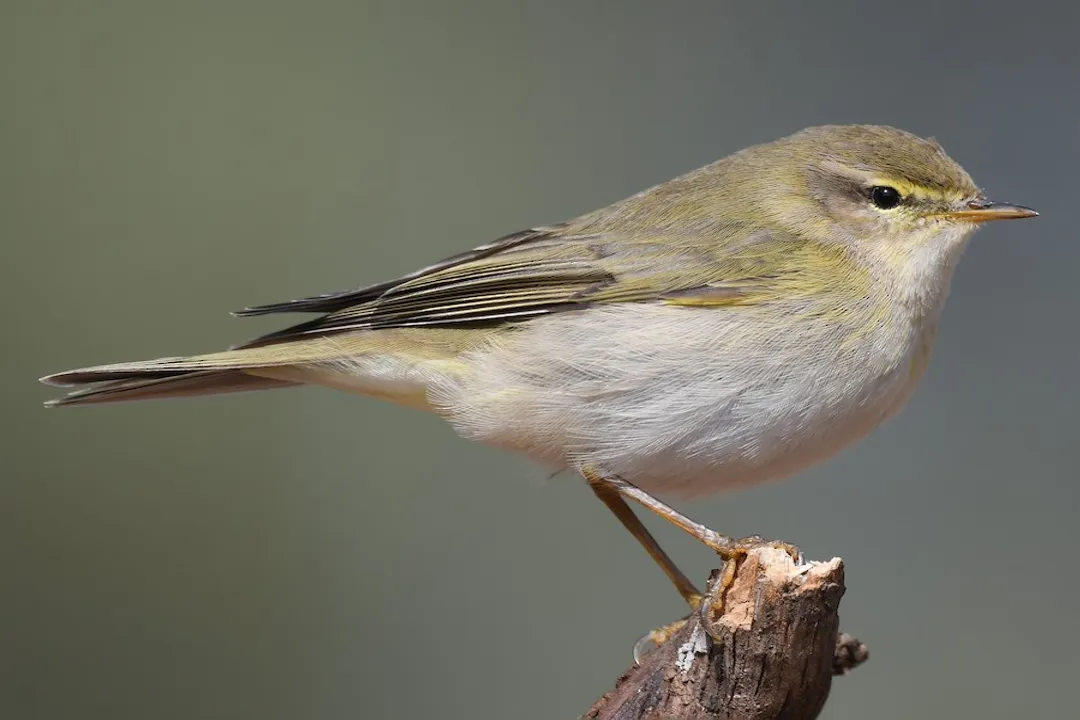
While colour can deceive, the actual structure of the bird, particularly the wings, can offer concrete evidence, though it requires a good, clear view. [5][9] This is one of the most important differences cited by field guides, yet one of the hardest to assess in practice because the bird rarely holds still long enough for precise measurement. [6] The Willow Warbler has noticeably longer primary projection than the Chiffchaff. [5][9] This primary projection refers to the length of the longest primary feathers extending beyond the tips of the shorter tertial feathers at the rear edge of the folded wing. [5] On a Willow Warbler, these primary tips usually extend noticeably past the tertials, often by about as much as the length of the tertial feather itself, or even more. [5] For the Chiffchaff, this projection is much shorter, with the primaries often barely reaching the tips of the tertials, or projecting only slightly beyond them. [9]
When you are trying to judge this, imagine a mental ruler. If you can see a clear gap or extension of the flight feathers beyond the back edge of the wing feathers, think Willow Warbler. If the wing looks more uniformly tapered, ending neatly at the back edge, it leans toward Chiffchaff. [6] This field mark is considered much more reliable than the slight differences in leg colour, which can vary widely within both species due to age and environment. [8]
# Legs and Gape
Moving lower down, the legs can offer a clue, though one that requires caution due to variation. [1][3] In general, Willow Warblers are often associated with paler legs, frequently appearing flesh-coloured or light brown, particularly in adults. [1][9] Chiffchaffs, by contrast, are more commonly noted for having darker, brownish-black legs. [5] However, juvenile Chiffchaffs can have paler legs, and in certain lighting or muddy conditions, a Willow Warbler's legs might appear darker than expected. [8] Therefore, while pale legs support a Willow Warbler ID, dark legs do not definitively rule one out if other features strongly suggest it.
Another small detail sometimes mentioned is the lower mandible, or gape. Willow Warblers sometimes show a slightly paler lower mandible compared to the Chiffchaff, which often presents a darker bill overall. [9] Again, this is a supporting detail, not a primary identification tool.
# Contextual Clues
Where and when you see the bird adds important contextual weight to your identification. Both species migrate, but their distributions and timing differ slightly. [1] Willow Warblers are generally birds of the north and west, breeding further north and west across Eurasia, whereas the Chiffchaff is more widespread across the central and southern areas. [1] During migration across the UK and Western Europe, both can be present, but the Willow Warbler often prefers slightly more open habitats with scattered trees, light scrub, or open woodland margins, while Chiffchaffs are often quite happy deep within dense hedgerows or thickets. [3][7]
A helpful way to frame this is to think about their relative numbers during the breeding season in a specific location. If you are in Scandinavia or Northern Britain during summer, the default warbler is likely the Willow Warbler; in Southern Europe, the default is often the Chiffchaff. [1]
| Feature | Willow Warbler (P. trochilus) | Chiffchaff (P. collybita) | Reliability |
|---|---|---|---|
| Song | Flowing, descending, clear whistle | Simple, repeated "chiff-chaff, chiff-chaff" | High |
| Overall Tone | Paler, brighter, more yellowish wash | Duller, greyer, brownish | Medium (light dependent) |
| Supercilium | Long, distinct, pale yellow | Shorter, less obvious, buffy | High |
| Primary Projection | Long, primaries extend noticeably past tertials | Short, primaries barely reach or slightly exceed tertial tips | High (if visible) |
| Leg Colour | Generally paler, flesh-coloured | Generally darker, brownish-black | Low to Medium |
A crucial realization for any birder encountering these species is that identifying them is an exercise in ruling in the less likely option. If you hear the song, and it's definitely not "chiff-chaff," you have effectively ruled in the Willow Warbler, irrespective of how confusing the plumage looks on that particular afternoon. [6] Conversely, if you see a bird exhibiting a very short primary projection alongside a dull, greyish cast, you have enough evidence to strongly favour the Chiffchaff, even if the legs look ambiguous. [5][9] Rarely will one feature be 100% conclusive on its own, especially when facing a nervous bird in poor light.
# Integrating Sight and Sound
The best strategy involves combining the evidence quickly. First, stop and listen for ten seconds. [7] Is there a clear, descending warble? If yes, the probability of it being a Willow Warbler jumps significantly. Second, locate the bird and focus on the head. Is the eyebrow long and clean? Third, try to get a profile view where the wing tips are visible against the body. Can you see the long primary feather extension? If you have a positive acoustic identification, the visual checks simply serve to confirm that the bird looks generally "brighter" or "yellower" than the typical duller Chiffchaff, rather than trying to find a perfect field mark that might not be present. [1][2] If you are unable to hear the song, you are entirely reliant on structure and colour, which drastically increases the difficulty. In such cases, look for the combination of a bright yellow wash and a long primary projection—if both are present, the identification is almost certain.
Remember that these small birds are constantly moving, flicking their wings, and hopping through dense foliage. The experience factor in correctly identifying them comes from not rigidly clinging to one feature, but learning to weigh the evidence. A bird that looks just a bit too bright and has just a little bit too much wing projection hanging out in an open scrubby area during early spring migration is far more likely to be the Willow Warbler than the Chiffchaff, which is often slightly earlier in its northward movement or already tucked into denser cover. [1][3] Successfully navigating this identification challenge is a key step in mastering the subtler aspects of field ornithology.
#Videos
Chiffchaff vs Willow Warbler. How To Tell The Difference. - YouTube
Related Questions
#Citations
Willow Warbler Phylloscopus trochilus - eBird
Chiffchaff vs Willow Warbler. How To Tell The Difference. - YouTube
Willow warbler | Somerset Wildlife Trust
How to identify chiffchaffs and willow warblers? - Facebook
The Chiffchaff's Song: A Guide to the Willow Warbler Challenge
Identifying Chiffchaffs and Willow Warblers - BTO
WILLOW WARBLER (Phylloscopus trochilus) - SongBird Survival
Willow Warbler or Chiffchaff? : r/UKBirds - Reddit
Willow Warbler - Phylloscopus trochilus - NatureSpot