Willow Warbler Evolution
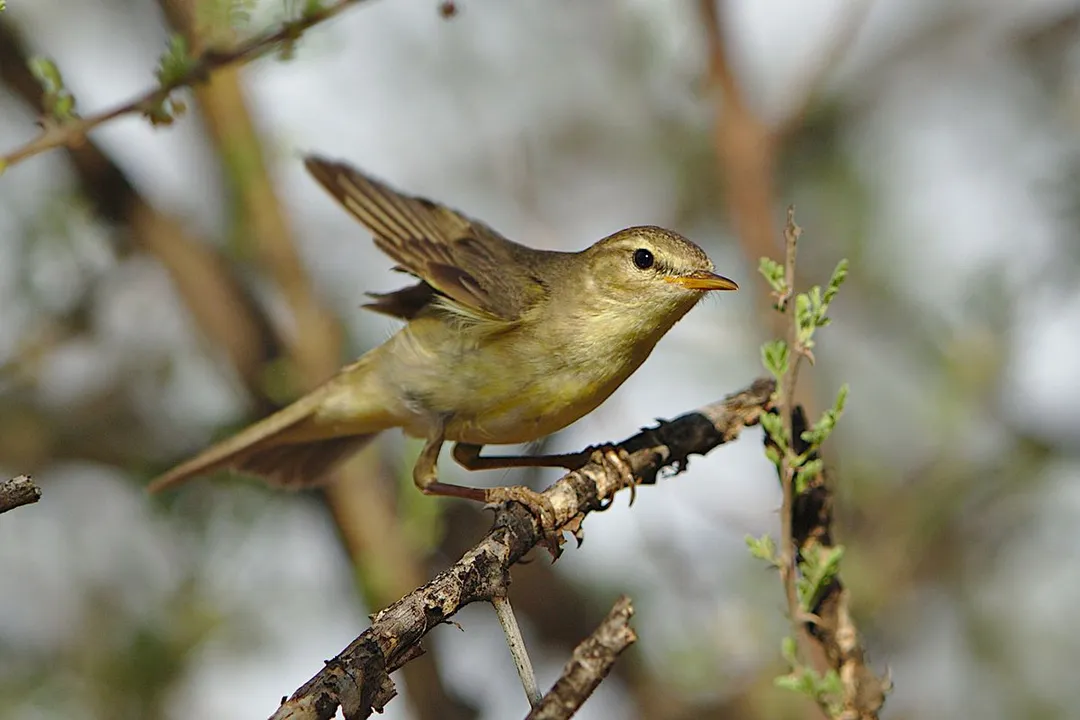
The Willow Warbler, Phylloscopus trochilus, is a small, widespread leaf warbler whose annual itinerary involves one of the most impressive feats of endurance in the avian world. Breeding across northern and temperate Europe and eastward into Siberia, nearly the entire population undertakes a long-distance migration, often covering thousands of kilometers to winter in sub-Saharan Africa. These tiny birds, weighing perhaps as much as a pencil, possess an innate, genetically encoded program that directs them to specific wintering locations—a behavior so complex that it remains a subject of intense scientific fascination.
The story of Willow Warbler evolution is not one of slow, steady change across the landscape, but rather one marked by sharp genetic boundaries linked to their migratory paths. The key to understanding this evolutionary divergence lies in the European migratory divide, a zone that dictates which of two major routes the birds will take south.
# Migratory Split
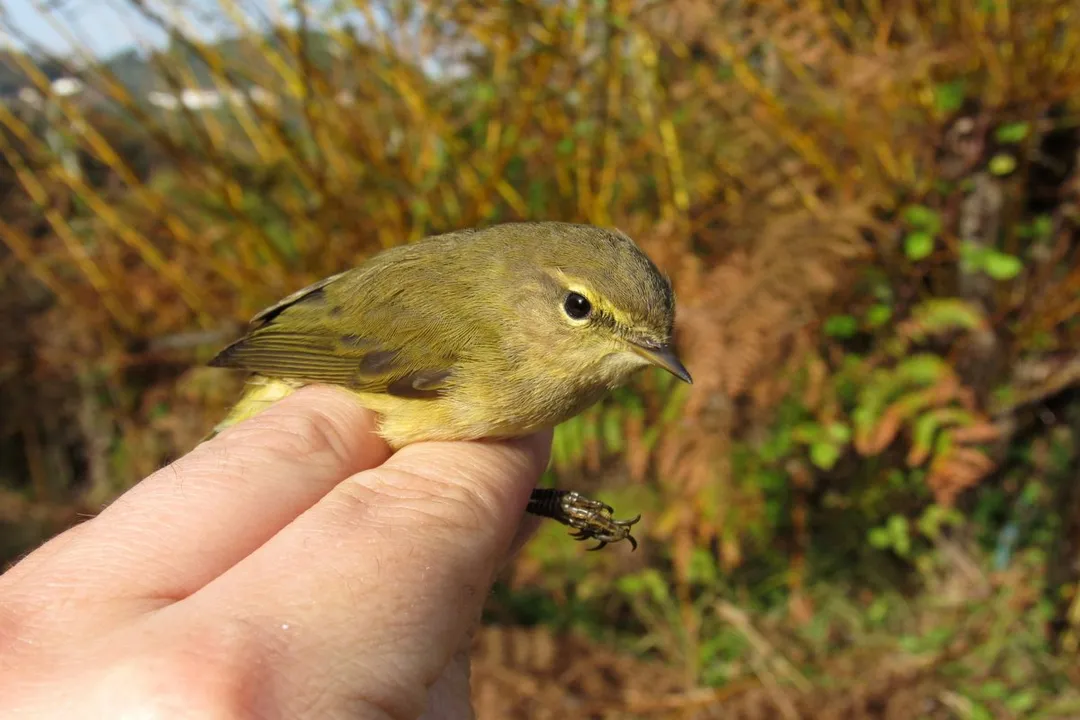
Banding data across Europe reveal a distinct north-south fissure in migratory strategy, particularly noticeable across Central Scandinavia. Here, populations separate into two main migratory phenotypes, which correspond to established subspecies whose differences were first noted through size and plumage coloration, though these traits show considerable overlap.
The nominate subspecies, P. t. trochilus, breeds further west and south, committing to a southwesterly route across the Iberian Peninsula to wintering grounds in West Africa. In contrast, the northern subspecies, P. t. acredula, breeds in northern and eastern Europe and Siberia, heading southeast over the Balkans towards Eastern and Southern Africa. A third subspecies, P. t. yakutensis, occupies Eastern Siberia, wintering in East and South Africa. These different destinations necessitate corresponding adaptations, especially physiological ones for fueling the journey.
In areas where these forms meet, such as Central Sweden, hybridization occurs, forming a contact zone. However, research into the resulting offspring revealed a surprising pattern: hybrids do not typically show an intermediate migratory direction, such as flying straight over the Mediterranean. Instead, they usually adopt the route of one or the other parent subspecies, potentially lowering the mortality cost associated with mixing migratory tendencies.
# Genomic Hotspots
For a long time, the genetic basis for such complex, innate directional behavior remained elusive. Studies comparing these two migratory phenotypes, which are otherwise physically very similar, were expected to find genetic differences concentrated in the loci controlling migration. Modern genomics confirmed this, yielding a truly striking result: across the vast majority of the genome, the genomes of the two migratory phenotypes are virtually undifferentiated. Even comparing individuals from Scotland to those in Far East Russia, over 6000 km apart, revealed almost no genome-wide difference when these specific regions were excluded. Mitochondrial DNA, which usually evolves faster, showed no sequence differences between the migratory phenotypes at all.
This low background differentiation sharply contrasts with the situation in other diverging bird populations, such as certain Ficedula flycatchers, which show much higher overall genomic divergence. The overall homogeneity in the Willow Warbler genome suggests a recent range expansion event characterized by high effective population sizes and gene flow across most of the species' range.
The genetic signal is instead focused into just three highly differentiated regions located on chromosomes 1, 3, and 5. These regions, which span between 4.0 and 13.1 Mb and contain hundreds of genes, show genetic structure suggestive of a historical isolation dating back perhaps 0.75 to 1.6 million years ago, long predating the last glaciation. The pattern within these regions suggests a lack of recombination between the northern and southern versions of the DNA—a condition often caused by large chromosomal inversion polymorphisms. Such inversions are evolutionarily important because they keep blocks of locally adapted genes tightly linked, allowing them to be inherited together even in the face of ongoing gene flow.

# Trait Association
The association between these chromosomal blocks and specific traits allowed researchers to pinpoint the likely genetic basis of the migratory divergence.
- Chromosomes 1 and 5: The distribution of haplotypes (the ancient northern or southern versions of the DNA block) in these two regions perfectly mirrored the geographical breeding distribution of the migratory phenotypes. Furthermore, these regions showed the strongest statistical correlation with the actual migratory strategy, as measured by stable nitrogen isotope ratios in feathers (a proxy for the African wintering area). Within these regions, genes potentially related to fatty acid synthesis were identified, suggesting they might govern the physiological capacity required to fuel the different migratory distances.
- Chromosome 3: This region also showed high differentiation across the Scandinavian divide but was not correlated with the migratory phenotypes along the eastern divide. Instead, its variation was strongly associated with breeding altitude and latitude. Genes within this region include those involved in calcium channel function, like , which has been implicated in adaptation to cold environments in other high-altitude vertebrates.
The fact that the genes determining migration direction appear to be anciently divergent variants (based on substitution rates) that have been maintained in separate blocks for over a million years, yet are only now forming sharp clines across the Scandinavian hybrid zone, presents a classic evolutionary puzzle. It suggests that while the underlying genetic tools for different migrations evolved long ago, the current ecological pressure that makes those directions adaptive (perhaps post-glacial range expansion patterns) is relatively recent, leading to strong selection acting on these pre-existing, tightly linked adaptive suites of genes.
# British Clines
While the migratory divide is sharp in Scandinavia, the story in the British Isles offers a different perspective on population structure. Ringing data collected over decades reveal variation in morphology, specifically wing length, which is often used as a proxy for body size and migration distance in passerines.
In British breeding populations (April to June captures), mean wing lengths showed a significant increase for both sexes between 1967 and 1985, followed by a significant decrease from 1986 through 2008. This pattern is observed across the whole dataset and at long-term sites like Wicken Fen. Interestingly, the initial increase might align with Allen's rule (longer appendages in a warming climate), but the subsequent decrease aligns with Bergmann's rule (smaller body size with increasing temperature). This shift suggests that the dominant selective pressures influencing morphology have changed mid-period in Britain.
A crucial contrast exists between the genetic reality in Scandinavia and the morphological reality in Britain: the British data show no significant correlation between latitude and mean wing length for either sex. This is significant because the Scandinavian divide is latitudinal and associated with different wintering grounds; the lack of a similar cline in Britain suggests that the British population is either experiencing a different blend of migratory types, or that strong gene flow is breaking down any latent latitudinal morphological structure. Furthermore, male and female mean wing lengths across most British sites track each other very closely over time, even at breeding and migration sites where sexes are caught at different times, implying the selective drivers affecting size act equally on both sexes, despite their potentially different migratory schedules within the broader European system.
Understanding the evolution of such traits requires understanding the conditions that maintain them. For instance, it is tempting to link the decrease in wing length post-1985 to the overall decline in abundance observed in long-distance migrants like the Willow Warbler in England. While changes in wing length broadly correlate with these abundance shifts across Britain, the factors causing the population decline might be distinct from those selecting for smaller size, perhaps being driven more by conditions on the itinerant African wintering grounds, an area about which comparatively little is known.
It is a remarkable finding that the genes controlling the essential compass setting—the migratory direction—might be ancient structures (putative inversions) that have been preserved, awaiting a specific ecological context to become actively selected upon, causing the sharp evolutionary split we see across the Baltic region today. This deep genetic divergence underlying a recent, sharp phenotypic cline underscores how evolution can work with pre-existing genetic variation to rapidly generate distinct forms adapted to new geographical realities following events like the last glaciation. The identification of genes related to energy metabolism in the migration-linked regions provides a tangible direction for future research into how physiology adapts to differing migratory demands.
Related Questions
#Citations
Genetic differences between willow warbler migratory phenotypes ...
Willow warbler - Wikipedia
Phylloscopus trochilus - Bird Migration Atlas
Genes decide the willow warbler's migration routes
Two Genetic Loci Control Migration Direction in a Small Bird Species
MORPHOLOGICAL AND MOLECULAR VARIATION ACROSS A ...
[PDF] Willow-Warbler-wing-lengths.pdf - CAMBRIDGESHIRE BIRD RINGING