What is a willow warbler?
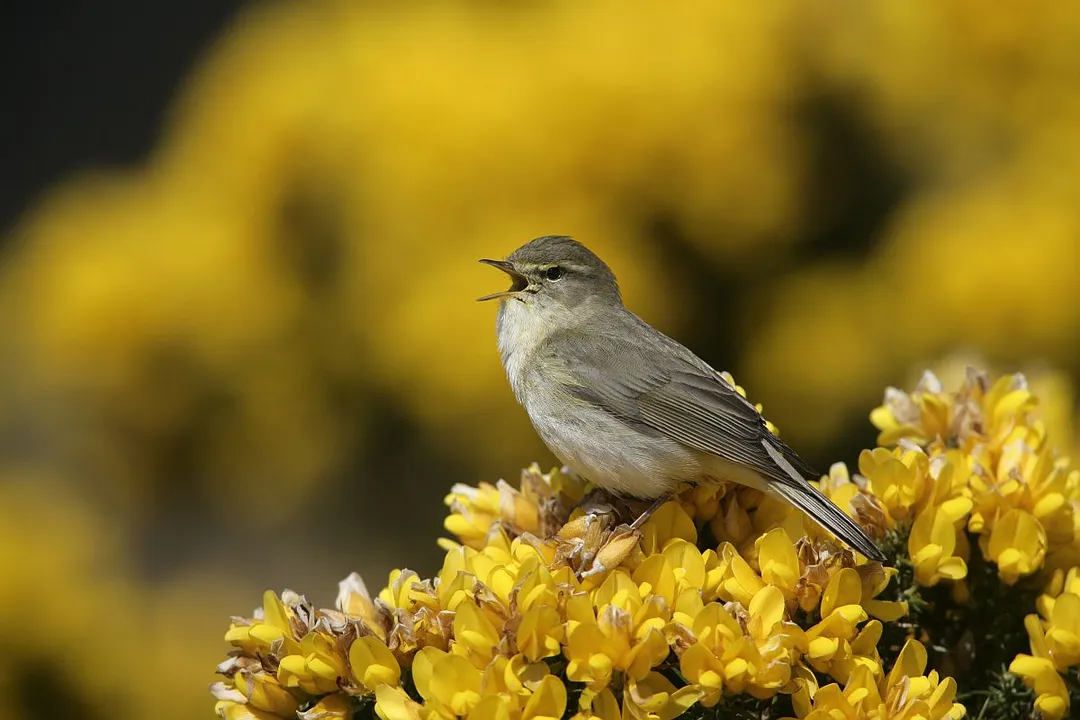
The arrival of the Willow Warbler, marked by its sweet, effusive song, signals a definitive turning point in the temperate spring, a small avian messenger confirming the retreat of winter across much of Europe and Asia. [4][6] This species belongs to the Phylloscopus genus, a group of small, migratory insectivores that can sometimes be challenging to distinguish from their close relatives when heard or seen only fleetingly among the foliage. [1][6] Understanding the nuances of this bird—from its subtle plumage to its long-distance commitment to African winters—reveals a creature perfectly adapted to the demanding life of a summer visitor. [1][2]
# Subtle Dress
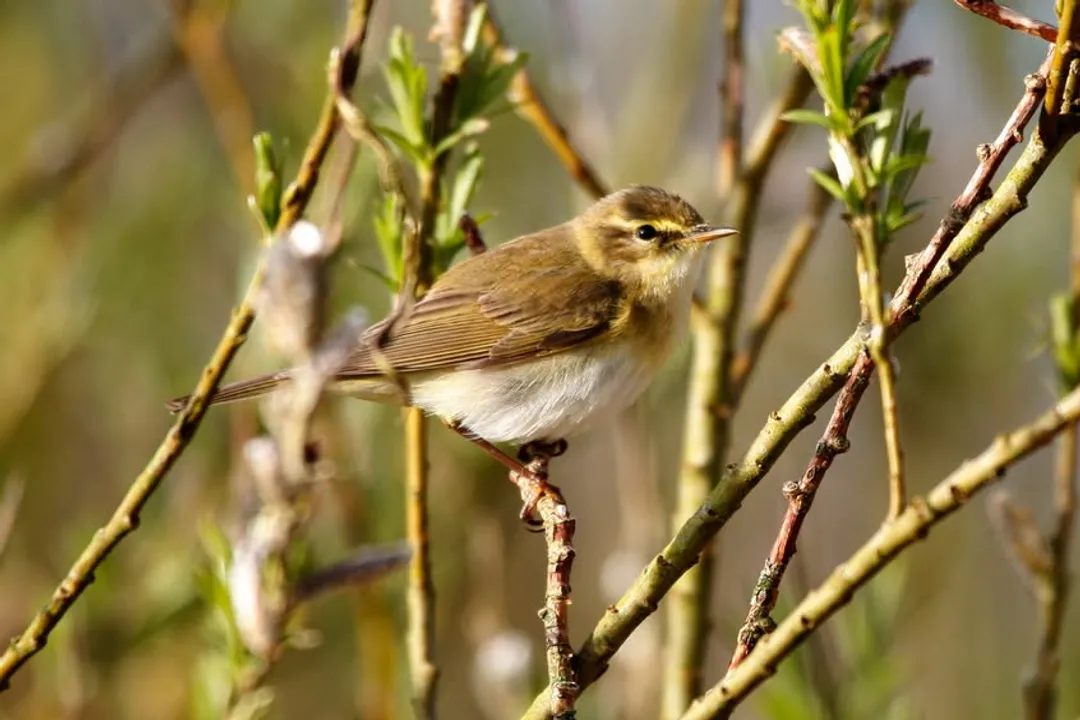
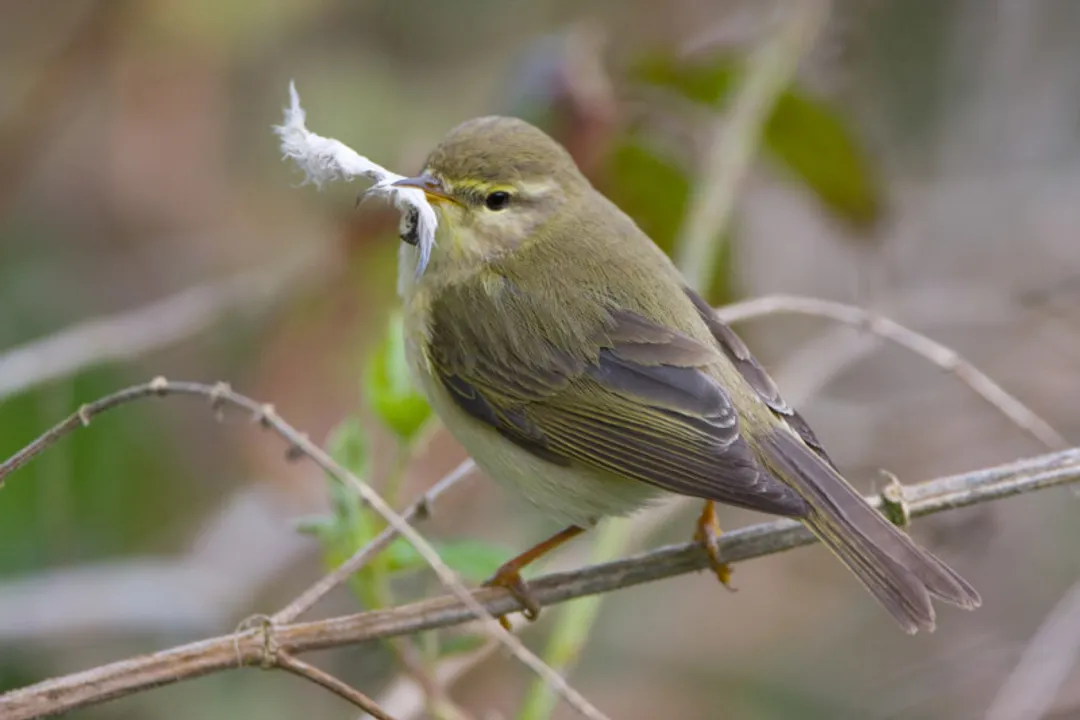
Visually, the Willow Warbler presents a rather nondescript appearance, which often contributes to the difficulty birders have in separating it from the Chiffchaff (Phylloscopus collybita). It is a small bird, generally measuring around 11 to 12 centimeters in length. [3] The upperparts are typically a plain, somewhat dull olive-green or grey-green hue. [3][10] Below, the bird appears pale, often with a noticeable wash of yellow on the throat and chest, which contrasts gently with the whiter belly. [3][10] A faint, pale eyebrow stripe, known as a supercilium, sits above the eye, though this can sometimes be weak, and there is a darker line running through the eye. [9]
One of the most critical yet difficult field marks to observe involves the wings and legs. Willow Warblers generally possess longer, paler legs than Chiffchaffs. [6] Furthermore, when the bird is perched, the primary projection—the length of the primary flight feathers extending beyond the tertials—is often longer in the Willow Warbler compared to the Chiffchaff. [6] While this difference is subtle and requires a clear view, recognizing the combination of relatively long pale legs and a longer primary wing projection is the classic, though sometimes unreliable, way to confirm the identity if the song is absent or indistinct. [6] If you find yourself struggling between the two species in a dense thicket, look for the bird that seems marginally paler overall, especially on the face and underparts, as the Chiffchaff often presents a slightly darker, browner look. [8]
# Melodious Call
Where appearance might confuse, the song of the Willow Warbler usually provides immediate clarity. This bird is renowned for its beautiful, liquid, and somewhat melancholy song, which is a defining characteristic used for identification. [3][8] The song is generally described as a clear, fluting, and descending series of notes, often sounding bubbly or like a cascade of sweet whistles. [4][8] It has a lovely, slightly sad quality to it, often delivered in a rush. [8] This contrasts sharply with the distinctly repetitive, almost mechanical "chiff-chaff, chiff-chaff" call of its close cousin. [6]
When not singing their full territorial display, the Willow Warbler has a simple, short contact call, often described as a faint, sharp "hoo-eet" or a short, soft 'hup'. [6] Learning to associate the fast, rising and falling, distinctly musical sequence with the Willow Warbler, while reserving the crisp, two-note repetition for the Chiffchaff, is perhaps the most dependable skill a birder can cultivate for summer identification in mixed woodland or scrub. [6][3]
# Distribution and Travel
The Willow Warbler is an extremely widespread summer visitor across the European continent and into Asia, but it is strictly migratory, undertaking vast journeys twice every year. [1][2] Its breeding range covers most of Europe, excluding the far north and very arid areas, extending eastwards across Siberia. [1] In the British Isles, it is a common summer resident, though its distribution is often patchier than the Chiffchaff, tending to favor areas with more open, regenerating woodland or damper scrubland compared to the Chiffchaff's preference for drier, denser cover. [3][4]
When the breeding season concludes, these small birds embark on a remarkable passage southwards. They are considered long-distance migrants, with the majority wintering in sub-Saharan Africa. [1][6] Imagine a bird weighing barely more than a twenty-pence coin undertaking a flight that can span thousands of miles to reach its wintering grounds—a feat of endurance that underscores the critical importance of stopover sites rich in invertebrate food sources along the Mediterranean and African coasts. [6] Their return in the spring, typically from April onwards depending on latitude, heralds the start of nesting activities. [2][6] For many bird enthusiasts, the first clear, descending song heard in a local wood is an annual calendar event, signalling that the true activity of the European summer bird season has begun in earnest. [4]
# Feeding Habits
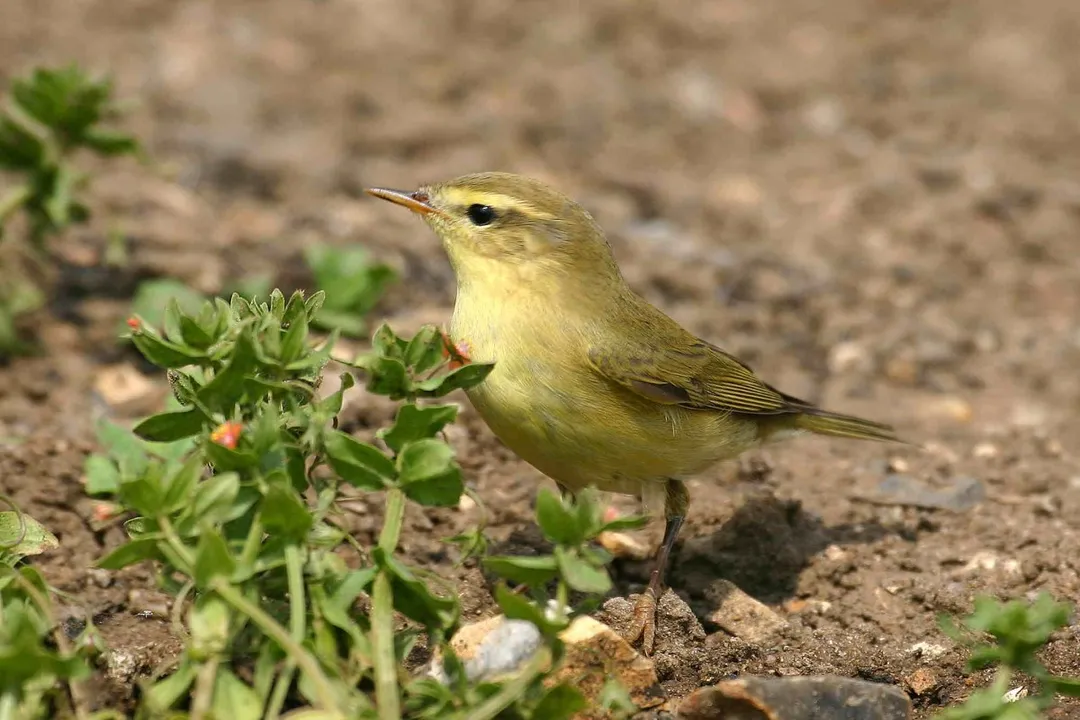
As an insectivore, the Willow Warbler’s diet is intrinsically linked to the presence of small arthropods throughout the warmer months. [7] Its slender bill is perfectly adapted for gleaning insects, spiders, and their larvae from the surfaces of leaves and twigs. [1][3] They often forage actively, moving rapidly through the foliage of trees and low bushes, keeping them relatively hidden from view. [7] Because they rely entirely on invertebrates for food, the timing of their arrival is tightly synchronized with the emergence of summer insect life; an early cold snap or delayed spring bloom can significantly impact their immediate foraging success upon arrival. [3] They are not known to visit garden bird feeders frequently, focusing instead on natural vegetation. [3]
# Nesting Cycles
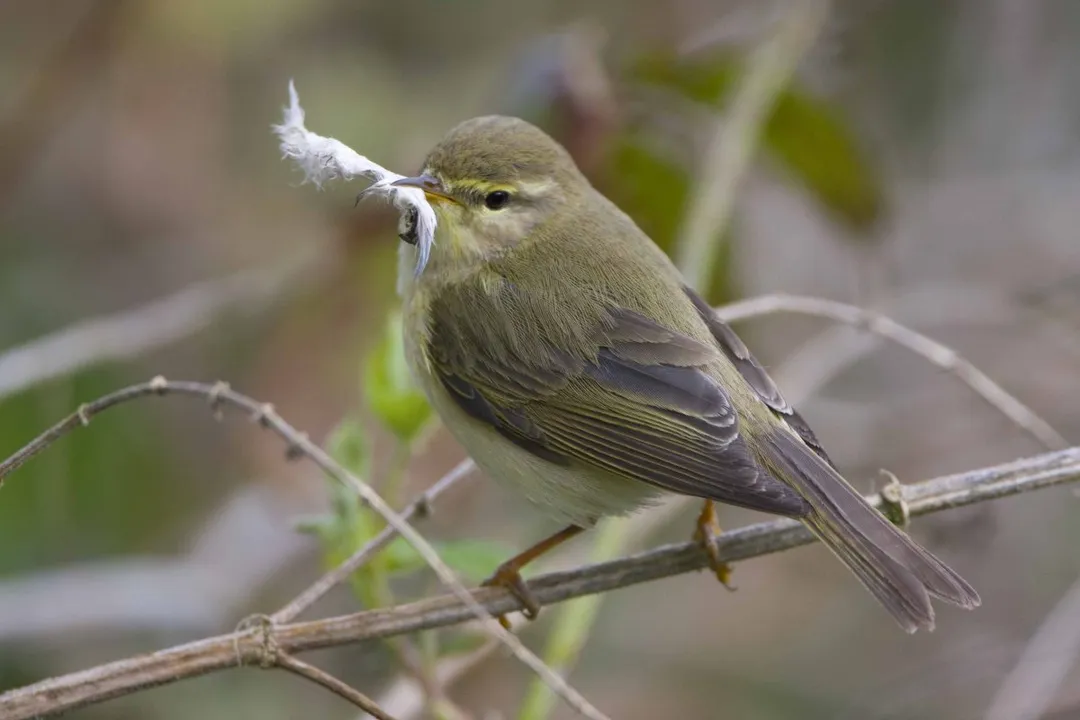
The reproductive strategy of the Willow Warbler involves constructing a neat, domed nest, typically situated low to the ground or concealed deep within thick vegetation, often nestled in dense grass tussocks or under the cover of low scrub. [1][3][4] This choice of location emphasizes their need for camouflage and protection from predators during the vulnerable incubation and brooding periods. [4] The female builds the structure, which is composed of fine grasses, mosses, and hair, often lined with feathers to provide insulation. [1]
A typical clutch size ranges from five to eight small, pale, off-white eggs, usually marked with faint reddish-brown spots. [1][3] The female undertakes the entirety of the incubation, which lasts around twelve to fourteen days. [1] Once hatched, the nestlings are brooded and fed by the female for a further twelve to fourteen days before they fledge. [1] In favorable conditions, particularly in northern latitudes where the summer days are long, a pair may occasionally manage a second brood before their southward migration begins. [1]
# Conservation Concerns
Like many long-distance migratory species, the Willow Warbler faces a complex array of pressures across its annual cycle, impacting population stability. [5] While the species is currently not considered globally threatened, monitoring its status is important due to declines noted in certain regions of Europe. [5][6] The threats encountered during migration and on the wintering grounds in Africa are often as significant as habitat changes on the breeding grounds. [5]
Habitat degradation on the breeding grounds, such as the loss of scrub or the maturation of previously regenerating woodland areas into dense forest canopy, can reduce suitable foraging and nesting sites. [4] However, understanding the impact of climate change on the synchronization between the warblers' arrival and peak insect availability represents a growing area of ecological concern. [5] If warmer springs cause insects to emerge earlier, the late-arriving warblers may miss the critical peak food supply needed to rear their young successfully, a phenomenon known as phenological mismatch. [5]

# Field Separation Insight
When in the field, especially where both Willow Warbler and Chiffchaff are common, a practical approach is to focus on the quality of the habitat presentation rather than solely relying on a single visual feature like the primary projection, which is hard to judge under field conditions. [6] Consider the overall vegetation structure. If you are in a damp meadow edge with tall, lush grasses and low, sprawling willow or alder scrub, your probability shifts slightly toward finding the Willow Warbler. [7] Conversely, drier, low-growing gorse or dense, low scrub on a hillside might slightly favor the Chiffchaff. [4] This is not a hard rule, as both birds are adaptable, but pairing habitat context with the initial 'feel' of the song (descending and musical vs. sharp and repetitive) significantly improves field confidence.
# Migration Effort
The sheer scale of the Willow Warbler's migratory commitment merits a closer look at the energetic requirements. A bird that weighs, on average, between 10 and 15 grams [3] needs to build up substantial fat reserves before embarking on its journey to West or Central Africa. [1][6] The route is not direct; many cross the Mediterranean and then traverse the Sahara Desert, a landscape offering almost no refueling stops. [6] This necessitates a high-efficiency flight fueled by stored lipids, meaning the quality of feeding in late summer across their European range directly dictates survival rates across the winter. Any factor that reduces late-summer invertebrate abundance—be it prolonged drought or changes in land use—effectively reduces the bird's "fuel tank" capacity for the most dangerous leg of its annual cycle. [5] This hidden dependency highlights why conservation efforts must span continents, not just local woodlands.
Related Questions
#Citations
Willow warbler - Wikipedia
Willow Warbler Phylloscopus trochilus - eBird
Willow Warbler Bird Facts | Phylloscopus Trochilus - RSPB
Willow Warbler (Phylloscopus trochilus) - Woodland Trust
WILLOW WARBLER (Phylloscopus trochilus) - SongBird Survival
Willow Warbler | BTO
Willow warbler | Somerset Wildlife Trust
Willow Warbler - BirdWatch Ireland
Willow Warbler - Phylloscopus trochilus - NatureSpot
The Willow Warbler is a small grey-green bird with a yellow chest ...