What specific conservation measure was crucial for the recovery of the Black Wildebeest from near extinction?
Answer
Intensive protection on private and state lands
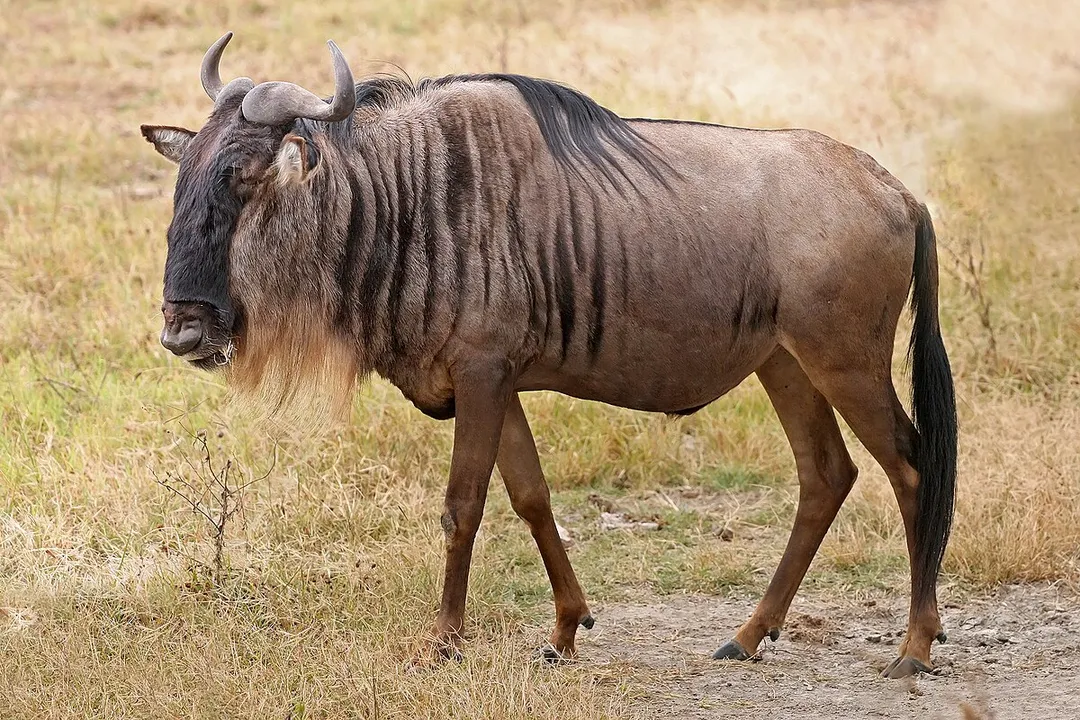
The Black Wildebeest faced severe population decline, reaching near extinction early in the 20th century. Its recovery trajectory differed significantly from the Blue Wildebeest, reflecting its adaptation to more localized ecological requirements. The survival and subsequent recovery of *C. gnu* populations were largely achieved through targeted, intensive protection programs implemented on both private properties and designated state lands. This successful conservation model demonstrates that for species adapted to smaller, more constrained geographic areas, strict protection and management within their historic range can be the primary means of ensuring species persistence.
Related Questions
To which tribe does the genus Connochaetes, which includes wildebeest, belong?What two key environmental conditions drove the evolution of dramatic migratory behavior in wildebeest?What physical feature distinctly characterizes the tail of the Black Wildebeest (*C. gnu*)?How is the visual coloration of the Blue Wildebeest (*C. taurinus*) described in contrast to its counterpart?What evolutionary specialization defined the lineage leading to the immense migratory herds of *C. taurinus*?Which wildebeest species historically maintained a more geographically restricted range, centered in South Africa?How do the horns of the Black Wildebeest (*C. gnu*) curve differently from those of *C. taurinus*?What collective action involving millions of Blue Wildebeest expresses their evolutionary success?What contemporary human impact turns the Blue Wildebeest's ancient strategy into a vulnerability?What specific conservation measure was crucial for the recovery of the Black Wildebeest from near extinction?