Wildebeest Evolution
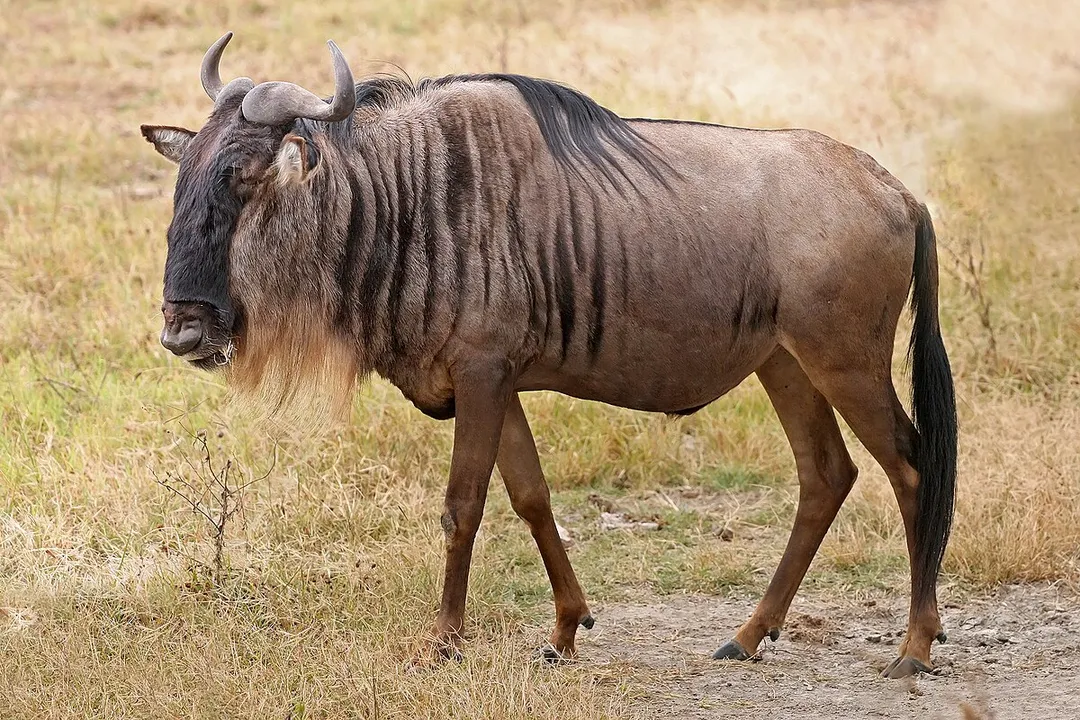
The story of the wildebeest is written in the shifting climate and expanding grasslands of Africa, a tale of adaptation etched over millennia. These large, strikingly horned antelopes, belonging to the genus Connochaetes, represent a singular lineage within the larger family of bovids. [1][5] They are instantly recognizable by their shaggy manes, massive forequarters, and distinctive silhouettes on the savanna, yet their evolutionary path reveals a fascinating divergence into two distinct forms shaped by differing environmental pressures. [1]
# Genus Structure
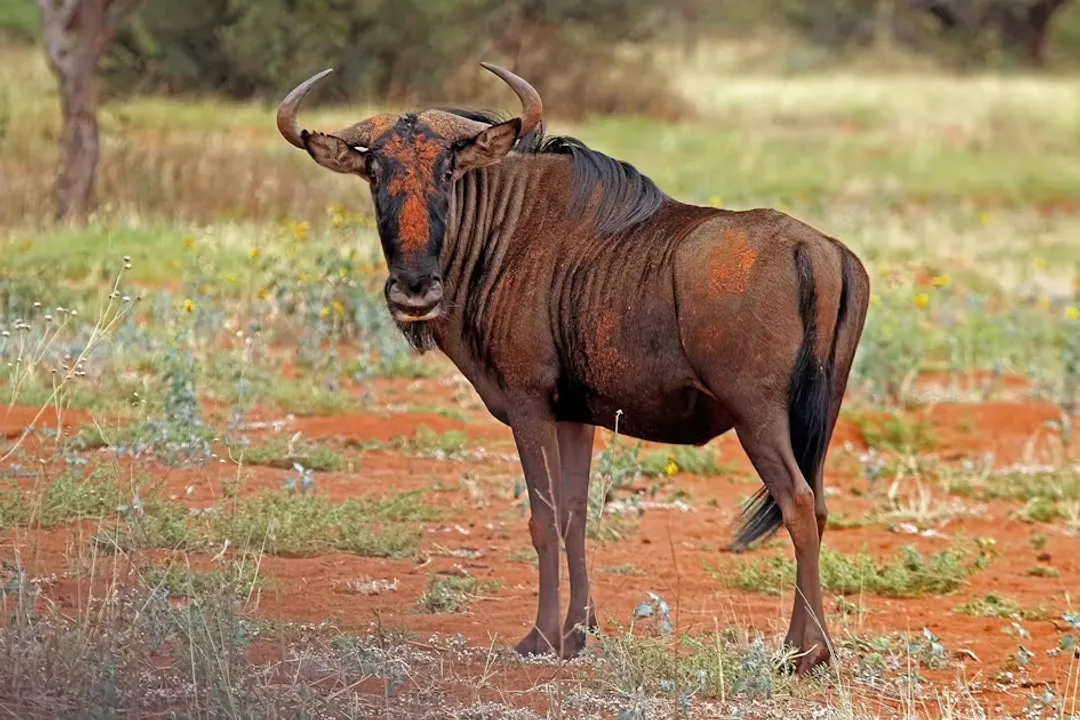
Wildebeest are categorized within the tribe Alcelaphini, which also includes the hartebeests. [1] This classification places them among the grazing ungulates that have successfully colonized the African plains. [5] The genus Connochaetes currently holds two recognized extant species: the Blue Wildebeest (C. taurinus) and the Black Wildebeest (C. gnu). [1][7] While both share the heavy build and characteristic horns that curve outward and then upward, their geographical separation and subtle physical distinctions suggest separate evolutionary trajectories following their divergence from a common ancestor. [1]
# Environmental Drivers
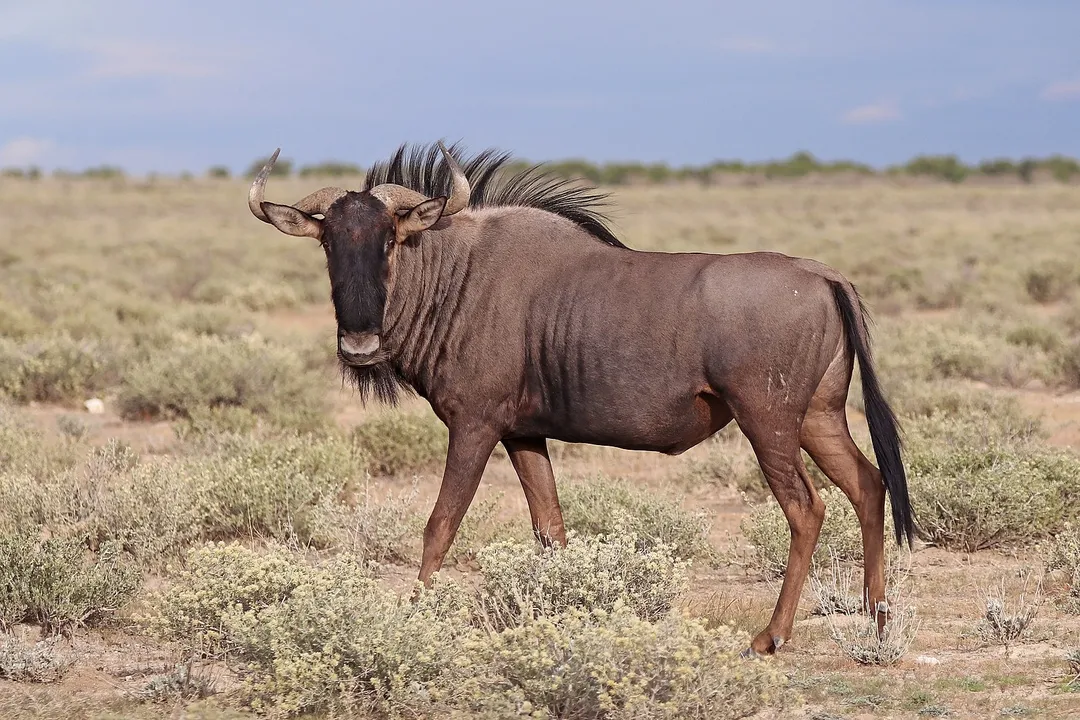
Understanding the evolution of the wildebeest requires looking back at broad climatic changes across the continent. Research suggests that the evolution of dramatic migratory behavior seen in some ungulates, a trait central to the Blue Wildebeest's existence, was heavily influenced by environmental shifts. [9] Specifically, periods characterized by cooler temperatures coupled with the expansion of grasslands provided the necessary conditions for these large grazers to develop their resource-tracking behaviors. [9] This environmental tailoring selected for individuals capable of covering vast distances in search of viable forage, as localized droughts would have been catastrophic without the option to move elsewhere. [9]
This ecological sculpting is key. The transition from a more mixed woodland/grassland environment to the sweeping open savannas likely favored specialization in grazing, which is exactly what the wildebeest lineage underwent. [1][9] The ability to exploit the ephemeral abundance of new, rich grasses—moving on as the plains dried—became the defining evolutionary success factor for the ancestors of the East African herds. [6]
# Species Divergence
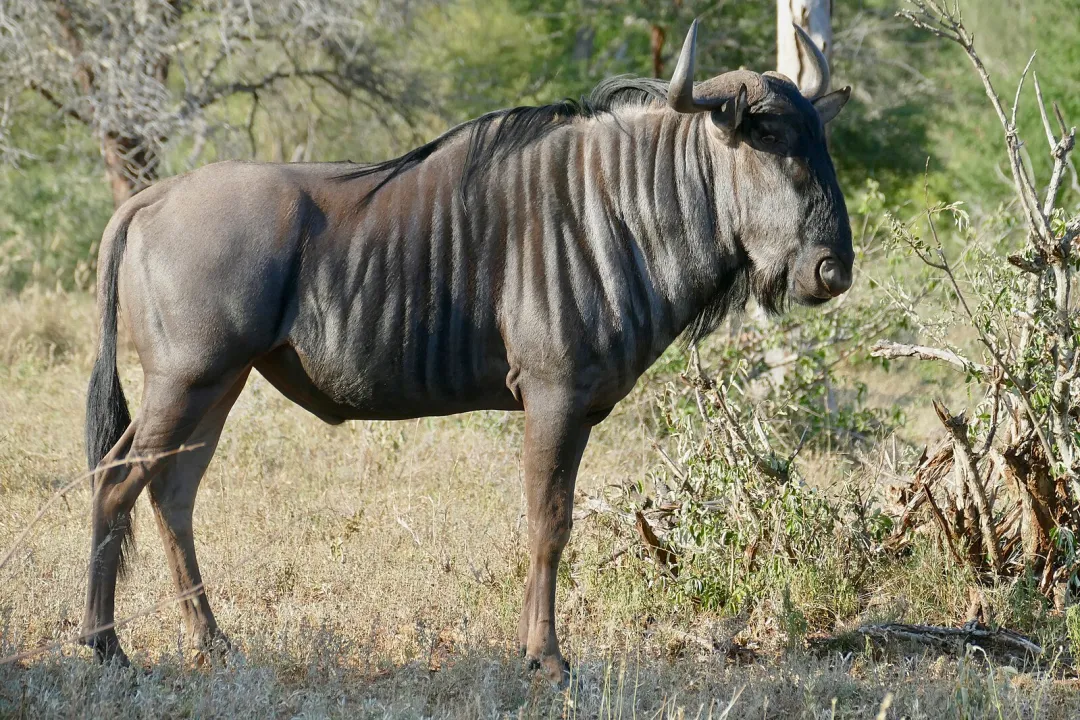
The separation into the blue and black forms represents a significant evolutionary event. The Blue Wildebeest, sometimes called the brindled gnu, is widespread in Southern and East Africa and forms the basis of the world's largest terrestrial mammal migration. [7][8] In contrast, the Black Wildebeest, or white-tailed gnu, historically occupied a much more restricted range primarily in South Africa. [1]
When one examines the relative ecological niches, it becomes apparent that the Black Wildebeest (C. gnu) is the more divergent of the two, with some morphological differences hinting at an earlier split or perhaps adaptation to drier, more localized grass availability. [1] For example, the Black Wildebeest has a longer tail that often appears white, and its mane is much darker, contributing to its common name. [1] The Blue Wildebeest, on the other hand, exhibits a silvery-blue or grey sheen and possesses distinct black vertical stripes on its neck and shoulders. [7]
Considering the drivers mentioned previously—cooler temperatures and grassland expansion—it is logical to infer that the lineage leading to the immense migratory herds of C. taurinus adapted to exploit the largest, most continuous tracts of newly suitable habitat that opened up across the Serengeti-Mara ecosystem. [9][8] The smaller, more localized ancestral population that became the Black Wildebeest may have become established before these massive grassland expansions, adapting instead to patchier resources or a different seasonal rainfall regime that didn't necessitate continent-spanning treks. [1] This scenario suggests the Blue Wildebeest lineage became an evolutionary specialist in massive-scale resource tracking, while the Black Wildebeest lineage specialized in persistence within a more constrained geographic area. [1][7]
# Physical Traits
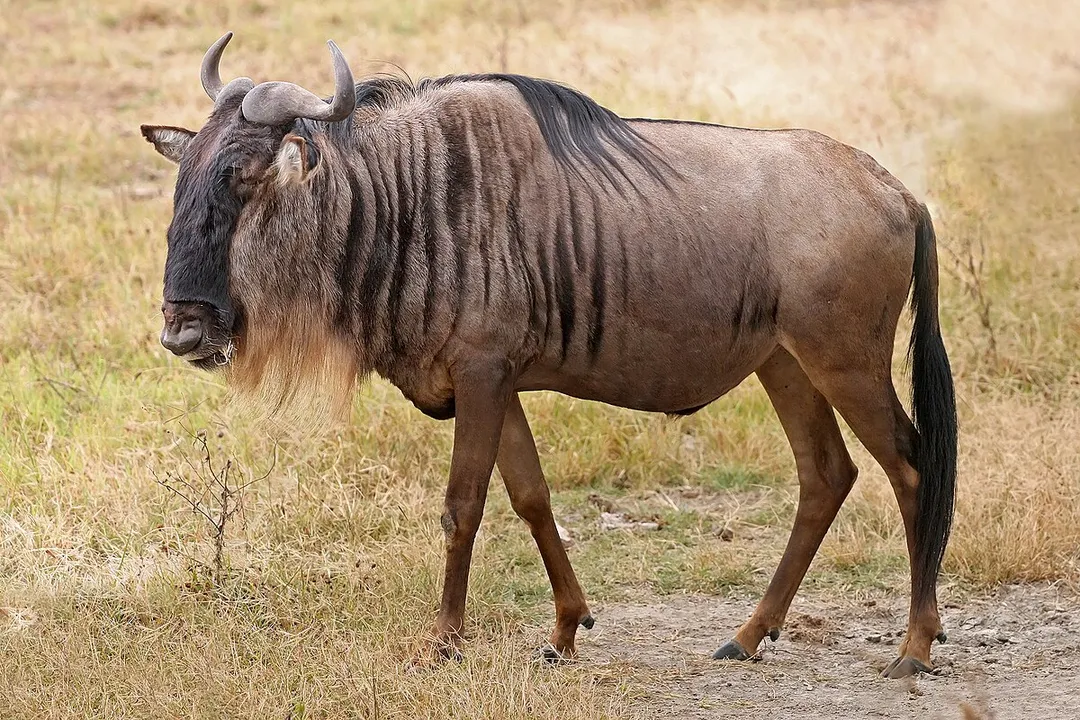
The physical appearance of the wildebeest is deeply tied to its ecology, reinforcing its evolutionary adaptations. Both species are characterized by their sloping backs, muscular forequarters, and curved horns present in both sexes. [1] They possess specialized teeth designed for grazing tough grasses, placing them firmly among the dedicated grazers of the African biome. [4]
A comparison of the two species highlights their differing paths:
| Feature | Blue Wildebeest (C. taurinus) | Black Wildebeest (C. gnu) |
|---|---|---|
| Coloration | Grey-blue with dark stripes [7] | Dark brown to black [1] |
| Tail | Shorter, dark [1] | Longer, often white [1] |
| Horn Shape | Broad base, sweep outward then up [1] | Sharper curve, sweep back then up [1] |
| Distribution | East and Southern Africa [7] | Restricted historically to South Africa [1] |
It is worth noting the common name for the Blue Wildebeest in some regions as the 'brindled gnu' speaks directly to the striping that might have evolved as camouflage within the complex light and shadow patterns of mixed savanna habitats, potentially offering better concealment than the uniformly dark Black Wildebeest against the open backdrop of the Serengeti. [7]
# Migration Emergence
The Great Migration, involving millions of Blue Wildebeest—often alongside zebras and gazelles—is perhaps the most dramatic expression of their evolutionary success. [6] This movement is not random; it is a finely tuned response to the preceding season's rains, a behavioral adaptation honed over countless generations to ensure access to fresh, nutrient-rich grass. [8] The necessity of this movement selects for stamina, social cohesion, and the ability to navigate large, featureless landscapes. [9]
The behavioral complexity required to organize and execute such a massive movement suggests a long period where environmental stochasticity (unpredictability) favored these collective migratory instincts. This collective action likely began as smaller, localized movements responding to local rainfall deficits, gradually scaling up as the grasslands became more interconnected and the ancestral range expanded following favorable climate periods. [9] For an evolutionary biologist observing modern herds, one can see the culmination of this process: thousands of individuals moving in near-unison, demonstrating an inherited memory for routes linked to seasonal climatic indicators. [6]
# Modern Context
Today, the evolutionary success of the wildebeest—particularly the Blue Wildebeest—is inextricably linked to conservation management. [10] While the Blue Wildebeest population remains large, its survival is heavily reliant on the maintenance of the vast, interconnected ecosystems that allow for its instinctive migration. [3][10] Barriers such as fences, roads, and expanding human settlements fragment these ancient corridors, turning a successful evolutionary strategy into a contemporary vulnerability. [10] The Black Wildebeest, having faced near extinction in the early 20th century, has seen a recovery largely due to intensive protection on private and state lands, demonstrating how carefully managed conservation efforts can support species adapted to more localized ecological requirements. [1] The preservation of the evolutionary path now requires preserving the space for that path to exist. [3]
Related Questions
#Citations
Wildebeest - Wikipedia
Meet the wildebeest - Caitlyn Finton, PhD
Wildebeest - African Wildlife Foundation
Wildebeest - Evolution, Types, Characteristics, Habitat and Distribution
Zoopedia: Wildebeest - Lewis Twiby's Past and Present
On safari with Africa's last great herds - The Ecologist
How the blue wildebeest restored the Serengeti ecosystem | One Earth
Cooler temperatures and expanding grasslands drove the evolution ...
Wildebeest Conservation - National Zoo