What specific adaptation do zebra sharks possess to process hard-shelled prey like snails and clams?
Answer
Strong, flat teeth capable of crushing the shells.
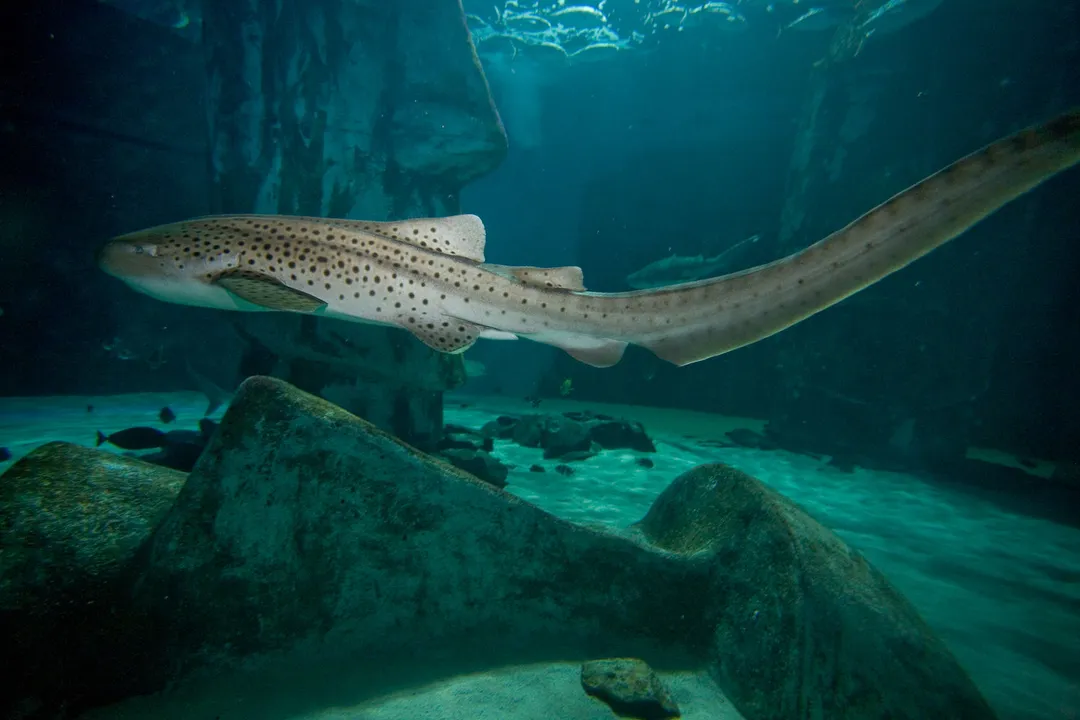
Given that a significant portion of the zebra shark's diet consists of mollusks encased in durable shells, such as snails and clams, they have developed specialized dentition for processing this tough food. Instead of relying on teeth designed for slicing flesh, they are equipped with strong, flat teeth. These teeth function like natural pavers, providing the crushing force necessary to break open the hard exterior shells. Once the protective shell is fractured or breached, the shark can then utilize its suction mechanism to ingest the soft internal meat, completing the processing of hard-shelled fauna.
Related Questions
How do zebra sharks breathe while resting motionless on the sandy bottom during the day?What physical tool allows the zebra shark to detect prey hidden within the dark, sandy substrate?What mechanical process do zebra sharks use, in conjunction with their small mouth, to capture prey?What distinctive visual pattern characterizes adult *Stegostoma tigrinum* cruising shallow Indo-Pacific reefs?Which category of organisms forms the bulk of the zebra shark’s caloric intake in its natural habitat?What specific hard-shelled prey, aside from snails and clams, is highlighted as part of the zebra shark's varied diet?What term describes the technique used by aquarium staff at the Shedd Aquarium to ensure multivitamin intake in a single meal?How do the zebra shark's feeding physics contrast with the energy demands of large, pelagic sharks?What human activity poses a significant threat to zebra sharks by scraping the seafloor and destroying their habitat?What specific adaptation do zebra sharks possess to process hard-shelled prey like snails and clams?