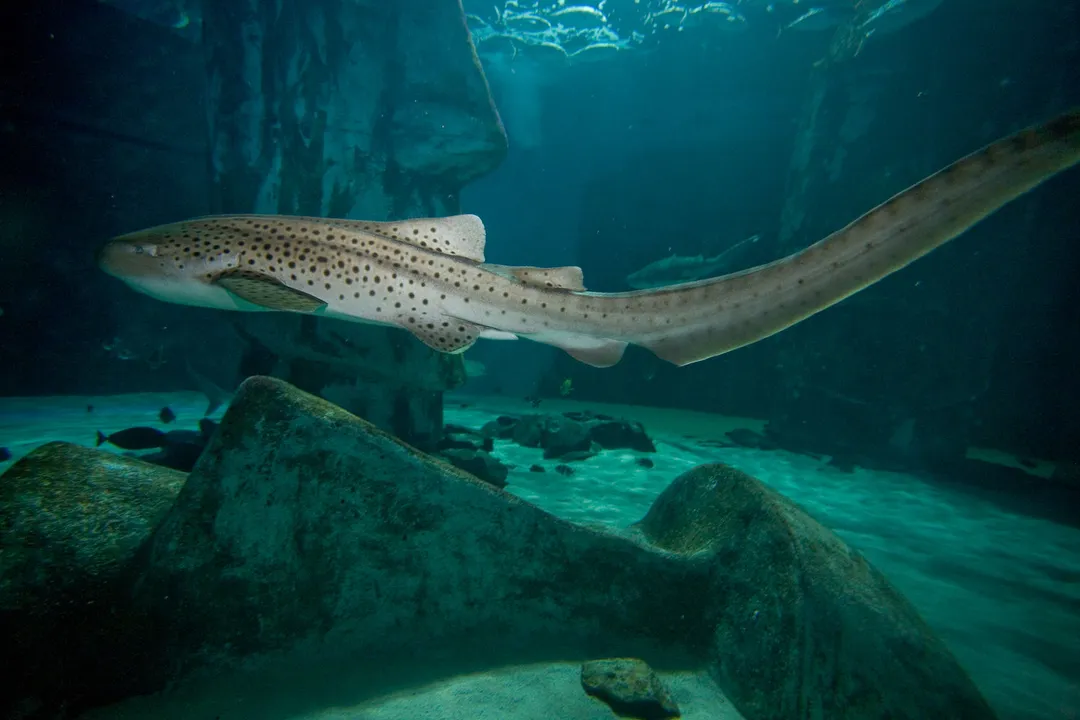
How do the zebra shark's feeding physics contrast with the energy demands of large, pelagic sharks?
The zebra shark conserves energy by resting and using buccal pumping, unlike pelagic sharks needing momentum for gill ventilation.
The energetic strategies for respiration highlight a significant divergence between the zebra shark and its fast-moving relatives. Large, pelagic sharks must maintain forward motion—a constant expenditure of energy—to force oxygenated water over their gills, a process termed ram ventilation. In contrast, the zebra shark's ability to employ buccal pumping while stationary allows it to rest for extended periods. This energy-saving approach means the zebra shark can spend hours meticulously foraging for hidden meals without exhaustion, aligning with its slow metabolism and reliance on accessible, bottom-dwelling food sources rather than migratory schools of fish.