Zebra Shark Physical Characteristics
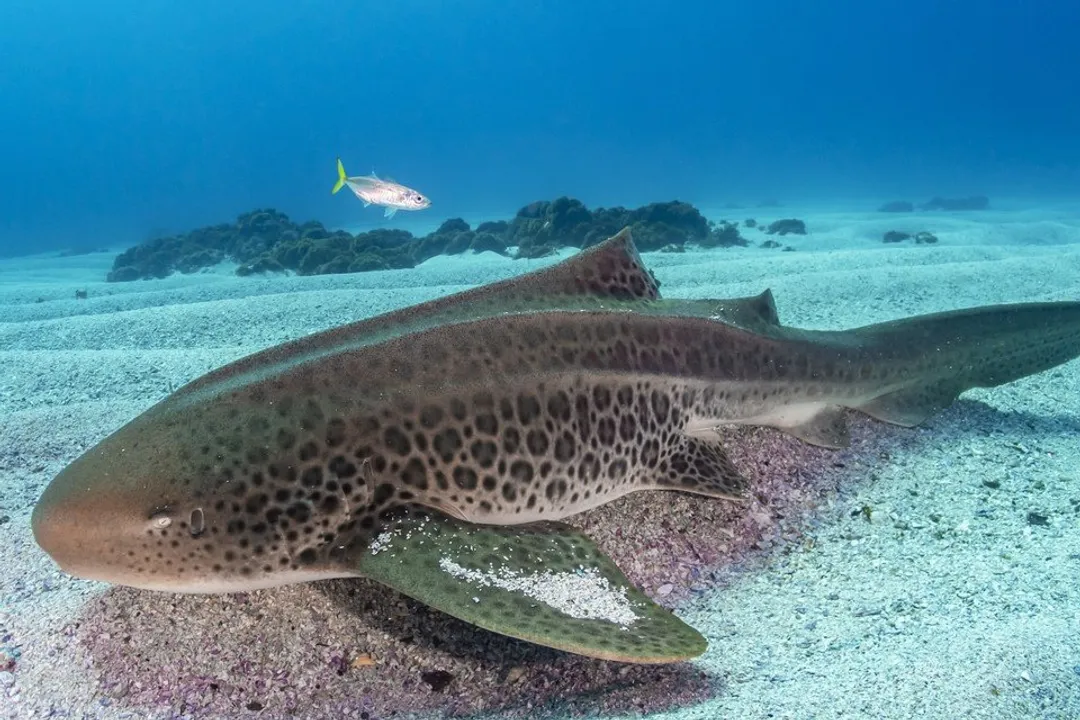
The initial visual impression of the zebra shark is often misleading, as the animal's namesake pattern rarely persists throughout its life. This species, scientifically referred to as Stegostoma fasciatum in some literature, though sometimes still cited as Stegostoma tigrinum, [2][9] presents one of the most dramatic pattern shifts in the shark world. What captures the imagination of divers and researchers alike is the stark contrast between the juvenile and the adult form. Young zebra sharks possess a dark background—typically dark blue, brown, or black—adorned with prominent, light-colored stripes running longitudinally down their bodies. [1][4][9] These stripes are what earn them the common moniker, resembling the pattern of an actual zebra. [4] However, as the shark matures, this striking livery undergoes a significant metamorphosis. The stripes begin to fragment and break apart, eventually dissolving into scattered dark spots across a lighter, often yellowish-brown or greyish body surface. [2][4][6][9] This transformation means that an adult shark might bear little resemblance to its younger self, a biological feature that suggests a major shift in habitat or hunting strategy as it grows. [2][9] Observing this transition in the wild is a rare treat for marine enthusiasts, highlighting how effectively camouflage needs can evolve throughout a creature's lifespan. [2]
# Size Metrics
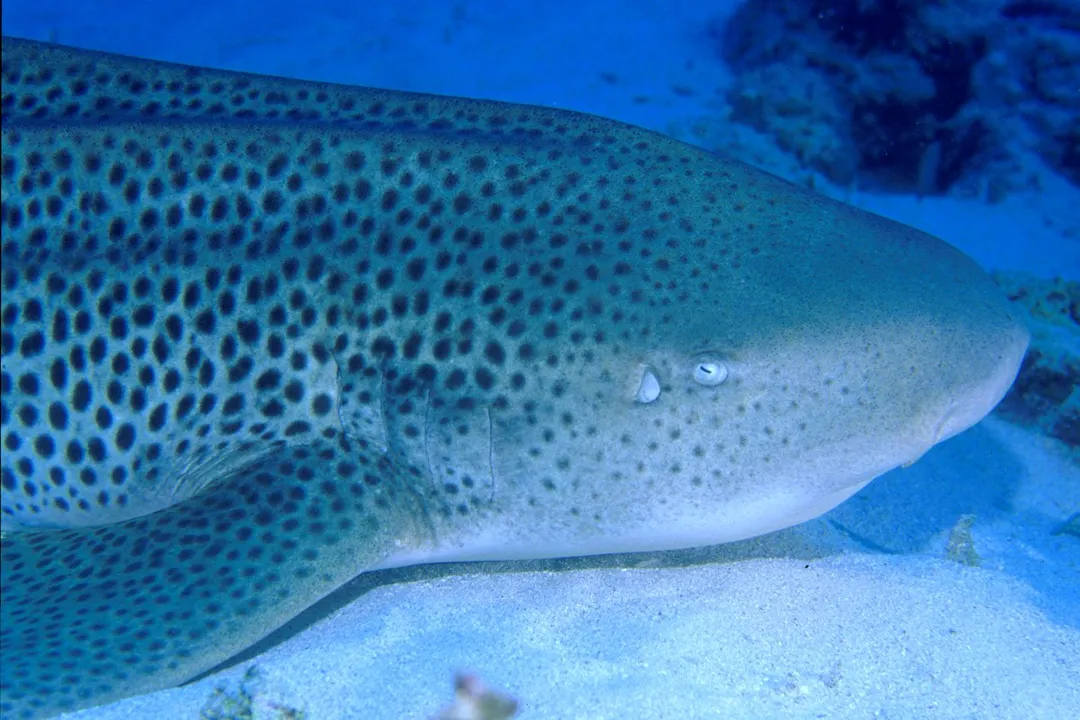
When considering the dimensions of the zebra shark, it falls into the category of a moderately sized shark, certainly not among the giants of the ocean like the whale shark, but substantial enough to command respect. [6] An adult specimen commonly measures between 2.5 to 3 meters (approximately 8 to 10 feet) in length. [4][9] Some records indicate they can grow slightly larger, with maximum observed lengths approaching 3.5 meters. [2] The largest reported size approaches 3.6 meters (11.8 feet). [7] This growth translates to a considerable body mass; they are known to weigh up to about 150 kilograms (330 pounds). [2] While they are large marine animals, their overall profile is generally slender and somewhat elongated, which aids their bottom-dwelling existence. [7] Understanding these dimensions is key, as spotting a smaller, striped individual versus a larger, spotted one immediately tells you about its age class, a helpful field note for anyone observing them in their tropical or subtropical waters. [6][9]
# Body Form
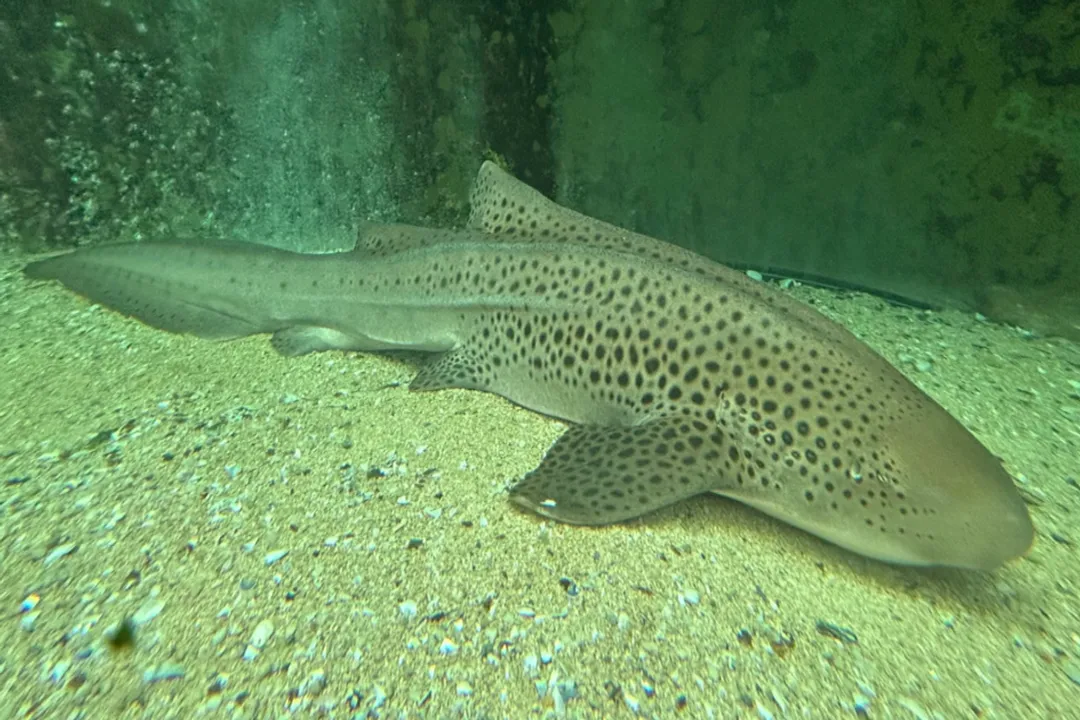
The physical architecture of the zebra shark is optimized for life spent near the seafloor, reflecting its benthic habits. [7] Its body is generally described as slender. [7] A key distinguishing feature, particularly when viewed from the side or below, relates to its fins. The pectoral and pelvic fins are quite broad, providing stability near the substrate. [7]
# Caudal Fin
Perhaps the most defining structural characteristic, one that aids in identification even when the spotting pattern is muted or the shark is viewed from a distance, is its tail. The zebra shark possesses a remarkably long caudal fin, or tail fin. [7] In fact, the upper lobe of this tail is so elongated that it is nearly the same length as the rest of the shark’s body combined. [2][7] This type of tail fin is known as heterocercal, meaning the vertebral column extends into the longer, upper lobe. [2][7] While many shark species have heterocercal tails, the extreme length ratio in the zebra shark makes it particularly noticeable underwater and suggests that while it is a capable swimmer, its primary mode of propulsion is likely geared toward slow, deliberate movement along the bottom rather than high-speed pursuits. [7]
# Dorsal Fins
The shark features two dorsal fins, which are relatively low compared to some other fast-swimming pelagic sharks. [7] These fins are supported by fin spines, a feature common to many shark groups, and they help maintain its orientation while it rests or cruises slowly just above the sand or rubble. [7]
# Head Structure
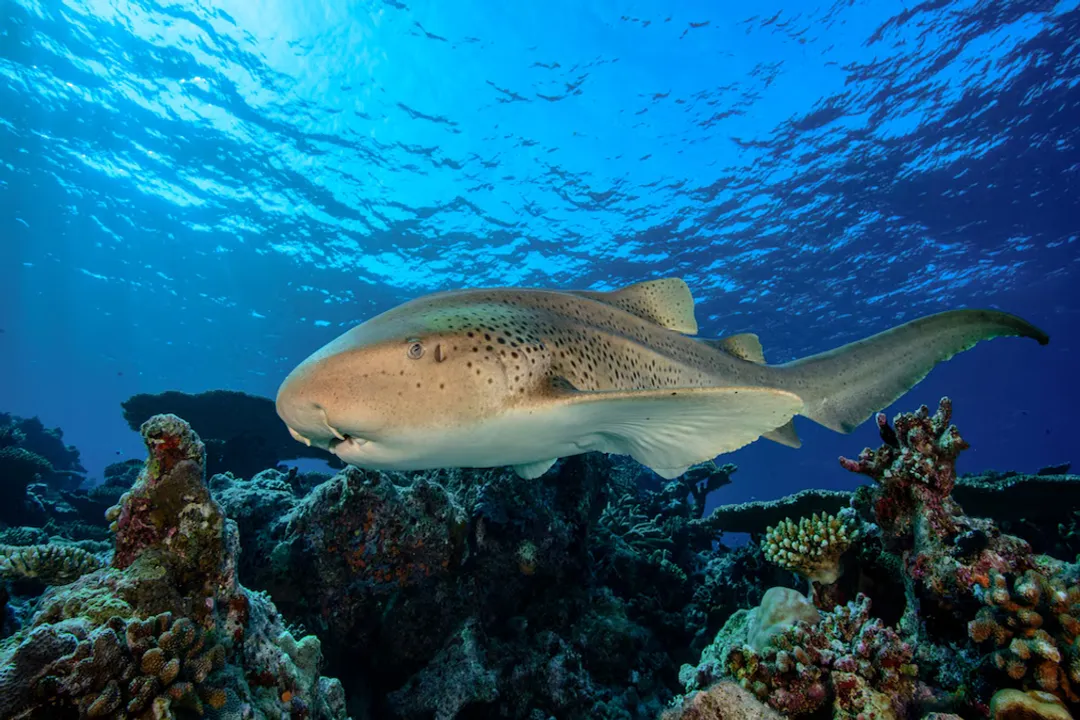
The head morphology of the zebra shark is another strong indicator of its feeding style. It is noticeably flattened, which complements its lifestyle spent near the ocean floor. [7] The placement of the mouth is crucial; it is situated ventrally, meaning it is located on the underside of the head, and is also described as subterminal—positioned slightly behind the very tip of the snout. [2][7] This positioning is typical for sharks that vacuum up food from the bottom rather than chasing prey in the water column. [7]
# Mouth and Gills
The mouth itself contains numerous small teeth. [7] These teeth are not designed for tearing large chunks of flesh but are instead adapted for crushing the hard shells of its typical prey items, such as mollusks and crustaceans. [7] This dietary focus—hard-shelled invertebrates—is directly reflected in the dentition and the downward-facing mouth structure. [7] Like many sharks, the zebra shark possesses five gill slits on each side of its head, allowing it to draw oxygenated water over its gills for respiration. [7] Because they are known to rest on the bottom for extended periods, sometimes remaining motionless for hours, the effectiveness of this buccal pumping mechanism is essential for their survival when stationary. [4]
# Pattern Variance and Identification
The constant change in markings presents a practical identification challenge and an opportunity for researchers. The pattern, whether striped or spotted, is unique to each individual, much like human fingerprints. [1] This uniqueness is highly valuable for population studies, as researchers can identify and track specific sharks over time based solely on their spot configuration. [1]
For those observing these animals in their natural habitat, recognizing the difference between the juvenile and adult pattern is essential for accurate identification. [1][4] If you encounter a shark in shallow, clear water with distinct, widely spaced dark spots on a pale background, you are looking at an adult. If the markings are bold, dark vertical or diagonal stripes on a lighter field, you are observing a juvenile Stegostoma species. [9] A small detail often overlooked, which can aid identification in murky water or at a distance, is the tail fin's extreme length. [7] If you can confirm that heterocercal tail shape where the upper lobe dramatically exceeds the lower, you can strongly suspect a zebra shark, regardless of the body's current spotting or striping status. [2] This feature serves as a reliable constant across the life stages where the more obvious pattern shifts dramatically. [7]
# Sensory Features
While the primary focus is often on external features like color and shape, the sensory apparatus defines how the shark interacts with its environment. Zebra sharks are generally considered nocturnal feeders. [4] This suggests a reliance on senses other than sight during their primary foraging times. Like other sharks, they possess specialized senses to detect prey in low light or turbid conditions. They have a keen sense of smell, which is vital for detecting chemical cues in the water. [7] Furthermore, they possess the Ampullae of Lorenzini, specialized electroreceptors located around their snout and head. [7] These organs allow them to detect the faint electrical fields generated by the muscle movements of hidden or resting prey, such as crabs buried in the sand or mollusks tucked into crevices—exactly the kind of creatures that make up their diet. [7]
# Comparison to Relatives
It is interesting to note how the zebra shark fits within the broader classification of sharks. Although the common name suggests a close link to tiger sharks (due to the stripes), the zebra shark belongs to its own family, Stegostomatidae. [9] It is distinct from ground sharks of the family Carcharhinidae. Its placement is somewhat unique, characterized by that hugely elongated tail fin and the specialized, suction-feeding-adapted mouth structure. [7] This combination of features distinguishes it clearly from many of its contemporary reef dwellers, cementing its specialized ecological niche as a slow-moving, bottom-feeding predator of hard-shelled prey. [7]
In summary, the physical characteristics of the zebra shark present a study in adaptation and transformation. From its slender, flattened head equipped with a ventral crusher mouth, to its highly elongated, heterocercal tail, every external feature points toward a life spent methodically combing the seafloor for slow-moving, armored meals. [2][7] The most striking feature remains the life-long pattern change, a visual clock marking the creature's journey from a striped juvenile to a spotted adult. [2][4]
Related Questions
#Citations
Zebra Shark - Oceana
Zebra shark - Wikipedia
Zebra Shark - Mystic Aquarium
Zebra shark | Animals - Monterey Bay Aquarium
Zebra Shark | Shedd Aquarium
Zebra Shark - National Aquarium
Stegostoma fasciatum - Zebra Shark - Animal Diversity Web
Zebra shark | National Geographic
Zebra Shark, Stegostoma tigrinum (Forster 1781) - Australian Museum