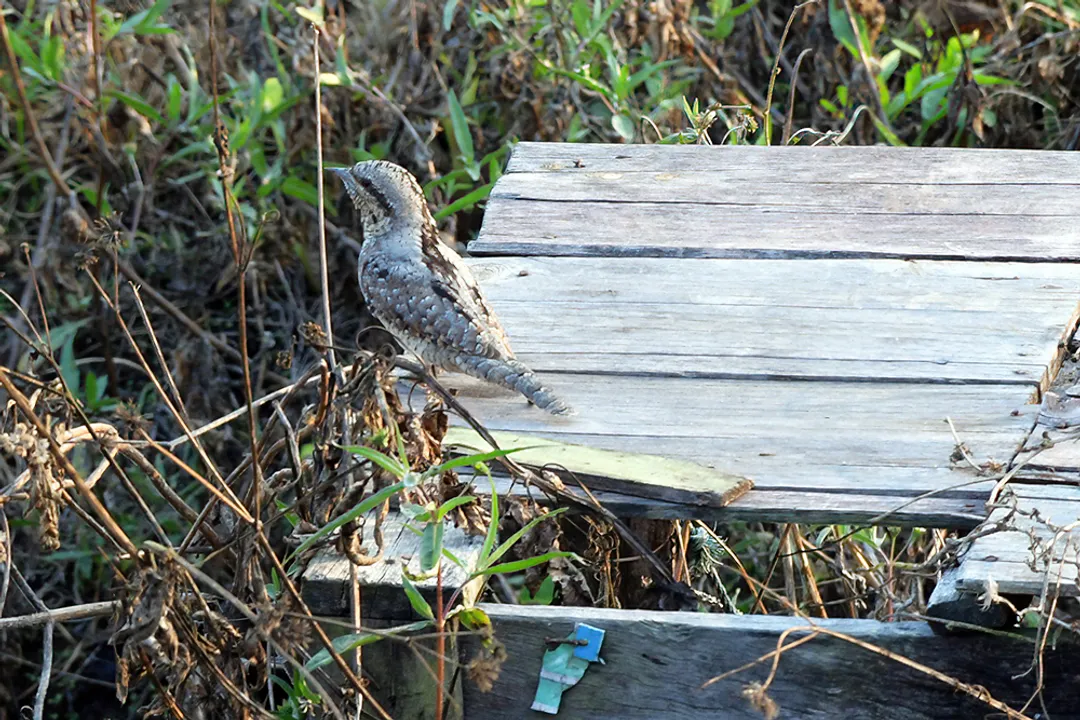
What specialized tongue adaptation do wrynecks share with powerful woodpeckers, and how is it utilized?
A long, protrusible, and sticky tongue used for gathering ants and larvae
A crucial adaptation retained by the wryneck, linking it strongly to its powerful woodpecker relatives, is its specialized tongue mechanism. This tongue is characterized by being long, capable of significant protrusion, and possessing a sticky surface. However, unlike excavators that might use this tool deep within drilled holes, the wryneck repurposes this adaptation for surface and shallow foraging. Its primary diet heavily consists of ants and their larvae, which it retrieves by probing into ground-level locations or shallow crevices using its sticky appendage. This functional retention highlights a shared ancestral capability that was later optimized for opportunistic, non-excavatory insect retrieval in the wryneck's ecological niche.